

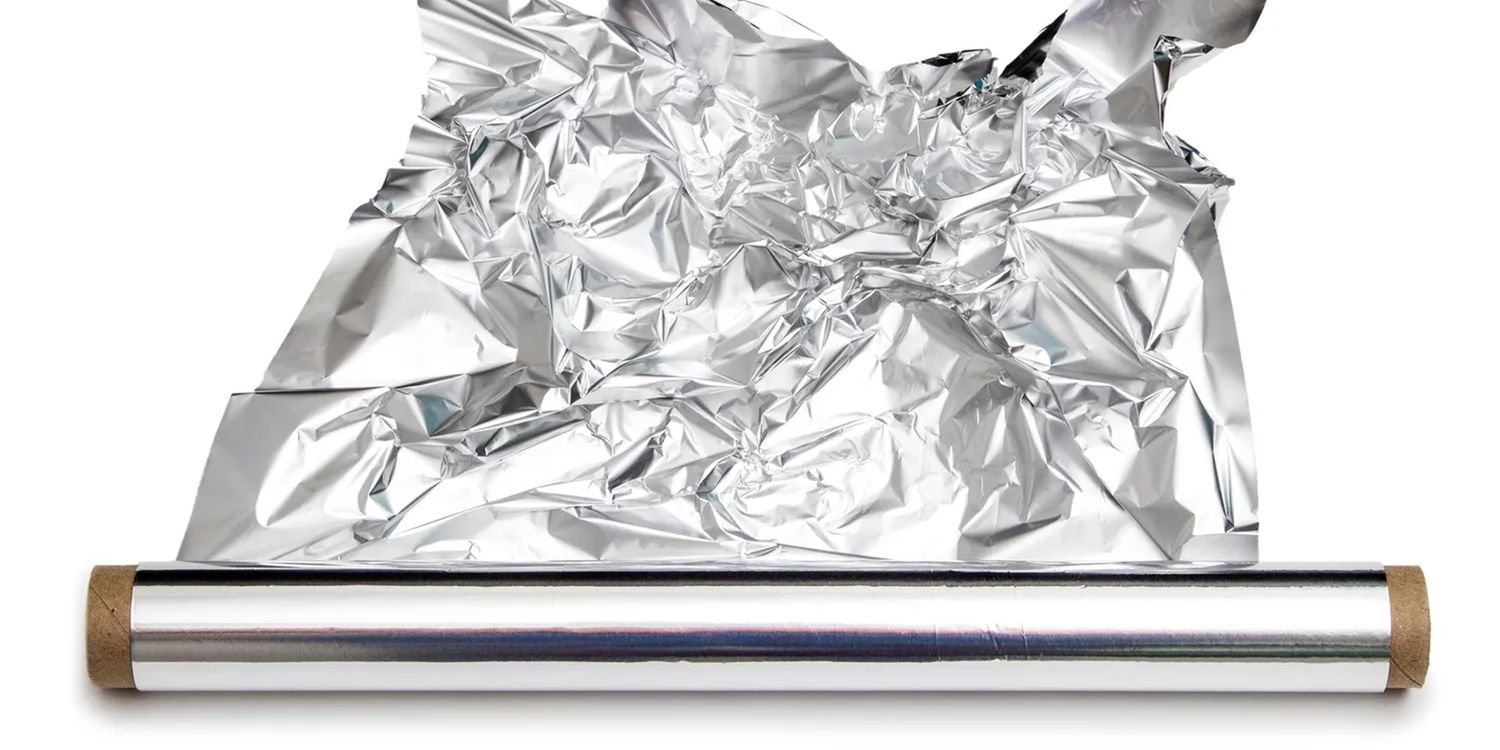
Whether you’re an occasional home cook or devote your waking hours to making gastronomic creations, you will likely agree that aluminum foil (AKA tin foil) is one of the most versatile products in the kitchen. Whether you use it to line sheet trays, cover roasting meats, or shape it into a pouch to cook or reheat leftover foods in the oven, aluminum foil can do so many things.
While the thin metal is used by 319 million Americans each year (according to one 2020 study), have you ever wondered why one side is shiny while the other is dull? Recently, a video went viral on social media claiming that the side you use should depend on how and what you will use the foil for. But is there any truth to that? Is the dull side intended for certain uses, and the shiny intended for others? To settle the confusion, we consulted some experts about the “right way” to use aluminum foil.
Why Aluminum Foil Is Shiny on One Side
The two different shades of the foil are due to the manufacturing process, according to Lara Tiro, a food scientist and owner of Vancouver-based consulting company Rebel Botanica. Tiro explains that large slabs of aluminum go through a continuous process consisting of heat and heavy-duty rollers, applying pressure to compress and lengthen the aluminum.
“The final stage of the process is called cold-rolling, which includes passing two layers of foil through sets of rollers simultaneously. This further reduces the desired thickness and improves the material’s final resistance and flexibility,” Tiro adds. During this process, the foil comes out shiny on the side that is in contact with the polished steel rollers, and dull on the side that is not in contact with the rollers.
Does It Matter Which Side of the Aluminum Foil You Use?
The short answer is no. Since the matte and gloss are a result of the foil’s contact with the roller, Tiro asserts that there is no difference in the material make-up of both sides of the foil. Whether the foil is regular or heavy duty, you can choose your preferred side to line or cover your food, as neither side will impact your food upon contact.
To confirm this theory we turned to the experts at Reynolds. “With standard and heavy-duty foil, it’s perfectly fine to place your food on either side so you can decide if you prefer to have the shiny or dull side facing out,” according to the Reynolds Brands website.
Although using neither side of the foil will impact the flavor and appearance of your cooked food, Tiro recommends using heavy-duty foil for grilling and roasting as it is thicker than regular foil and offers added strength.
The Exception to That Rule
While conventional aluminum foil doesn’t require using a specific side for cooking, an exception applies to nonstick aluminum foil. Tiro explains that regular foil isn’t inherently nonstick, but many companies produce a nonstick aluminum foil containing an FDA-approved coating on the dull side. That means foods should be placed on that side to get the benefits of the nonstick coating, ensuring easier, cleaner removal of cooked food.
Reynolds has a handy trick for remembering which side of its nonstick aluminum foil should be facing up: “If you can read the writing on the foil then you have the right side up.”
When Not to Use Aluminum Foil
Foil may be your trusty kitchen companion, but it may not be the best choice for some cooking methods and foods.
Avoid using aluminum foil to cover brining meats. Tiro explains, “Although [foil is] an excellent barrier to light and oxygen, the aluminum can react with salt-heavy foods, forming aluminum chloride crystals on the food,” which can cause your food to taste bitter.
Tiro also doesn’t recommend using foil to line your baking sheet when baking cookies. “The underside of the cookies will bake faster than the rest,” she says. Finally, forget about using aluminum foil to cover or store your leftovers—foil doesn’t provide an airtight seal to protect your food.
