

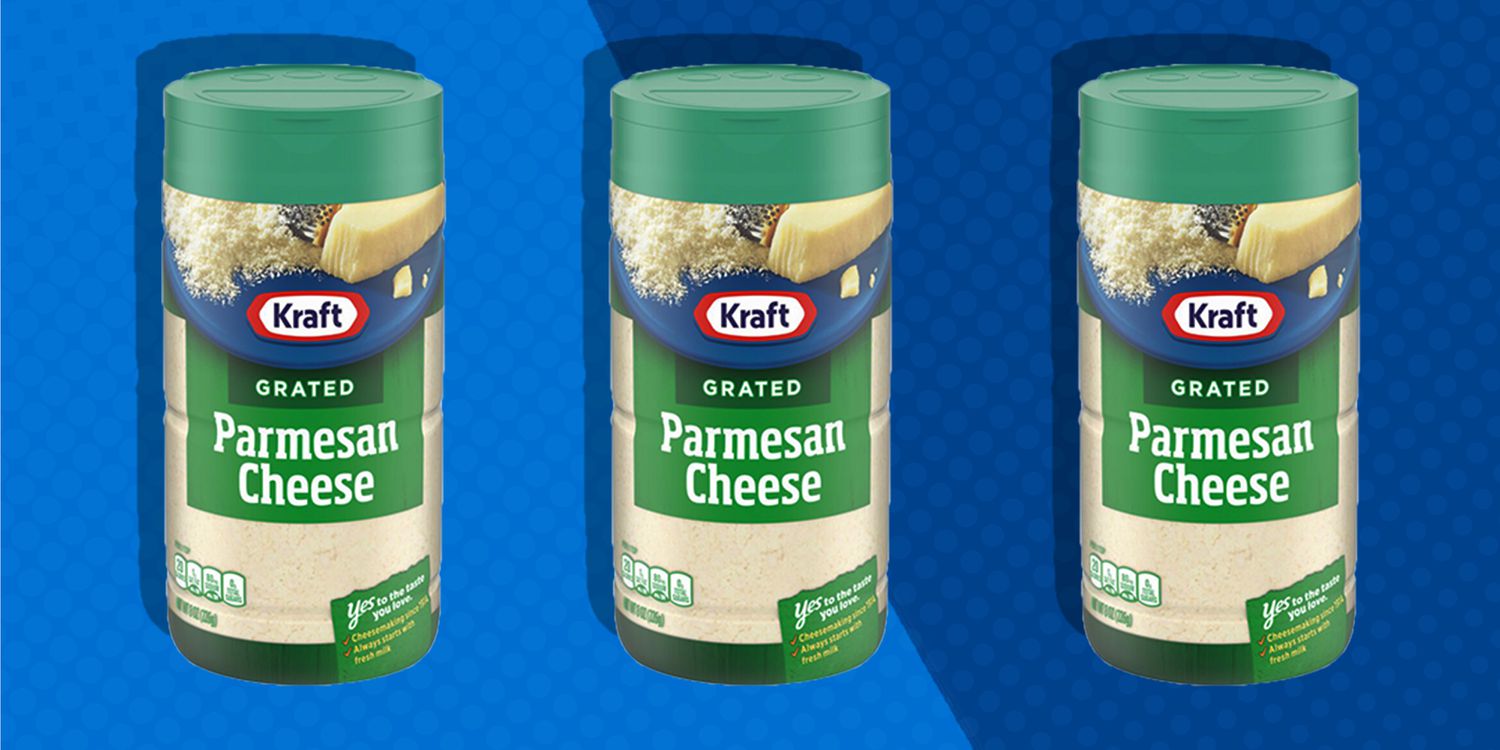
For cheese lovers, few things aren’t improved by a healthy sprinkle of grated Parmesan cheese. Whether it’s freshly grated or straight from the iconic green shaker, more is more. But does that green shaker of grated Parmesan cheese really need to be stored in the fridge after it’s opened? Or is it safe in the pantry?
What Is Grated Parmesan?
First, what is the difference between cheese labeled Parmesan and Parmigiano-Reggiano? Parmigiano-Reggiano has a special protected cultural status with strict requirements. It can only be made in a specific region of northern Italy from local cow’s milk and using specific historical methods. Parmigiano-Reggiano must also be aged for at least one year. Think of it as the Champagne of cheeses. If it isn’t made in northern Italy, then it’s just sparkling cheese.
Parmesan doesn’t need all of those rules. Any milk can make it, it can be made anywhere, and the aging process is shorter—only around 10 months. The texture of grated Parmesan is also drier than that of fresh cheese. Grating or shredding hard cheeses requires dehydration, evaporation, and then cooling to prevent the fat from oozing out and clumping. Reducing fat compounds reduces the risk of the cheese going bad and ruining that plate of spaghetti.
Where Should You Store Grated Parmesan Cheese?
Sorry to your local pizza place, but those shakers of cheesy goodness should, in fact, be refrigerated to keep them fresh and preserve the quality. In a response posted on Target’s website, Kraft advised storing its cheeses in the refrigerator at the normal temperature of 40 degrees F (4 degrees C) and keeping them at room temperature for no more than one hour. This advice makes sense if you remember that cheese, no matter how fine it seems, is a dairy product, and no one likes room-temperature milk.
The Bottom Line
The answer is straightforward: store that cheese in the fridge. That said, harder cheeses will hold up against bacteria longer than softer cheeses because of their drier texture. If you notice any discoloration, foul odors, or moisture on that grated Parm, as much as it hurts, throw it out!
