

Key Takeaways
-
Field sobriety tests, like the walk-and-turn and one-leg stand, help police check if a driver is drunk.
-
Failing a field sobriety test can lead to a breath or blood test to check blood-alcohol content (BAC).
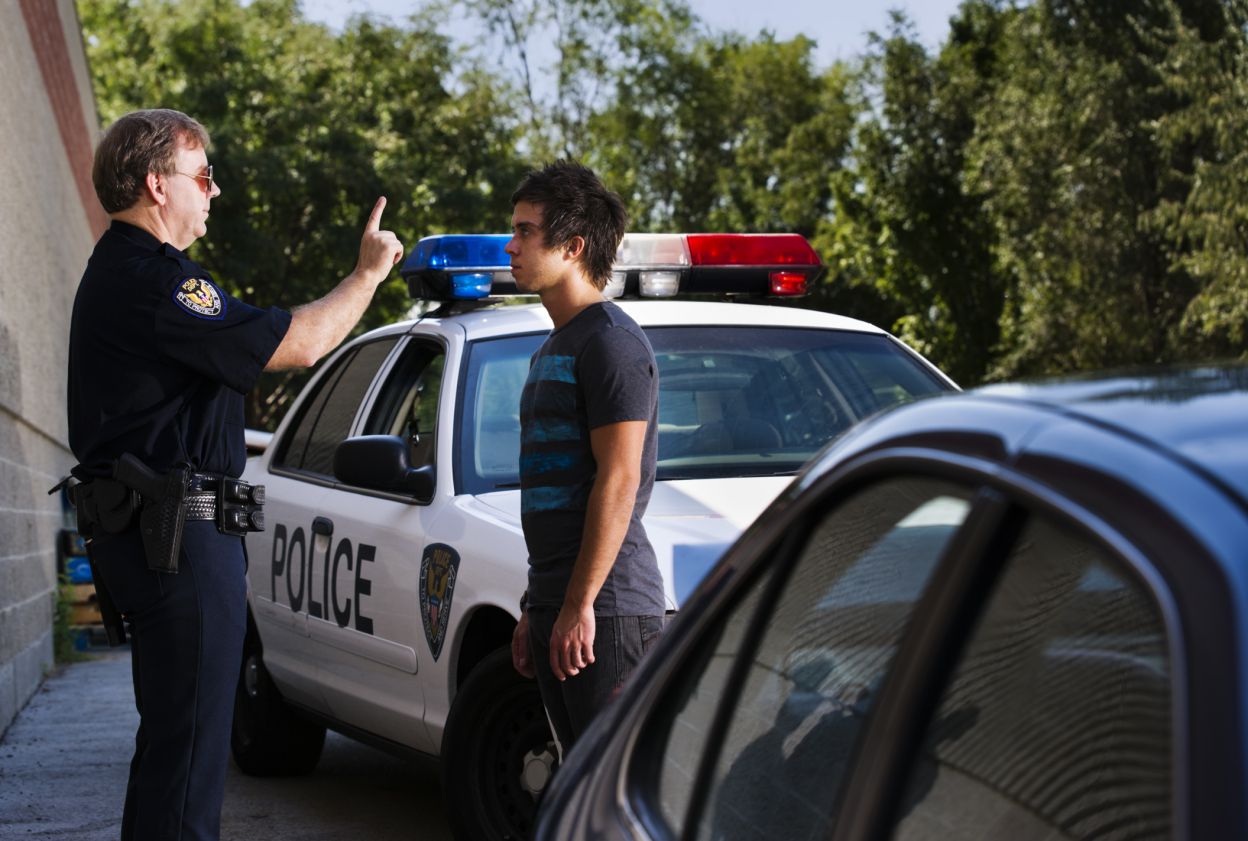
Field sobriety tests are tests used by police to determine if a driver is impaired. The tasks assess balance, coordination, and the ability of the driver to divide his attention to more than one task during the field sobriety test.
The tests have been scientifically proven to validate legal intoxication in drivers suspected of drunken driving in 90% of cases if administered by a trained officer. The results of the test are admissible as evidence in court.
This article discusses the three types of field sobriety tests that may be administered and the essential information you should know about these DUI tests.
The Three Field Sobriety Tests
National Highway Traffic Safety Administration defines and describes the three parts of the field sobriety test in detail. If the driver fails any of the field sobriety tests, the officer will then ask the suspect to take a breath test or a chemical test to confirm their blood-alcohol content.
The Standard Field Sobriety Test (SFST) is a battery of three tests that include the horizontal gaze nystagmus (HGN), the walk-and-turn, and the one-leg stand tests.
Horizontal Gaze Nystagmus
Horizontal gaze nystagmus is an involuntary “jerking” of the eyeball which happens to everyone when the eyes are rotated at high peripheral angles. When a person is intoxicated, however, the jerking of the eyes becomes more exaggerated and occurs at lesser angles.
Turning the HGN test, the officer will ask the driver to follow a moving object, such as a pen or flashlight, slowly from side to side. The officer looks to determine:
- If jerking is distinct when the eye is at maximum deviation
- If the angle of jerking onset is within 45 degrees
- If the eye cannot follow the object smoothly
If four or more clues appear between the two eyes, the driver is likely to have a blood-alcohol content (BAC) 0.10 or greater. Research from the NHTSA shows this test to be accurate in 77% of test subjects.
Walk-and-Turn Test
For the walk-and-turn test, the officer asks the driver to take nine steps, heel-to-toe, along a straight line, turn on one foot and return nine steps in the opposite direction. During the test, the officer looks for seven indicators of impairment. A subject may be impaired if they:
- Begin before the instructions are finished
- Cannot keep balance while listening to the instructions
- Do not touch heel-to-toe
- Lose balance while turning
- Stop while walking to regain balance
- Take an incorrect number of steps
- Use arms to balance
According to the NHTSA, if the driver exhibits two or more of these indicators during the test, there is a 68% likelihood of a BAC level of 0.10 or higher.
One-Leg Stand Test
For the one-leg stand test, the officer asks the driver to stand with one foot about six inches off the ground and count from 1,001 (one-thousand-one, one thousand two, etc.) until the officer says to put the foot down. During the next 30 seconds, the officer looks for these four indicators:
- Hopping to maintain balance
- Putting the foot down
- Swaying while balancing
- Using arms to balance
If the driver exhibits two or more of the above indicators, there is a 65% chance they have a BAC of 0.10 or greater, according to the NHSTA.
Signs of Intoxication
If you suspect that you or someone else might be intoxicated, there are some signs to watch for. Indicators that someone is drunk and may fail a field sobriety test include:
- Feelings of confusion
- Lethargy
- Impaired walking
- Becoming very talkative or euphoric
- Lack of inhibition
- Slurred speech or other problems speaking
- Vomiting
Alcohol affects people differently. Even if you don’t feel drunk, do not operate a motor vehicle if you have been consuming alcohol.
Can You Fail a Field Sobriety Test While Sober?
There are many reasons that people who are not intoxicated might not be able to perform the above tests successfully. These include certain medical conditions, disabilities, age, injury, and taking a certain medication.
The officer usually will ask the driver if there is a reason that they may not be able to pass the test and makes a note of their answer in the arrest report.
If there is a legitimate reason, medical or otherwise, why you might fail one or more parts of the field sobriety test, make sure you mention it so that the officer notes it in the official record. It might be helpful to you in court later.
Tests for Marijuana and Other Substances
Field sobriety tests can be used to check for signs of intoxication and impairment. However, they cannot determine specifically what substances a person has been using.
HGN tests are commonly used to look for signs of marijuana intoxication. However, research indicates it is not a reliable tool for detecting cannabis use. Officers may also look at the individual’s pupils to see if they are unequal, have unusual movements, or are extremely dilated or constricted.
Laws about driving under the influence of cannabis vary. Some states utilize “per se” laws similar to alcohol intoxication, suggesting that a certain level of THC (the psychoactive compound delta-9-tetrahydrocannabinol) corresponds to alcohol intoxication.
However, research indicates that specific THC levels do not correlate with specific levels of impairment. Even low levels of THC may cause significant cognitive and psychomotor impairments.
Can You Refuse a Field Sobriety Test?
While you have a right to refuse a field sobriety test or breathalyzer test, the state also has a right to penalize you for doing so.
A field sobriety test helps provide evidence that an individual is intoxicated. If someone refuses the tests, however, police can still arrest a person that they believe is intoxicated and then conduct further testing. They can also still arrest someone who passes field sobriety tests if they suspect the individual is under the influence.
Verywell Mind uses only high-quality sources, including peer-reviewed studies, to support the facts within our articles. Read our editorial process to learn more about how we fact-check and keep our content accurate, reliable, and trustworthy.
Thanks for your feedback!
What is your feedback?
Helpful
Report an Error
Other
