

Credit: René Ramos / Lifehacker / NatalyaBurova / iStock / Siri Stafford / DigitalVision / Getty
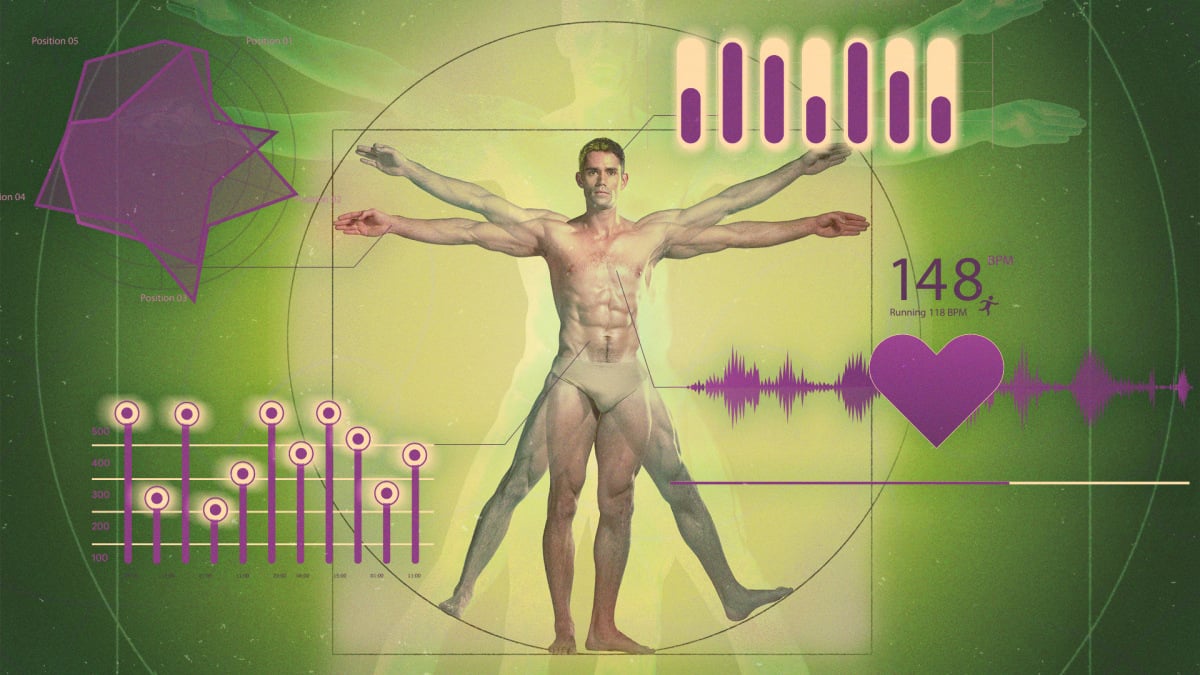
The latest craze in the fitness world—from gym culture, to nutrition planning, to recovery protocols— is hyper-personalized optimization. But is there really a benefit to at-home microbiome tests that reveal the optimal diet for your gut bacteria? How about a device that tells you whether you’re burning carbs or fat with each breath?
Personalized fitness advice used to be largely limited to factors like height and weight, but now you might have a Whoop, Oura, or Apple Watch wearable tracking your track heart rate variability, skin temperature, blood oxygen, and so much more. Continuous glucose monitors, once reserved for diabetics, are now worn by biohackers and CrossFit enthusiasts trying to optimize their carb timing.
On the one hand, the appeal of having unprecedented insight into your body’s unique needs is understandable. On the other, there’s a looming shadow behind all this data: As the metrics multiply, so does the potential for anxiety. When every workout, meal, and bedtime becomes a referendum on dozens of competing data points, decision fatigue is likely to set in. And as your algorithms suggest targeted interventions for every perceived deficiency, someone else—likely a giant corporation getting fat off of user data—is profiting. The question looms larger with each new device metric: Does more data actually lead to better health outcomes?
More data isn’t always better
Your wearable spits out a sleep (or stress) report every morning. How is this data serving you? “Metabolic testing, biomechanics, and body composition are all forms of objective data that can be pretty powerful when collected in validated settings and interpreted by professionals who understand physiology and adaptation,” says Lekshmi Kumar, a performance physiologist at Boston-based Human Powered Health. But consumer devices, while improving, exist in a different category: “Consistent research has bolstered consumer-facing tools and significant improvements have been made over the past several years. But they’re still not considered substitutes for professional-grade assessments,” Kumar says. In other words, for a lot of bio-hacking endeavors, there’s a major gap between the numbers you see and their potential real-life applications.
Kumar sees three critical prerequisites for data to actually improve outcomes: data quality, proper context, and accurate interpretation. “Absent these, we often see expensive and excessive supplementation, conflicting recommendations, and decision fatigue,” she says. The real danger, she says, isn’t the data itself—it’s the illusion of expertise it creates.
Hyper-personalized data might add unnecessary confusion
Many direct-to-consumer tests lack the clinical validation of their medical-grade counterparts. Interpretation of the data is frequently automated, missing nuance that a trained professional might catch. And the recommendations often trend toward more—more supplements, more tracking, more intervention—rather than identifying changes that might actually move the needle. It’s a hard truth that no wellness product actually cares more about your health than its company’s profits.
Perhaps the most insidious cost of hyper-personalization is less financial, and more psychological: When every metric matters, decision-making becomes paralyzing. Should you work out today even though your HRV is down? Is that meal worth the glucose spike? Did last night’s 6.5 hours of sleep doom today’s training session?
The constant feedback loop can transform exercise from a joyful practice into an optimization problem to be solved. This isn’t the first time I’ve pointed out the trappings of wellness culture. The internal compass—how do I actually feel?—gets drowned out by all the external data streams. Ironically, the tools meant to “empower” can instead create dependency, where you can’t trust their own bodily sensations without technological confirmation.
Does hyper-personalization actually work?
When implemented thoughtfully (with quality data, proper interpretation, and professional guidance), personalized approaches can obviously aid you in optimizing training, recovery, and nutrition in ways generic programs cannot. Elite athletes have long used sophisticated testing—VO2 max assessments, lactate threshold testing, motion capture analysis—to gain advantages, however marginal. As these tools become more accessible, it makes sense their benefits can extend beyond the professional realm.
But accessibility without expertise? That’s a different matter. Consider two hypothetical people concerned about their fitness: Person A tracks sleep quality, HRV, resting heart rate, blood oxygen, skin temperature, glucose levels, and workout strain—but lacks a framework to understand how these metrics interact, or what to do when they conflict. Person B follows a simple evidence-based program: strength training three times per week, 30 minutes of cardio on alternate days, eight hours of sleep, and a balanced diet with adequate protein. Even absent all that data, Person B will likely see better results and experience far less angst about their health.
What do you think so far?
Again, there are the economic incentives to consider too. Companies profit from selling more tests, more devices, more subscriptions, and more supplements. The business model depends on convincing consumers they need increasingly granular data to achieve their goals. This creates an environment where the answer to “what should I track?” is almost always “more than you’re tracking now,” regardless of whether the additional data actually serves you.
When personal health tracking actually makes sense
“The biggest gains won’t come from chasing every single flashy metric,” says Kumar. “They’ll come from identifying the variables that matter most to the specific individual, and working with a credentialed professional who can assist in translating the information into meaningful takeaways and actions.”
What does smart, targeted tracking look like in practice? Here are scenarios where specific metrics can genuinely help:
-
For a runner struggling with fatigue: Tracking HRV and resting heart rate can reveal when you’re not recovering adequately between training blocks. If these metrics trend downward over weeks, it’s a signal to dial back intensity or add rest days—something that matters far more than monitoring glucose fluctuations after breakfast.
-
For someone with persistent digestive issues: A food diary paired with symptom tracking (not necessarily a microbiome test kit) can help identify genuine patterns. Working with a registered dietitian to systematically eliminate or reintroduce foods provides actionable insights, unlike a $200 test suggesting you eat more fermented foods.
-
For someone desperate to improve sleep: Use your gadgets to track total sleep time and sleep consistency. That matters more than obsessing over REM percentages. Focus on establishing a regular pre-sleep routine and measuring whether you feel rested, rather than achieving some algorithm’s “optimal” sleep score.
-
For the lifter hitting a plateau: Remember that linear gains are for beginners. Instead of stressing over daily scale readings, focus on your training log tracking progressive overload and consider following these tips.
You’ll notice a patter here: Each tracking approach is targeted, time-bound, and directly connected to a specific goal or problem—not a fruitless pursuit to optimize every single thing all the time.
The bottom line
In a culture obsessed with optimization, it’s getting harder and harder to cut through the noise. But maybe your goal shouldn’t be to track everything. As hyper-personalization continues its ascent, think about how you’re engaging with every new tool. The wisest approach may be a picky one: choosing one or two key metrics that align with specific goals. Because more information isn’t automatically better, and consumer tools have real limitations, and that the human body is beautifully, frustratingly complex—not exactly reducible to a dashboard of numbers.
