

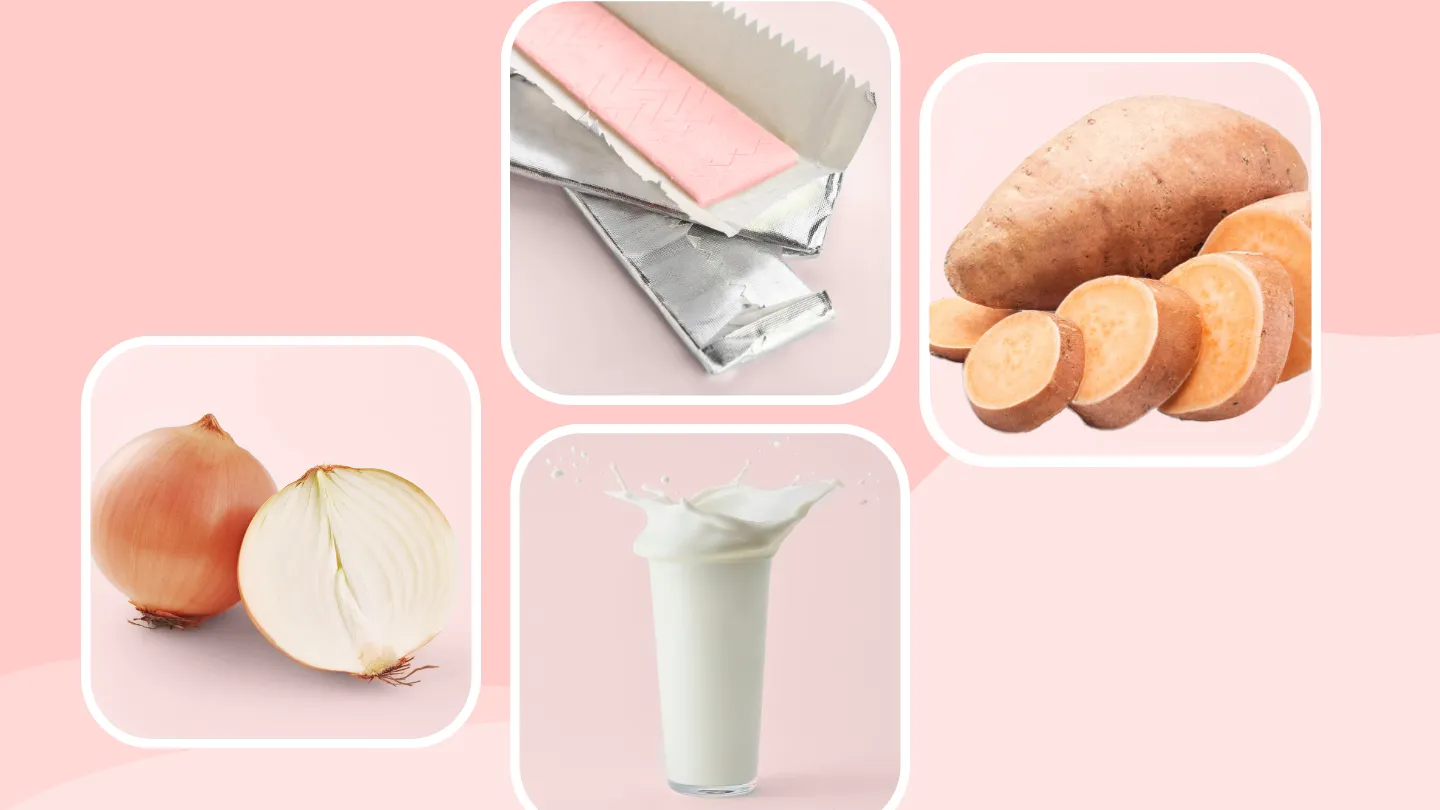
14 Foods That Cause Gas
1. Onions and Garlic
Onions and garlic can make you gassy because they have high concentrations of fructans, according to The Ohio State University. Fructans are a type of carb that’s tough to digest, Finkel says. They can be hard to avoid, because so many recipes rely on onions and garlic for flavorful cooking.
Fructans are a type of FODMAP. That stands for fermentable oligosaccharides, disaccharides, monosaccharides, and polyols, according to Johns Hopkins Medicine. FODMAPs are specific types of carbs that can be hard to digest. They’re a common cause of gas, especially for people with irritable bowel syndrome (IBS), small intestinal bacterial overgrowth (SIBO), lactose intolerance, and other GI sensitivities, Finkel says.
What to Try Instead If your sensitivity to onions and garlic is severe, try swapping them for a mix of fennel and carrots, which will add flavor but be easier to digest, says Christy Brissette, RD, founder of 80 Twenty Nutrition in Laguna Niguel, California.
2. Cruciferous Vegetables
Broccoli, cabbage, and Brussels sprouts can be tough on some stomachs. According to research, this is in part due to the raffinose content — a type of sugar in cruciferous veggies that can be tough to digest, leaving you bloated and gassy.
What to Try Instead Cooking cruciferous vegetables may help you cut down on gas. You can also simply reduce your serving size. Brissette says to stick to 1 cup per serving maximum. Or, get your greens from easier-to-digest options like lettuce, peppers, beets, and carrots.
3. Starchy Vegetables
Starchy vegetables like potatoes, sweet potatoes, and corn can cause gas as they break down in your large intestine, according to the International Foundation for Gastrointestinal Disorders (IFFGD). This can result in you feeling a little more bloated or gassy after you eat them. You might even find that entire kernels of corn come out in your stool.
What to Try Instead If starchy veggies give you gas, try mashing or cooking a lower-starch alternative, like jicama, according to Michigan State University. Its flavor and consistency are similar to those of potatoes, but it won’t likely cause as much digestive upset.
4. Legumes
Yes, beans fall into the legume category. But they aren’t the only gas-producing plants in this group. Other legumes like peas and lentils can also lead to excessive farting, according to the IFFGD.
These plants contain insoluble fiber, which doesn’t dissolve in water and is poorly fermented in the gut, according to the IFFGD. In other words, it’s more likely to cause digestive issues like gas, bloating, and abdominal pain.
What to Try Instead If legumes make you extra gassy, there are things you can do to reduce it. According to Cleveland Clinic, you can take the following steps:
- Soak beans before cooking them.
- Cook them with certain herbs and spices, like ginger, fennel, and cumin.
- Take a digestive aid like Beano to reduce gas.
5. High-FODMAP Fruits
Some fruits can cause gas, too, especially those that contain high levels of fructose or sorbitol, Finkel says. These can include apples, watermelon, and stone fruits like cherries, peaches, or apricots, according to Cleveland Clinic.
Fruits with a high concentration of fructose can lead to gas, abdominal pain, and diarrhea if your system isn’t digesting properly, according to Mayo Clinic.
And fruits and other foods rich in sorbitol — a type of sugar alcohol that naturally occurs in some plants — can’t be fully digested, which can also lead to gas, according to Monash University. Fruits with high levels of sorbitol include apples, cherries, peaches, and plums, according to Yale Medicine.
What to Try Instead Try eating low-fructose fruit options like cantaloupe, kiwi, mandarin, orange, and pineapple, Brissette says. Once you’re comfortable, you can slowly introduce high-fructose options back into your routine.
“Sometimes it’s all about the amount. You’ll find you can do an apple a day, but not a big bowl of cherries, too,” she says.
6. Cucumbers
According to the IFFGD, cucumbers can cause gas and bloating. This is likely due to a chemical compound called cucurbitacin. The compound can vary in potency from plant to plant and is often responsible for the bitter flavor you get when you bite into a cucumber, according to a research article.
Other produce that contains trace amounts of cucurbitacin includes wild pumpkins, melon, watermelon, and squash, according to the University of California, Davis.
What to Try Instead Consider avoiding cucumber altogether if you notice that every time you eat it, you get gas, bloating, stomach upset, or diarrhea. Instead, opt for vegetables like lettuce, zucchini, tomatoes, and okra, according to the IFFGD.
7. Sugar Alcohols
“With a lot of my clients dealing with bloating or gas, one of the most common causes is sugar alcohols or any ingredient that ends in ‘-ol,’” Brissette says.
Sugar alcohols are often added to protein powders, bars, packaged foods marked “sugar-free,” and other so-called “diet” foods to reduce their calorie counts. Xylitol, sorbitol, maltitol, and erythritol are all examples of sugar alcohols, according to Harvard Health Publishing. They’re often used as sugar substitutes and to add bulk and texture to foods.
Brissette says the body doesn’t digest all parts of the sugar alcohol: The undigested parts travel to the colon, where they can “generate some gas and sometimes cramping or abdominal discomfort.”
What to Try Instead According to Cleveland Clinic, the sugar alcohol erythritol produces less gas than xylitol. So, try looking for foods sweetened with erythritol instead. Brissette also suggests looking for products sweetened with stevia, which are also known to cause less bloating and gas. You can also make bars at home using fruit, nuts, and seeds, she says.
8. Dairy
About 30 million American adults have some amount of lactose intolerance, according to MedlinePlus. And as you get older, you’re likely to have more trouble digesting dairy.
People with dairy intolerance can’t fully digest lactose, a type of sugar found in milk. Usually, this happens because the small intestine doesn’t make enough lactase, the enzyme responsible for breaking down milk, according to research. People with low levels of lactase can still digest milk. But if their levels are too low, they might get symptoms like nausea, bloating, stomach cramps, gas, and diarrhea.
What to Try Instead Most people with lactose intolerance don’t have to completely give up dairy to manage their condition. Instead, they can opt for lactose-free milks or non-dairy alternatives like oat or almond milk.
For every dairy product, chances are there’s also a non-dairy version that’s good for gas, Brissette says. “Just make sure to choose one that’s fortified with calcium and vitamin D to get the health benefits of milk,” she says.
You can also talk to your doctor about taking Lactaid. It’s a lactase digestive enzyme that you take before meals to help break down lactose, according to Cleveland Clinic.
9. Whole Grains
Whole grains help your digestive tract function properly, stabilize blood sugar, and provide fiber, according to Mayo Clinic. Those benefits are good for your gut, heart, and overall health. Research has found that a whole grain–rich diet is linked with weight loss and a host of other positive health outcomes, like reduced inflammation.
But adding too many whole grains to your diet at once can cause gas. “Your body needs to acclimate because fiber creates bulk and moves things through your system quickly,” Brissette says.
What to Try Instead Brissette recommends introducing fiber-rich foods gradually and drinking more water as you go to keep things flowing smoothly. Otherwise, fiber can sit in your colon and lead to gas and bloating.
10. Foods With Gluten
If you have an autoimmune condition called celiac disease, your body isn’t able to process the protein in many grain products called gluten, according to the National Institute of Diabetes and Digestive and Kidney Diseases (NIDDK). Long-term, gluten can cause damage and inflammation to the large intestine, along with gas, bloating, and diarrhea in the meantime.
But “there’s another subset of people who seem to have non–celiac gluten intolerance,” Brissette says. “When they have foods with gluten, they feel lethargic, get headaches, and experience gas, bloating, constipation, and diarrhea.”
Brissette says the following gluten-rich foods can cause gas:
- Wheat bread and pasta
- Rye
- Barley
- Seitan
- Pastries or other products with wheat flour
What to Try Instead If you have symptoms every time you eat gluten-containing foods, you can switch to gluten-free alternatives like quinoa or brown rice for two to three weeks, says Brissette. “If you replace gluten foods with those items and the gas and bloating don’t get better, you know something else is going on,” she adds.
If your gastrointestinal symptoms persist despite cutting out gluten, visit your doctor to determine the root cause of your digestive discomfort.
11. Fried Foods
“High-fat foods are not gas-forming on their own, but they do tend to slow down digestion so that food has more time to ferment in the colon,” Finkel says.
Indeed, greasy, fried foods commonly cause gas because they’re higher in fat — the most slowly digested macronutrient, according to Merck Manual. Because fatty food digests slowly, it spends more time lingering in your GI tract, which can lead to those not-so-fun symptoms like gas, bloating, and diarrhea.
What to Try Instead “Reducing fat can prevent food from hanging around, so you feel lighter and more energetic,” Brissette says. Try baking or pan-searing your foods rather than deep frying them. Or ask for sauces, dressings, and other condiments on the side when you’re eating at a restaurant.
12. Candy
Sucking on a hard candy can lead you to swallow extra air, which can give you gas, according to Mayo Clinic. Candy can also contain artificial sweeteners and sugar alcohols that may lead to flatulence.
What to Try Instead If you swallow lots of air while sucking on hard candy, try opting for candies that can be chewed instead.
13. Gum
Similarly, chewing on gum can cause you to swallow more air than usual, which can leave you feeling gassy, according to Mayo Clinic. Some varieties can also have artificial sweeteners or sugar alcohols that upset your stomach.
What to Try Instead Limit the amount of time you spend chewing gum. Or opt for another satiating snack that won’t bring on as much gas.
14. Sugary Drinks
Sipping on certain beverages can lead to gas, too. Carbonated drinks like soda, beer, and sparkling water trap air in your digestive system, causing belching and gas, according to Mayo Clinic.
What to Try Instead Try sticking with plain water or water infused with fruits or herbs as much as possible. “I have quite a few clients who didn’t need to touch their diet and found that switching to still water is enough,” Brissette says.
