

Key Takeaways
- Spacing out study sessions over time, known as spaced repetition, helps cement information in your memory.
- Testing yourself, such as using flashcards or practice questions, improves long-term memory and recall.
Knowing how to learn effectively can help ensure that learning isn’t slow, frustrating, or boring. When you have the right learning strategies and techniques—like testing yourself and spacing out your study sessions—memorizing and using information becomes much easier. Adding effective study strategies, such as minimizing distractions and connecting new concepts to things you already know, can also help boost long-term memory.
Verywell / Zoe Hansen
Strategies That Can Help You Learn Effectively
Some of the most effective ways to ensure that learning is effective include:
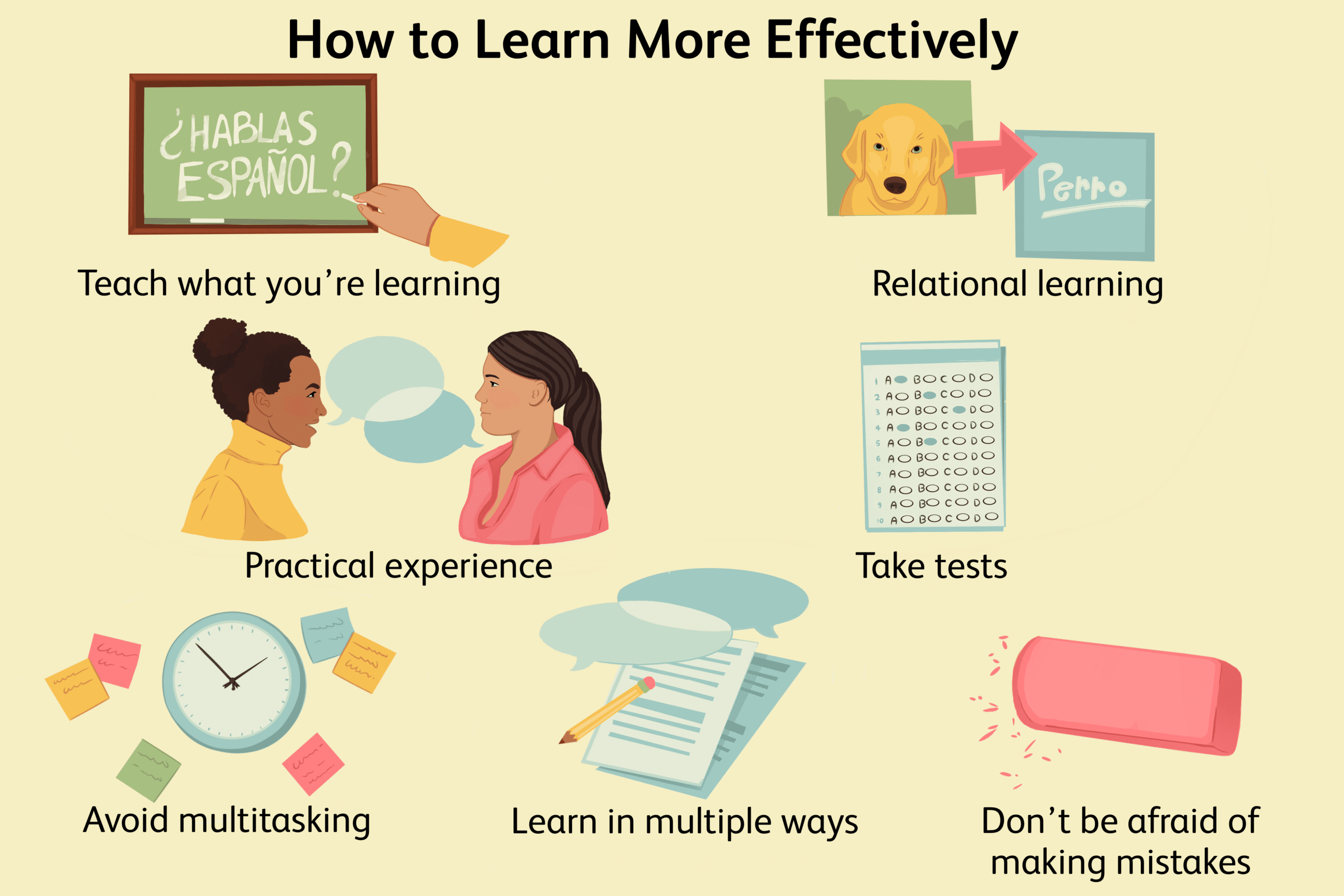
- Active recall: This approach involves testing yourself on what you’re studying. For example, you might make your own practice questions and use flash cards to quiz yourself.
- Spaced repetition: Rather than cramming all the information in one big study session, try spacing it out into shorter sessions over a period of days. This helps cement the information in your memory.
- Concept mapping: This strategy involves creating visual maps or diagrams to illustrate concepts and ideas and show how they are related.
- Teaching: Instead of just reviewing the material, try putting it in your own words, as if you were teaching it to someone else.
Knowing the most effective strategies for learning can help you maximize your efforts when acquiring new ideas, concepts, and skills. If you are like many people, your time is limited, so it is important to get the most educational value out of the time you have. Speed of learning is not the only important factor, however.
It is also important to accurately remember the information you learn, recall it later, and use it effectively in a wide variety of situations. The following are 10 strategies that can help:
Lifestyle Factors That Can Help
Lifestyle strategies can also help boost memory. To ensure you’re at your best, focus on:
Research suggests that these healthy habits can have a powerful impact on memory and overall brain health.
Practical Tips for Learning Effectively
If you want to learn effectively, building good study habits can help. Such practices include:
- Eliminating distractions
- Taking regular breaks
- Studying when you are alert
- Using good note-taking strategies
- Summarizing concepts in your own words
- Avoiding procrastination
- Maintaining an organized study space
- Organizing the information you are studying to make it easier to remember
- Using visual aids like photographs, graphs, and charts
- Reading the information you are studying out loud
Most importantly, focus on active methods that help you engage with the material. You’re less likely to retain information from passive study methods, while active learning encourages your brain to create, retain, and utilize memories.
This process can take time, and it always takes practice and determination to establish new habits. Start by focusing on just a few of these tips to see if you can get more out of your next study session.
Work on developing the mindset that you can improve your knowledge and skills. Research suggests that believing in your own capacity for growth is one of the best ways to take advantage of the learning opportunities you pursue.
