

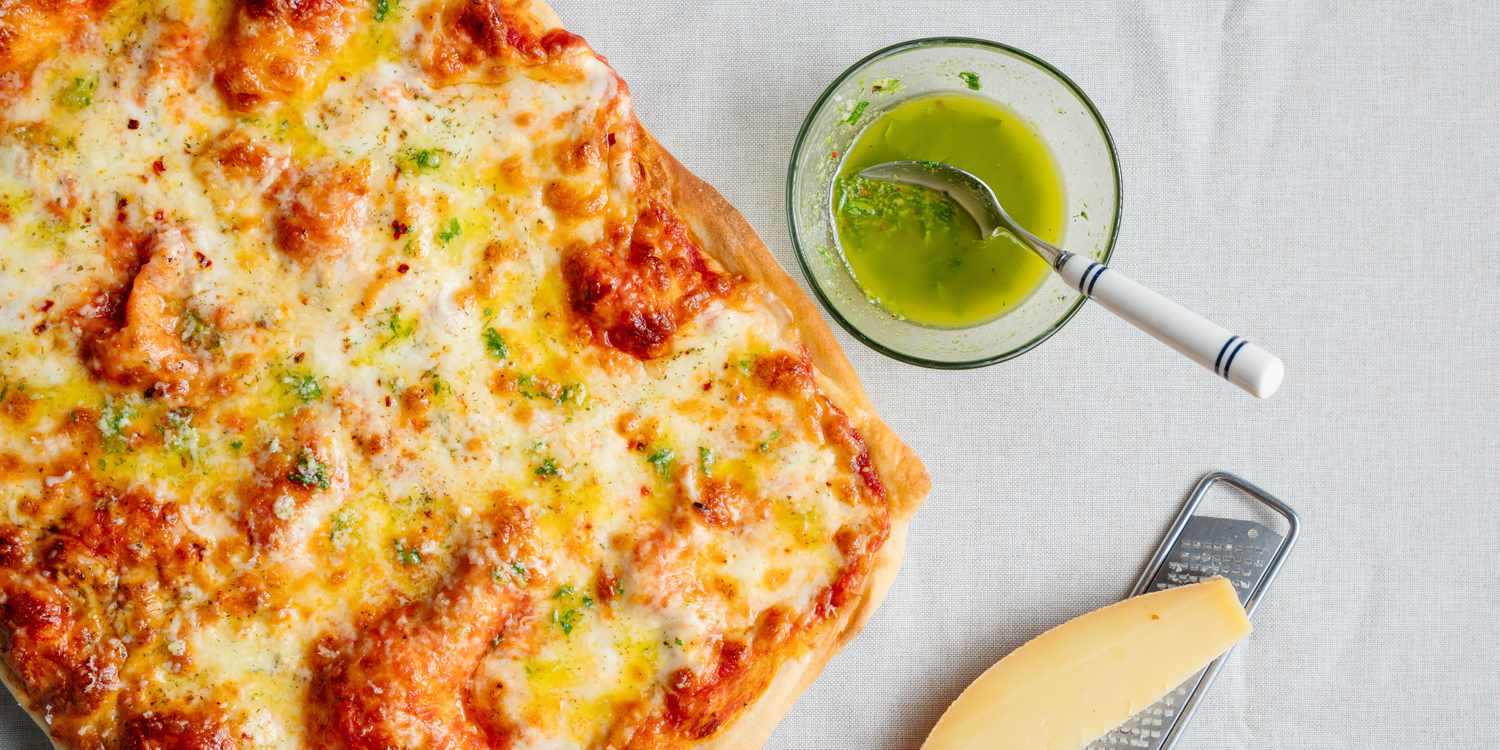
When January arrives, King Arthur captures the attention of bakers and home cooks with its annual “Recipe of the Year.” In 2024, the honor went to an ultra-soft chocolate chip cookie, followed by a big, bubbly focaccia in 2025. For 2026, the flour company is turning its focus to pizza.
King Arthur has named Flaky Puff Crust Pizza its 2026 Recipe of the Year. A laminated dough sets this crust apart, creating flaky, buttery layers throughout.
The recipe has already earned hundreds of reviews. One baker wrote, “The folds/laminations are incredibly satisfying, and the garlic-basil oil brings it over the top.” Another reviewer shared, “There are reviewers who find this recipe to be too much effort for the outcome, and then there’s me, who finds it so worth the effort that I’ve made it three times in nine days.”
With the new year underway, I set out to find a recipe that offered a true baking challenge. While trends like Japanese cheesecake yogurt have been taking center stage this January, I wanted a project that pushed my skills further. That search led me to Flaky Puff Crust Pizza.
Read on to learn how to make it, my honest take on the results, and a few tips that I learned after testing it in my own kitchen.
How To Make King Arthur’s Flaky Puff Crust Pizza
Ashia Aubourg
Making the Dough
King Arthur’s Flaky Puff Crust Pizza begins like other laminated doughs, with grated, frozen butter. The recipe calls for grating 4 tablespoons of butter and then freezing it for 30 minutes.
Next, I measured the dry ingredients into a bowl: 2 1/2 cups of all-purpose flour, 2 1/4 teaspoons of instant yeast, 1 1/4 teaspoons of table salt, and 1/2 teaspoon of granulated sugar, then mixed them together. In a separate bowl, I combined 3/4 cup of lukewarm water, between 98 degrees F (36 degrees C) and 110 degrees F (43 degrees C), with 1 tablespoon of extra-virgin olive oil. I then combined the wet ingredients with the dry until a dough formed.
On a lightly floured surface, I kneaded the dough for about 2 minutes, then let it rest at room temperature for 30 minutes.
Laminating the Dough
After resting, I transferred the dough to a lightly floured surface and rolled it into a 10-by-13-inch rectangle. Working quickly, I sprinkled most of the frozen grated butter over the surface, reserving about 1 tablespoon for later. With lightly floured hands, I pressed the butter into the dough to help it stick.
I folded the left third of the dough toward the center, then folded the right third over the top to create a letter fold. I sprinkled the remaining butter over the surface and pressed gently to help it adhere. Next, I folded the dough in the opposite direction, bringing the top third toward the center and folding the bottom third over it to form a rectangle about 1 inch thick.
I rolled the dough into a large rectangle until it started to resist, then covered it with a sheet pan and let it rest for 15 minutes.
Assembling the Pizza
While the dough rested, I positioned a rack in the middle of the oven and preheated it to 450 degrees F (230 degrees C).
After 15 minutes, I uncovered the dough and rolled it out on a parchment-lined sheet pan. After transferring the dough, I popped any air bubbles that formed. Then, I let the dough rest for another 15 minutes.
Meanwhile, I prepared the toppings: 2/3 cup of pizza sauce, 1/4 cup of grated Parmesan, 8 ounces of shredded mozzarella, and 4 ounces of cubed mozzarella. Once the dough finished resting, I added the toppings and baked the pizza for 15 to 17 minutes.
While the pizza baked, I made a garlic basil oil by mixing 1/4 cup of extra-virgin olive oil, 2 heaping tablespoons of minced basil, 1 teaspoon of lemon juice, 1/2 clove of grated garlic, and a pinch each of table salt and red pepper flakes.
This pizza impressed me from the first slice. The crust did not flake like a croissant, but it delivered the kind of layers you’d find when breaking open a biscuit. The visible layers throughout the crust confirmed that the lamination was successful, which was my greatest concern. Although the process takes around two hours from start to finish, the results justify the time, and I look forward to using this dough again for future pizzas.
Tips for Making King Arthur’s Flaky Puff Crust Pizza
Ashia Aubourg
Doughs can be tricky, especially when working with yeast, resting times, and lamination techniques, but this recipe provides dependable results. After testing it in my own kitchen, below are a few tips I’d suggest to guarantee success:
- Use frozen butter. Rushing through this recipe may tempt you to skip freezing the grated butter, but that step matters. Keeping the butter cold during lamination creates distinct layers, resulting in the flaky crust you want in this recipe.
- The yeast type matters. This recipe leans on instant yeast, which begins working as soon as it’s mixed into the dough. Substituting for active dry yeast requires blooming it in water, while fresh yeast provides less potency if you’re trying to substitute the same amount.
Add toppings only after the oven fully preheats. Layering marinara sauce and cheese too early introduces moisture into the dough and can affect the final texture. Waiting to assemble the pizza until just before baking helps deliver a crust that isn’t soggy.
