

Whenever new friends find out that I’m a food critic, they assume it’s all glamour. Sure, trying every new restaurant in my area on a company card is pretty cool, but it comes with some drawbacks. The biggest? I have to try different meals on command all the time, and my choices aren’t always as healthy as I wish they could be.
I lost my gall bladder to this very cause in 2013, after which I cut my weight down by 30 pounds. But in the last four years, since I got married, I’ve struggled to find that kind of motivation. As I’ve been eating more fatty leftovers and fewer healthy homemade meals, my clothes have slowly become tighter. I finally realized it was time to make a change.
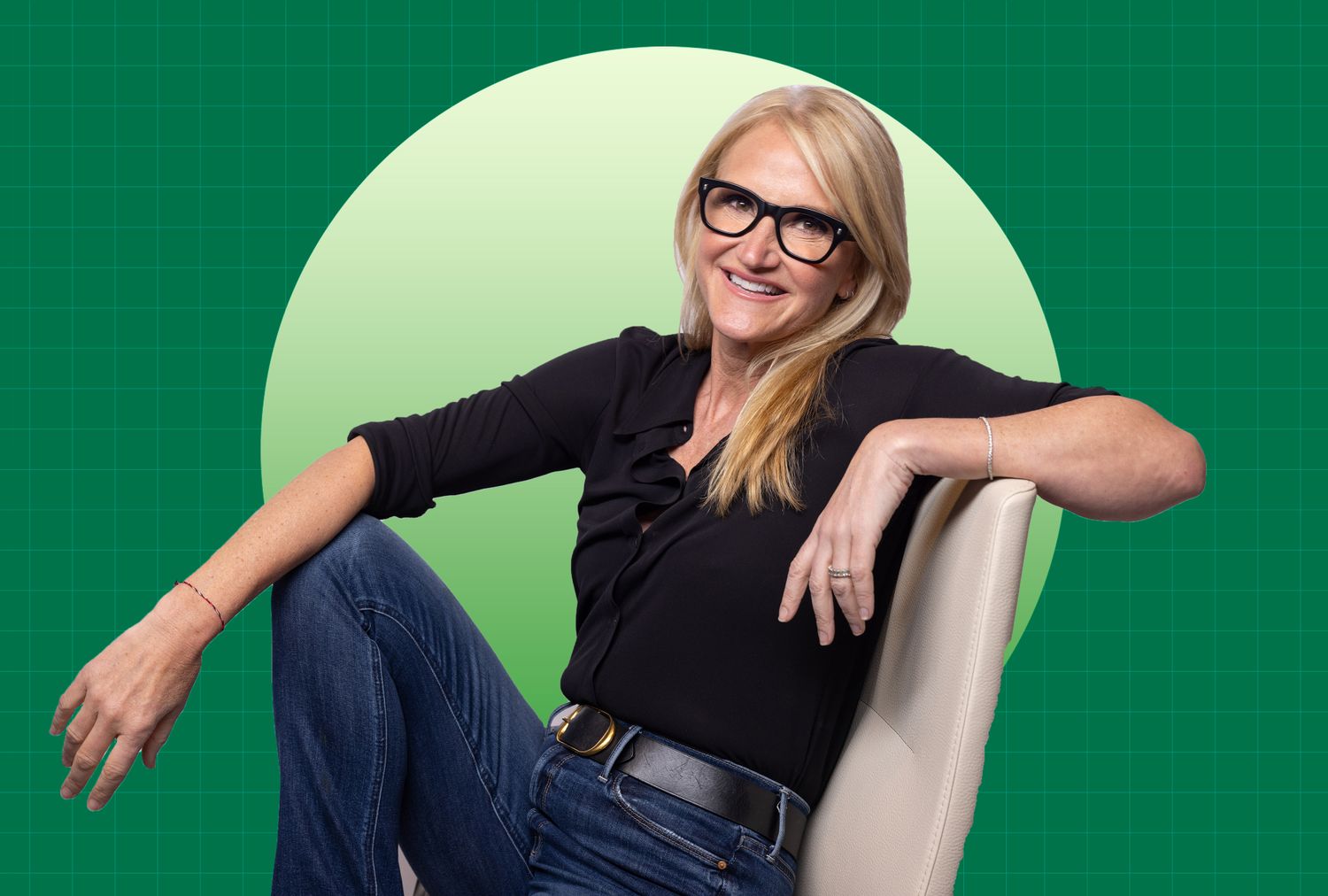
Now, it’s important to understand that I’m not your typical self-help reader—I’ve never been one to join clubs or fads, and am more than a bit skeptical of the qualifications of most people who make a living telling others what to do. But when a colleague floated the idea of Mel Robbins’ The 5 Second Rule as a helpful trick, I was open to learning more.
Robbins is very forthcoming about the fact that she’s not a medical professional and has no formal training in psychology, yet she claims that this simple rule completely changed her life. And it’s worked for way more than just her—The 5 Second Rule has sold more than a million copies and been translated into more than 30 languages.
So, while I normally am resistant to these things, I was desperate enough to buy a copy.
What Is the 5 Second Rule?
Robbins’ inspiration for the 5 Second Rule came from watching a countdown to liftoff in a TV commercial featuring a rocket launch. One fateful evening, she decided to use the same 5-4-3-2-1 sequence to “launch” herself out of bed the next morning instead of hitting the snooze button—a habit most of us know all too well. Surprisingly, it worked. She then began applying it to other aspects of her life. “I ignored how I felt. I didn’t think. I did what needed to be done,” she recalls in The 5 Second Rule.
As a natural skeptic, I wanted to see whether it actually worked—and also understand why she was so confident about it. While doing research for her book, Robbins explains that what she coined as the “5 Second Rule” is actually known as a “starting ritual,” which engages the brain’s prefrontal cortex. Other common terms for this include cue‑based action triggers or pre‑performance routines.
“When you count backwards, you mentally shift the gears in your mind,” she explains. “You interrupt your default thinking and do what psychologists call ‘assert control.’” Essentially, it stops you from overthinking and propels you into immediate action.
The 5 Second Rule is very simple: whenever there is a task you don’t want to do, count backwards from 5 to 1, then force yourself to do it.
And yes, she uses going to the gym as an example more than once in her book.
My Personal Experience
The day after I began reading The 5 Second Rule, I woke up and skipped working on a story in favor of getting on my Peloton. I didn’t have a deadline that day, so it was possible—but that’s not true most days. Usually, a story is due, and I have to finish it before I can even think about counting down to 1.
I tried to think back to when I first got my Peloton a decade ago and worked out every day. What made it easier then? First, I was 10 years younger and had more energy. Second, I was also alone in a new city, with plenty of initiative—and very few responsibilities—that allowed me to hop on the bike between the office and my next work meal.
My life has changed a lot since then, and I knew I couldn’t replicate those circumstances. But I could use a rocket boost to get off the couch. Unfortunately, the 5 Second Rule didn’t quite speak to me. I would count down “5-4-3-2-1” and then do nothing—or I’d end up doing something else entirely. I found it was embarrassingly easy to ignore that new voice in my head.
Another memory from my early Peloton days? My favorite instructor, Christine D’Ercole, used mantras that always motivated me, such as her most famous: I Am, I Can, I Will, I Do. Could a mantra—or “self-talk”—be my secret sauce? I called licensed psychotherapist, Sarah Greenberg, M.F.T., to learn more.
“The research really supports that self-talk connects to real brain responses,” she told me. “So when we take a more productive form of self-talk, it can really influence mood, it can influence behavior and it can reduce some of the unconscious stress that we’re putting on ourselves.”
But even that didn’t fully do the trick. The real game-changer? As it usually is, it was advice from my mother. Actually, it wasn’t so much advice as an off-the-cuff remark. She had told her doctor that she struggles to find the drive to exercise daily. He told her that at 79, moving her body was a “use it or lose it” proposition.
“Use it or lose it.” Those five words spoke to me. I finally found something that worked: a combination of self-talk and what Greenberg calls a “tool, technique or strategy.” This gave me the drive to exercise more consistently.
Sometimes I will work out between work and dinner. Other times, it’s just when I have a free hour or even just 10 minutes to do an arms or ab class. Either way, I realized it’s better to move a little than to let my body stagnate, floating from meal to meal, assignment to assignment.
My Overall Thoughts
I’ve only been telling myself to “use it or lose it” for about a month, so I haven’t slipped back into my favorite jeans yet. Still, I’m noticeably on a better path. The 5 Second Rule, unfortunately, didn’t last long for me.
While the rule itself didn’t become the life-changing method I hoped it would, reading Robbins’ book and learning her techniques helped guide me toward success in my own way—and helped me discover what truly motivates me to take action. It made me more aware of my own potential for change and for forming healthier habits.
I became more mindful, which helped me notice other habits affecting my health and life. That awareness stopped me from overeating at a restaurant and also made me a better wife and friend by improving my ability to step back and consider other people’s needs. And really, I think that counts for something.
So, while the 5 Second Rule didn’t transform my life as I’d hoped, it did “launch” me on my own journey of change.
