

2026 Trends
Initiative Chair: Jackie Roby, Relationship Mindset Coach, Inspired Journey Consulting, United States
Initiative Vice-Chair: Cherrie Catresse, Wellness Practitioner with Catreese & Co Wellness
The language and priorities surrounding diversity, equity and inclusion continue to evolve across the wellness industry. In many regions, shifting political climates and changing workplace dynamics are influencing how organizations approach inclusion, belonging and wellbeing. At the same time, new research and emerging social patterns are expanding how inclusive wellness is understood.
Increasingly, the conversation is moving beyond individual health behaviors toward the broader systems and environments that shape wellbeing. Workplace culture, social connection, health systems and the built environment are all playing a role in determining whether people have equitable opportunities to live healthy and fulfilling lives.
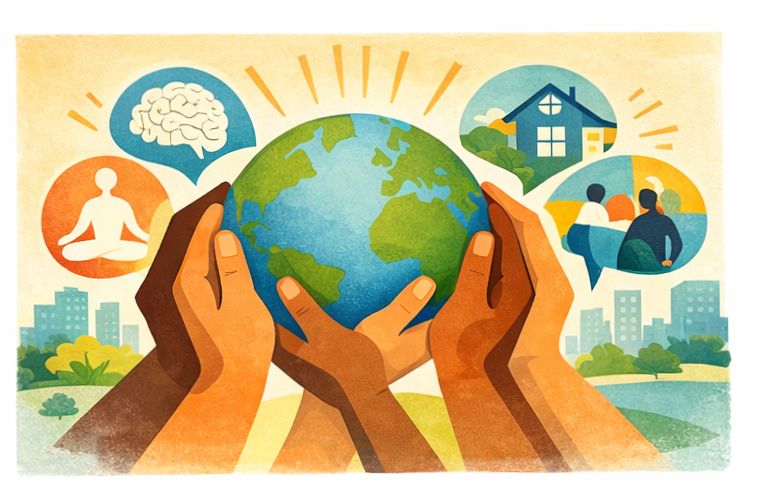
The trends emerging in 2026 reflect this expanding perspective. From the redesign of workplaces and the integration of neurodiversity into wellness practices to the growing longevity economy and community informed architecture, the industry is beginning to recognize that inclusive wellness requires both cultural awareness and structural change.
Together, these trends highlight an important shift. Inclusive wellness is no longer only about providing access to services. It is about designing systems, environments and practices that support the health, dignity and resilience of diverse populations.
TREND 1: Neurodiversity and the Rise of Whole Person Nervous System Care
Conversations around mental health and workplace inclusion are increasingly expanding to include neurodiversity, particularly conditions such as Attention Deficit Hyperactivity Disorder (ADHD). Historically, ADHD has often been framed narrowly as a behavioral or attention disorder treated primarily through medication.
Emerging research and advocacy from the neurodivergent community are encouraging a broader perspective. ADHD is increasingly understood as involving nervous system regulation, emotional processing and executive functioning. Practices such as physical activity, mindfulness, yoga and other body-based approaches have shown potential to support attention, emotional regulation and stress management.
This shift has important implications for inclusive wellness. Individuals from historically disadvantaged groups (HDGs) often face barriers to diagnosis and treatment including financial limitations, stigma and lack of culturally competent care. As a result many individuals seek complementary approaches that support neurological regulation and overall wellbeing.
As awareness grows, organizations and wellness providers are beginning to rethink how environments are designed to support different cognitive styles. The emerging model is not medication or lifestyle, it is medication and lifestyle, tailored to the individual. Personalized treatment frameworks combining conventional care with mindfulness, movement and environmental design are replacing one-size-fits-all approaches across healthcare systems globally. For wellness practitioners, centering accessibility through sliding scale pricing, culturally relevant programming and practitioners from HDGs ensures these tools reach the communities who need them most and have historically been excluded from both conventional care and premium wellness spaces. This conversation naturally extends into the next phase of the workplace evolution.
Resources:
TREND 2: From Accommodation to Design – Building Neuroinclusive Workplaces
For many years ADHD in the workplace has been treated primarily as an individual accommodation issue. Employees might request flexible deadlines, quieter workspaces or modified schedules if they felt comfortable disclosing their condition. This approach placed the burden on individuals rather than examining how workplace structures themselves might contribute to cognitive strain.
Research increasingly suggests that this model is insufficient. Studies have shown that adults with ADHD in full time employment often experience lower income, more workplace warnings and greater difficulty maintaining relationships with supervisors and colleagues due to executive functioning challenges that traditional workplace structures rarely accommodate. A 2025 Understood.org survey of neurodivergent adults in the workplace found that 82% experience pressure to mask their neurodivergence due to stigma. Masking is exhausting work. It consumes the cognitive and emotional bandwidth employees would otherwise spend doing their actual jobs. When people cannot be their authentic selves at work, the emotional tax accumulates.
The conversation is now shifting from accommodation to design. Rather than waiting for individuals to disclose their needs, some organizations are beginning to redesign work environments so they support diverse cognitive styles from the outset. Clearer communication structures, predictable workflows, flexible work environments and leadership training on neurodiversity are becoming part of broader workplace wellbeing strategies. Emerging tools are also expanding what support can look like. Research on virtual body-doubling (the practice of working alongside another person to support focus and task completion) found that participants with ADHD completed tasks faster and reported greater sustained attention when paired with a human or AI body double versus working alone. Executive-function coaching, once considered a niche offering, is beginning to appear in broader employee benefit ecosystems alongside mental health, sleep and stress programming.
This shift reflects a deeper recognition that psychological safety and inclusion influence not only individual wellbeing but also how people experience connection at work.
Resources:
TREND 3: The Reframing of DEI in a Changing Political Climate
As the political climate shifts in the United States following the most recent election cycle, the language surrounding Diversity, Equity and Inclusion (DEI) is undergoing significant transformation. In some contexts, the term “diversity” itself has become politically charged, with reports indicating that certain organizations and government-funded programs have been advised to avoid using the term altogether.
This evolving environment is influencing how companies communicate their commitments to inclusion and workplace wellbeing. In response, many organizations are rebranding DEI initiatives under alternative frameworks such as belonging, inclusion, respect, culture and wellness. Media reporting and industry observations suggest that departmental titles are also changing accordingly. For example, Google has reframed its DEI leadership role as Vice President of Googler Engagement, reflecting a broader trend toward shifting the language used to describe this work.
For some organizations, these changes represent an effort to continue advancing representation, fairness and bias reduction while remaining compliant with evolving legal and political expectations. In these cases, the underlying commitment may remain intact even as the terminology evolves.
However, shifts in language can also carry implications for accountability and clarity. Scholars and commentators have noted that replacing terms such as “equity” with broader concepts like “belonging” may unintentionally dilute the specificity of the work being undertaken. While belonging is an important dimension of workplace culture, it does not necessarily address structural disparities in the same way equity-focused initiatives are intended to do.
Changing terminology can therefore create both opportunities and challenges. On one hand, reframing language may allow organizations to continue advancing inclusion efforts in politically sensitive environments. On the other hand, it may introduce ambiguity, making it more difficult to evaluate whether meaningful progress toward equity is being maintained.
Ultimately, the impact of these efforts depends less on terminology and more on integration. As long as inclusion and equity remain framed as standalone initiatives rather than embedded into organizational systems, leadership accountability and operational practices, changing the name of the work alone is unlikely to produce lasting change.
As organizations reconsider how workplaces support diverse cognitive styles, broader conversations are also emerging around how inclusion itself is defined and communicated within organizations.
Resources:
TREND 4: Employee Wellbeing as a Strategic Driver of Organizational Success
Employee engagement and wellbeing are becoming increasingly interconnected. Global workforce surveys indicate declining engagement levels, prompting organizations to reconsider how workplace culture and wellness initiatives influence long-term organizational performance.
Workplace wellbeing is also being understood more broadly than in previous decades. It now encompasses multiple dimensions including mental health, financial stability, social connection and a sense of purpose within one’s role. When employees feel supported across these areas they are more likely to remain engaged, creative and committed to their organizations.
At the same time, research increasingly highlights the relationship between wellbeing and organizational outcomes. Studies from global institutions and workplace research organizations suggest that environments supporting employee health and engagement are associated with stronger productivity, improved retention and more resilient organizational cultures.
Financial stability is also gaining recognition as a component of workplace wellbeing. Economic inclusion research continues to highlight persistent pay disparities across many sectors, shaping employees’ access to stability and long-term financial security. When financial wellbeing is unevenly distributed across a workforce, stress and economic uncertainty can influence both individual health and workplace engagement.
Social connection remains another critical factor. Hybrid work environments, evolving workplace dynamics and rising social polarization are changing how employees interact with colleagues and leadership. As opportunities for informal connection decline, organizations are increasingly exploring ways to foster stronger relationships and shared purpose within teams.
Together these dynamics are prompting many organizations to view employee wellbeing not as a standalone initiative, but as an integral component of sustainable workplace systems.
Resources:
TREND 5: The Longevity Imperative and the Redesign of Health Systems
Global aging is rapidly transforming the priorities of health systems and the wellness economy. By 2030, every baby boomer will be over 65. Adults over 80 are the fastest-growing demographic in many nations. Nearly 70% of older adults will require long-term support in their lifetime.
For decades healthcare systems were designed primarily to diagnose illness, treat acute conditions and discharge patients. As populations live longer this reactive model is becoming increasingly unsustainable.
The growing longevity economy is shifting attention toward prevention, functional health and the ability to age safely within communities. The World Health Organization’s Decade of Healthy Ageing highlights the importance of environments that support mobility, accessibility and social participation across the lifespan.
This transformation is reshaping industries far beyond healthcare. Housing, transportation, food systems, digital monitoring and community infrastructure are increasingly viewed as part of the broader health ecosystem.
For CEOs, boards and global investors, audit your organization for longevity bias, integrate social infrastructure into capital planning, align reimbursement strategy with distributed care and treat caregiving as an economic variable. Shift dashboards to include mobility trajectories, cognitive screen trends, social isolation risk and caregiver strain metrics.
As attention turns toward how environments influence long term health, the intentional design of communities themselves is emerging as an important area of focus.
Resources:
TREND 6: Community Informed Development and the Future of Wellness Architecture
Inclusive wellness increasingly recognizes that health outcomes are shaped not only by individual behaviors but also by the environments where people live, work and gather. Architecture and development decisions influence access to nature, mobility, housing stability and opportunities for social connection. Architectural conversations around affordable housing have similarly emphasized that urban design decisions should reflect the lived experiences of local communities.
Public health research highlights that the conditions in which people are born, grow, live, work and age strongly influence health outcomes and health equity. Built environments that support walkability, shared spaces and stable housing can strengthen community cohesion and improve long term wellbeing.
Participatory planning tools such as Maptionnaire are enabling developers to gather community insight through digital mapping and surveys so residents can identify neighborhood priorities that may otherwise be overlooked.
Architecture firms are increasingly integrating these approaches into practice. The US firm David Baker Architects has emphasized community based hospitality design, incorporating resident feedback in projects such as the Harmon Guest House in Healdsburg, California. Global firms including Gensler and HKS are also expanding community engagement strategies within urban planning and hospitality design.
As inclusive wellness expands globally, another important conversation is emerging around the cultural origins of many healing practices.
Resources:
TREND 7: Cultural Integrity and the Ethical Integration of Traditional Chinese Medicine
As interest in holistic wellness practices grows, traditional healing systems are gaining greater global visibility. Traditional Chinese medicine and acupuncture in particular are becoming increasingly integrated into healthcare and wellness environments beyond their cultural origins.
These systems approach health through a holistic framework emphasizing balance within the body and harmony between physical, emotional and environmental factors. Practices including acupuncture, herbal medicine and mind body movement aim to restore equilibrium and support natural healing processes.
The global expansion of these practices reflects a broader shift toward integrative wellness models that combine conventional medical care with complementary therapies.
However this growth also raises important ethical considerations. When traditional healing practices are adopted without cultural context or collaboration with practitioners connected to those traditions, there is a risk of cultural appropriation and loss of historical meaning. Responsible integration requires cultural humility, proper training and recognition of the communities that developed these healing systems.
Resources:
EXPLORE THE INCLUSIVE WELLNESS INITIATIVE
