

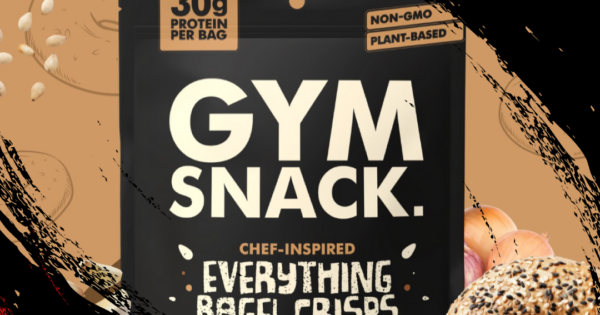
Gym Snack Everything Bagel packs 30g protein per bag — no seed oils, no junk. Extruded pea protein + a deep-marination process means flavor baked in, not dusted on. Real satiety, clean macros, and a morning snack that actually works.
When Gym Snack launched with Cheddar and Jalapeño Cheddar Cheeze Bits, the brand brought the protein snack market something it desperately needed: a savory, crunchy option delivering 30 grams of protein per bag without seed oils or junk ingredients. Now, Everything Bagel flavor shows how versatile this ingredient platform can be when you design from first principles instead of copying existing products.
As Nate Frazier and Brooks Thomas of Louisville Brands explained in Episode #201 of the PricePlow Podcast, Everything Bagel came directly from consumer feedback. Early morning workout enthusiasts loved the cheese flavors but wanted something better for pre-dawn training. Developing Everything Bagel quickly in their Louisville facility shows why owning your manufacturing matters.
But the real story isn’t another flavor launch. It’s understanding why this ingredient combination lets Gym Snack deliver what other protein snacks can’t: actual satiety, clean digestion, and satisfying texture without compromising macros. Everything Bagel gives us a lens to examine the ingredient platform making all three flavors work.
Complement Your Fitness Journey with a Savory Science-Backed Snack
Gym Snack positions itself as a unique complement to your fitness journey. The brand’s philosophy centers on the “you vs. you” mentality: giving you tools to support your personal progress rather than adding another hurdle to navigate. That means clean ingredients, honest macros, and genuine satiety that helps you hit your protein targets without fighting your own biology.
This article gets technical, and is a follow-up of our original Gym Snack introduction. You can review that article, or forge ahead to see why the science really adds up with this snack — both in terms of flavor and efficacy.
Gym Snack GYM Snack – Deals and Price Drop Alerts
Get Price Alerts
No spam, no scams.
Disclosure: PricePlow relies on pricing from stores with which we have a business relationship. We work hard to keep pricing current, but you may find a better offer.
Posts are sponsored in part by the retailers and/or brands listed on this page.
This area is reserved for Team PricePlow’s upcoming videos.
Subscribe to our channel and sign up for notifications so you catch it when it goes live!
Gym Snack’s Everything Bagel Nutrition Facts (per 2oz Bag)
The new Everything Bagel flavor brings the following macros in each bag (spread amongst two servings):
-
Calories: 330
-
Protein: 30g
-
Total Carb: 20g
-
Dietary Fiber: 3g
-
Total Sugars: 9g
-
-
Total Fat: 14g
As we’ll see later in this article, the high amount of protein compared to the other macros is quite an impressive feat.
The Textured Pea Protein Foundation
Before diving into what Gym Snack does with textured pea protein, it’s worth understanding why pea protein works in the first place. As we covered in our original Gym Snack article, pea protein isolate delivers comparable muscle thickness gains to whey protein when combined with resistance training, making it a legitimate alternative to animal-based proteins.[1] But the protein powder you mix into shakes can’t create the texture that makes Gym Snack work. For that, you need high-moisture extrusion cooking.
-
The Extrusion Process: Heat, Pressure, and Transformation
High-moisture extrusion cooking (HMEC) takes pea protein isolate and forces it through a twin-screw extruder at temperatures between 165°C and 175°C, moisture content of 55% to 60%, and screw speeds of 150 to 200 rpm.[2] Research shows optimal texturization occurs at 55% moisture, 175°C barrel temperature, and 200 rpm screw speed.[2]
Through this process, the protein experiences intense mechanical shear combined with thermal stress inside the extruder barrel. When the protein reaches the discharge end, it passes through a long cooling die where rapid temperature reduction locks the denatured proteins into their new structure. The result is flat, ridged flakes with substantial surface area and a fibrous internal structure resembling something you’d expect from a snack mix bag.
-
What Happens to the Protein Molecules
The high heat and pressure trigger a controlled structural change in a way that differs dramatically from pea protein powder: the protein molecules unfold from their native three-dimensional structure. In the extruder, this unfolding is followed by reaggregation where proteins interact with each other to form new cross-linked patterns.
The transformation changes how proteins behave and look. Extruded pea protein has a fundamentally different molecular architecture than the powder form, which is why it interacts differently with water, seasonings, and other ingredients.[2] The proteins become less soluble during extrusion, which sounds like a problem but is actually the goal. Lower solubility means the proteins have locked into new structures that give the material its characteristic chew and bite instead of dissolving away.[2]
-
Why Ridged Flakes Matter
A savory protein snack that doesn’t compromise. Gym Snack brings 15g plant protein per oz in crunchy form with zero seed oils, olive oil base, and real ingredients. Cheddar Cheeze and Jalapeño Cheddar flavors that taste like actual food.
The extrusion process creates a specific physical structure: flat flakes with ridges and valleys running across the surface. This topology matters for what happens next in Gym Snack’s manufacturing process. Those ridges increase total surface area available for marinade absorption. The valleys create channels where liquid can penetrate through capillary action during rehydration.
Compare this to pressing pea protein powder into shapes. You’d get density but not the aligned fibrous structure that comes from forcing partially melted protein through a die. The shear forces inside the extruder align protein molecules in the direction of flow, creating non-uniformity. So the protein has different characteristics when you bite across the grain versus with it. That’s why Gym Snack measures different cutting strengths in vertical versus parallel directions.
-
Digestibility and Bioavailability
Does extrusion affect how your body processes the protein? Research shows that digestible indispensable amino acid scores (DIAAS) for pea protein can vary based on processing method,[3] but Gym Snack claims 97.3% true digestibility, which would put extruded pea protein above the digestibility scores typically cited for pea protein isolate powder.
The controlled denaturation during extrusion may actually improve amino acid bioavailability by breaking down by making the protein structures more accessible to digestive enzymes. However, direct comparison studies between extruded pea protein products and pea protein isolate powder for absorption and satiety remain a research gap. What’s established is that the extrusion process creates a different protein matrix than what exists in powder form, and that matrix holds together better during digestion.
The Marination Process: Why Penetration Beats Surface Coating
Most protein snacks dust seasoning on the surface because it’s faster and cheaper. The result: flavor powder at the bottom of every bag and inconsistent taste. Gym Snack takes a different approach borrowed from traditional meat preparation: they use marination through controlled rehydration.
The extruded pea protein arrives dehydrated with its ridged, porous structure intact. Louisville Brands rehydrates it with their proprietary marinade containing all the flavor ingredients: distilled white vinegar, lemon juice, olive oil, nutritional yeast, coconut aminos, and spices. The marinade penetrates throughout the protein matrix through osmotic pressure and capillary action along those extruded channels, not just coating the exterior.[4]
The acids (acetic acid from vinegar and citric acid from lemon juice) do more than add brightness, too.[4] They interact with protein structure, helping the pea protein matrix “open up” to absorb flavor compounds more completely. The olive oil carries fat-soluble aromatics from garlic, onion, paprika, and turmeric deep into the protein, binding them within the structure.
After marination, secondary dehydration at low temperature removes moisture while preserving those integrated flavor compounds and creating the crispy texture. Every bite delivers consistent, bursting flavor because the seasoning isn’t sitting on the surface… it’s embedded throughout the protein itself.
But that’s not all. Now we need to discuss more on what it’s marinated and seasoned with:
The Umami System: Nutritional Yeast + Coconut Aminos
The cheese flavors achieve savory depth without dairy through nutritional yeast and coconut aminos. Both contribute umami compounds, but their combination creates something more powerful than either alone.
-
Nutritional Yeast: Glutamate and Nucleotide Powerhouse
Nutritional yeast contains naturally-occurring glutamate, the amino acid responsible for umami taste. Unlike added MSG (monosodium glutamate), which carries stigma despite FDA and EFSA recognition as Generally Recognized As Safe,[5] glutamate from nutritional yeast appears on labels simply as “nutritional yeast”. Functionally, they’re the same compound triggering the same taste receptors.
But nutritional yeast provides more than glutamate. It also contains nucleotides, specifically guanylate (GMP) and inosinate (IMP). These compounds activate the T1R1/T1R3 heterodimer, the receptor protein complex mediating umami taste.[6] While genetic variation in TAS1R1 and TAS1R3 genes means individuals have different umami sensitivities,[7] the fundamental mechanism works universally.
-
Coconut Aminos: Fermented Complexity
Coconut aminos brings depth beyond glutamate alone. Produced through fermentation of coconut palm sap, lactic acid bacteria transforms the sap’s sugars and free amino acids into organic acids and aromatic compounds. The fermentation develops complex savory notes similar to soy sauce production but using coconut instead of soybeans.[8,9]
The amino acid profile resembles soy sauce while avoiding soy and gluten entirely. Functionally, coconut aminos provides savory complexity that balances the brightness from vinegar and lemon juice in Gym Snack’s marinade, preventing the acids from dominating while supporting the umami foundation.
-
The Synergistic Effect
The combination creates “cheese-like” character through umami synergy, yet without any dairy or animal sources. When equal amounts of glutamate and GMP combine, they produce a 30-fold increase in perceived umami intensity compared to glutamate alone.[10] This isn’t additive (1 + 1 = 2) but multiplicative (1 + 1 = 30).
The amplification occurs through a mechanism where nucleotides bind adjacent to where glutamate binds, stabilizing parts of the receptor and dramatically enhancing the signal.[11] Think of glutamate as unlocking the door and nucleotides as propping it open. Both together keep the receptor activated longer and more strongly.
The result is savory fullness integrated throughout the protein matrix. During marination, these flavor compounds penetrate the textured pea protein structure. After secondary dehydration, they remain bound within the protein, delivering consistent umami depth in every bite without dairy-based cheese powder.
The Fat Choice: Why Olive Oil Works
The snack industry defaults to cheap seed oils (canola, sunflower, soybean) for simple economics. Olive oil costs more, period. But for a product positioning itself on clean ingredients, the choice makes sense beyond marketing.
-
Oxidative Stability
Seed oils are polyunsaturated fats high in omega-6 linoleic acid that oxidize readily during processing and storage.[12] When extracted, refined, bleached, and deodorized at high temperatures, they form oxidation products like lipid peroxides and aldehydes that create inflammatory potential. By the time seed oils reach your snack, they’ve been through significant oxidative stress.
Olive oil is predominantly monounsaturated oleic acid, which is far more stable. It handles the secondary dehydration process without significant oxidation. The polyphenols naturally present provide additional antioxidant protection. For a product sitting in bags on shelves (or gym bags), this stability matters for both flavor preservation and avoiding rancidity.
-
Fat-Soluble Flavor Delivery
Many flavor compounds in Gym Snack’s spice blends (the aromatics from garlic, onion, paprika, turmeric) are fat-soluble. Olive oil acts as a carrier, helping these compounds coat and penetrate the textured pea protein during marination. After secondary dehydration, those fat-soluble flavors remain integrated, creating consistent taste throughout instead of volatile aromatics that dissipate.
The mouthfeel contribution can’t be ignored. Olive oil provides richness and rounds out the sharp acids (vinegar, lemon juice) and umami depth (nutritional yeast, coconut aminos) without making the product greasy. At 7 grams per serving, the amount carries flavors and signals satiety without dominating the macro profile. More on this when we discuss the snack’s protein leverage below.
-
The Cost Signal
Choosing olive oil over seed oils signals brand priorities. It’s more expensive, which means accepting lower margins or charging slightly more. Louisville Brands chose ingredient quality, which aligns with avoiding artificial colors, flavors, and preservatives elsewhere in the formula. For consumers reading labels and avoiding seed oils specifically, it’s a meaningful difference.
As Nate Frazier mentioned in the podcast, “regardless of where you fall on the political spectrum about seed oils, I think we can all agree that olive oil is the best.” That’s the positioning: not wading into controversial territory, just choosing the ingredient that’s been used for thousands of years and happens to work better for this application.
Everything Bagel: Proof of Platform Versatility
Everything Bagel shows why owning your manufacturing facility and having an in-house chef matters. When morning workout customers requested a flavor better for pre-dawn training, Louisville Brands could respond quickly because they control the entire production process.
The Everything Bagel ingredient list shows how the platform adapts:
The Constant Base:
- Textured Pea Protein (same extrusion, same base)
- White Vinegar + Lemon Juice (acid structure)
- Olive Oil (fat delivery)
- Nutritional Yeast (umami foundation)
- Coconut Aminos (depth and complexity)
- Garlic, Salt, Spice (aromatic base)
The Flavor-Specific Additions:
- Hemp Hearts: Adds nutty flavor, textural interest, and visual appeal (you see the seeds). Also contributes omega-3 ALA and additional plant protein.
- Organic Apple Cider Vinegar Powder: Provides tangy brightness in dry form, complementing the liquid vinegars. Creates the “bagel” acidity profile.
- Specific Spice Blend: While the exact everything bagel spice mix isn’t detailed, this is where sesame, poppy seed, dried onion, and other traditional bagel seasonings would appear.
The sugar content is slightly higher in Everything Bagel (4g per serving vs 3g in cheese flavors), likely from the spice blend and dried onion components containing natural sugars. Sodium increases to 470mg per serving (vs 230mg in cheese flavors) to match the saltier profile expected from everything bagel seasoning. These adjustments show the platform can accommodate different flavor targets by modifying specific components while maintaining core protein delivery (still 15g per serving, 30g per bag).
What’s notable is that the base formula doesn’t change. The extruded pea protein, marination process, olive oil, and umami system stay constant. Everything Bagel proves the platform works for morning snacking, savory breakfast contexts, and even as a bagel substitute. Some customers report using it as a salad topper or crouton replacement. The cheddar-based flavors target post-workout and afternoon snacking. Everything Bagel hits a different daypart and use case.
This flexibility matters for future flavor development. As Brooks mentioned in the podcast, the R&D team has already developed other flavors, including tikka masala and potential sweet options like brown butter toffee. The marination platform that creates Everything Bagel can theoretically handle almost any flavor profile that benefits from the protein base and crunchy texture. The limitation isn’t the base technology but finding flavors that make sense for the target consumer and maintain the clean ingredient commitment.
Everything Bagel also shows Louisville Brands’ consumer feedback loop. They’re not just pushing flavors they think will work but responding to specific requests from actual users who wanted this exact product for this exact use case. That responsive approach, enabled by owning manufacturing, creates the kind of product-market fit co-manufactured brands struggle to achieve.
Looking for other flavors, though? Here’s an up-to-date list of all of the Gym Snack Flavors seen on PricePlow:
Why This Creates Real Fullness
Gym Snack claims “real fullness” and positions itself for GLP-1 agonist users. The science behind why this works is based on converging research on protein leverage, gut hormone signaling, and digestibility.
-
Protein + Fiber Synergy
The 15g of pea protein per serving addresses a fundamental driver of overconsumption: protein leverage. Research from Simpson and Raubenheimer shows that humans regulate protein intake more tightly than fat or carbs.[13] When protein drops below approximately 15% of total calories (standard for ultra-processed snacks), people compensate by overeating everything else!
Gosby et al. found subjects on a 10% protein diet consumed 12% more total calories, with the excess coming almost entirely from between-meal snacks.[14] This explains why hitting that 15-16g protein target per serving matters. It’s not arbitrary. It’s the threshold where your body stops driving you to eat more.
But protein doesn’t work alone. The 2-3g of fiber per serving triggers gut hormone release through multiple pathways. Fermentable fibers get broken down by colonic bacteria into short-chain fatty acids like propionate and butyrate, which ultimately stimulate the release of GLP-1 and PYY, two potent appetite-suppressing hormones.[15] Viscous fibers slow gastric emptying, prolonging nutrient exposure and sustaining CCK release.[16]
The combination is more powerful than either alone. Hall’s NIH trial found ultra-processed diets (typically low in both protein and fiber) drove an extra 508 calories per day of overconsumption.[17]
Rule of Thumb for Protein Leverage
In general, dieters often find that if your protein intake in grams is near (or greater than) the addition of net carbs + fats (also in grams), you will have a much easier time burning fat. Gym Snack’s 30g protein compared to its 17g net carbs and 14g fat makes it incredibly close, pulling up the average in most diets.
Another trick often employed for protein bars is that you want protein (in grams) to be ~10% of the number of calories. With 30g protein compared to 330 calories, we’re once again incredibly close. This ultimately makes for a protein-leveraged product, and there’s even more benefits from the pea:
-
Pea Protein’s Digestion Kinetics
Pea protein digests at an intermediate rate, faster than casein but slower than whey. This matters for sustained fullness versus a quick protein spike that leaves you hungry 90 minutes later. One study found that a 20g pea protein preload significantly reduced subsequent energy intake compared to whey, suggesting pea protein’s digestion kinetics extend the intermeal satiety window.[18]
Another study showed that pea protein triggers CCK, GLP-1, and PYY responses comparable to dairy proteins,[19] while yet another saw 25g pea protein cut postprandial glucose spikes by 31%.[20]
-
Real Satiety vs. Volumetric Tricks
Some snacks create fullness through volume alone (air-puffed products or high water content that fills your stomach temporarily). Gym Snack creates fullness through actual nutrient density. The combination of protein, fiber, and fat from olive oil signals satisfaction through hormonal pathways, not just stomach distension. This is why 15g of protein in Gym Snack produces more lasting satiety than 15g in a protein bar bulked with inulin or maltitol.
-
GLP-1 Agonist Compatibility
Brooks Thomas and Nate Frazier discuss Gym Snack’s innovative approach to savory protein snacks, delivering 30g of plant-based protein with clean ingredients and zero seed oils on Episode #201 of the PricePlow Podcast.
For users on GLP-1 agonist medications, which slow gastric emptying, heavy protein bars can sit uncomfortably. As mentioned on Gym Snack’s GLP-1 page, the brand has received feedback from customers finding the lighter texture, plant-based protein, and fiber profile easier to process than dense animal-protein bars. The crunchy texture and marinated seasoning make it more palatable when appetite is already suppressed. The macro balance (protein + fiber + moderate fat) aligns with what many clinicians recommend for GLP-1 users trying to preserve muscle mass while losing weight.
-
Digestibility Without Distress
Clean ingredients matter for gut comfort. Pea fiber acts as a prebiotic, supporting beneficial bacteria without the bloating that some experience from high-inulin bars. The absence of sugar alcohols, artificial sweeteners, and seed oils eliminates common GI irritants. The controlled extrusion and marination process creates a protein matrix that holds together during digestion. Gym Snack’s claimed 97.3% true digestibility suggests the processing doesn’t compromise amino acid bioavailability.
Everything Bagel is new, but the science behind why it works isn’t. Louisville Brands built an ingredient platform designed to deliver what protein snacks promise but rarely achieve: genuine satiety in a convenient format that doesn’t wreck your gut or force you to choose between taste and macros.
Conclusion: Science as Sound as the Taste
Ultimately, you don’t need to understand all of the science to understand why Gym Snack is so awesome. It’s high in protein and fiber and low enough in fat and carbs that it maintains incredible protein leverage. It works and it tastes great. More importantly, it’s designed to support your fitness journey as a tool in your corner, not another obstacle. Whether you’re chasing strength gains, fat loss, or just trying to hit daily protein targets, Gym Snack functions as your ally in the you vs. you battle.
Everything Bagel gives us an entry point to understand what makes Gym Snack genuinely different in a crowded protein snack market. It’s not just about avoiding seed oils (though that matters) or hitting 30 grams of protein per bag (though that’s impressive). It’s about designing an ingredient platform from first principles: choosing pea protein extrusion for structure, developing a marination process for flavor integration, using olive oil for stability and delivery, and building umami through nutritional yeast and coconut aminos instead of dairy.
What competitors see is three flavors of crunchy protein snacks. What they can’t easily replicate is the manufacturing facility ownership, the in-house chef expertise, the controlled marination process, and the willingness to use more expensive ingredients when they’re simply better for the application. Brooks Thomas and his team have built something that requires vertical integration and ingredient knowledge most brands don’t have.
For anyone on a fitness journey who needs macro-friendly snacks that actually support your goals instead of sabotaging them, Everything Bagel is more than a line extension. It proves the platform works across different flavor profiles and use cases while maintaining the core mission: being a complement to your progress, not a compromise.
And based on what Brooks and Nate shared in Episode #201 about additional flavors already developed (tikka masala, anyone?), this is just the beginning.
All three flavors (Cheddar Cheeze Bits, Jalapeño Cheddar Cheeze Bits, and Everything Bagel) are available now at GymSnack.com and on Amazon. For the full story on how this brand came together and what’s coming next, listen to the complete podcast conversation with Brooks and Nate. And for more on the macro profile and positioning that started this whole discussion, check out our original Gym Snack coverage.
Subscribe to PricePlow for updates on new flavors (tikka masala, we’re ready when you are) and sign up for Gym Snack news and deals:
Gym Snack GYM Snack – Deals and Price Drop Alerts
Get Price Alerts
No spam, no scams.
Disclosure: PricePlow relies on pricing from stores with which we have a business relationship. We work hard to keep pricing current, but you may find a better offer.
Posts are sponsored in part by the retailers and/or brands listed on this page.
