

Key Takeaways
- Lexapro withdrawal can cause a range of symptoms when the medication is stopped too quickly or without guidance from a healthcare provider.
- Withdrawal symptoms usually begin within a few days, though the timeline varies based on the dose, duration, and individual factors.
- Following a slow taper can reduce the risk of withdrawal symptoms and support long-term mental health.
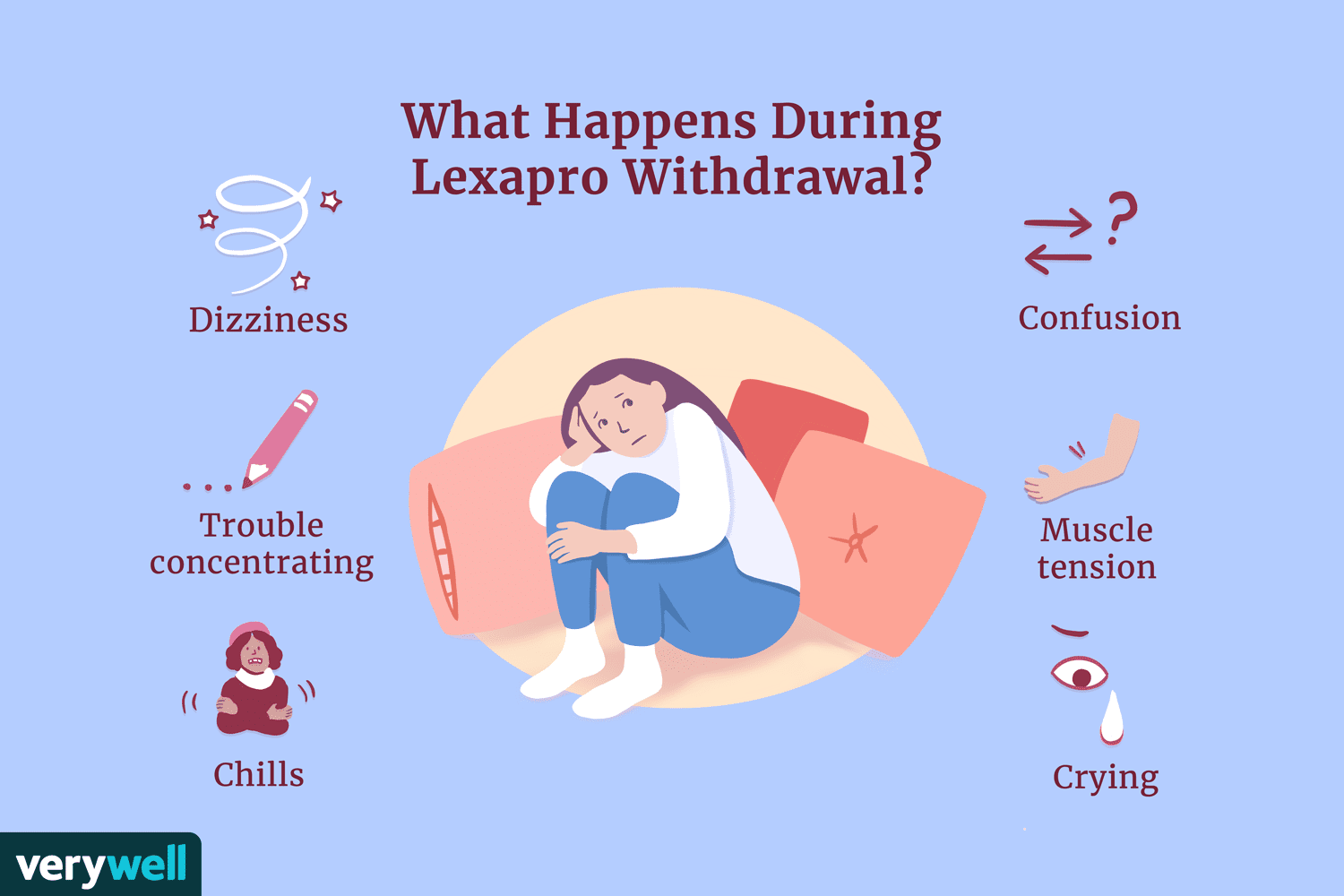
Stopping Lexapro can lead to withdrawal symptoms. For patients who’ve decided (with their healthcare provider) to come off this medication, the quitting process can be difficult. Common symptoms of Lexapro withdrawal include dizziness, muscle tension, chills, crying, and brain fog. Knowing what to expect in terms of the timeline can help you wean off Lexapro with as few withdrawal symptoms as possible.
Verywell / Hilary Allison
What to Know About Lexapro Withdrawal
Lexapro (escitalopram) is in a category of drugs that have long been associated with withdrawal symptoms after stopping their use. While physicians refer to these symptoms as antidepressant discontinuation syndrome, many believe that this name minimizes the seriousness of the effects experienced.
Lexapro is a prescription medication approved by the Food and Drug Administration (FDA) to treat major depressive disorder and generalized anxiety disorder. It belongs to a class of drugs known as selective serotonin reuptake inhibitors (SSRIs).
In the U.S., Lexapro is a brand name for the generic drug escitalopram. In the U.K. and several other countries, escitalopram is sold under the brand name Cipralex.
Antidepressants are among the most commonly prescribed medications in the United States. One survey found that just over 13% of adult Americans report taking an antidepressant medication in the last month. For one in four people taking this type of drug, they’ve been doing so for 10 years or longer.
Why Stopping Lexapro Causes Withdrawal
SSRIs affect levels of serotonin, a type of mood-regulating neurotransmitter in the brain. When a person stops taking them, it takes their brain a while to get used to the drug’s absence, resulting in Lexapro’s withdrawal.
SSRIs take time to effect changes in the brain; that’s why people typically don’t notice a reduction in symptoms of depression and anxiety for a few weeks after starting them. Likewise, abruptly stopping a medication doesn’t give the brain enough time to adjust to the sudden change.
According to one study, more than half (56%) of people who quit antidepressants experience withdrawal symptoms.
Click Play to Learn How To Wean Off Lexapro
Common Lexapro Withdrawal Symptoms
Different SSRI medications may affect the brain in somewhat different ways. People who experience withdrawal symptoms can expect those symptoms to range from mild to severe. On a range of lowest to highest chance of severe withdrawal symptoms, Lexapro sits around the middle.
Some research showed that, on average, about 46% of people experiencing SSRI withdrawal symptoms described them as severe. Severe symptoms indicate that withdrawal can potentially interfere with one’s ability to meet responsibilities at home and work.
Most Common Symptoms
According to one study, the most common symptoms of Lexapro withdrawal—occurring in more than one in four people—are:
- Dizziness
- Muscle tension
- Chills
- Confusion
- Trouble concentrating
- Trouble remembering things
- Crying
Dizziness, muscle tension, and chills each affected about 44% of people discontinuing Lexapro. Many people also experience confusion and difficulty concentrating.
Less Common Symptoms
Lexapro withdrawal can be difficult, both physically and emotionally. The following are other symptoms associated with SSRI withdrawal:
- Changes in motor control: Tremors, muscle tension, restless legs, unsteady gait, or difficulty controlling speech and chewing movements
- Digestive issues: Nausea, vomiting, cramps, diarrhea, or appetite loss
- Flu-like symptoms: Headache, muscle pain, weakness, and tiredness
- Instability: Dizziness, lightheadedness, or difficulty walking
- Mood changes: Anxiety, agitation, panic, suicidal ideation, depression, irritability, anger, or mood swings
- Sleep problems: Nightmares, unusual dreams, excessive/vivid dreams, or insomnia
- Unusual sensations: Brain zaps (like an electrical shock or shiver in the brain), pins and needles, ringing in the ears, strange tastes, or hypersensitivity to sound
How Long Does Lexapro Withdrawal Last?
Lexapro withdrawal symptoms typically begin one to three days after the last dose, although rarely they can start sooner (within hours) or later (more than a week). Symptoms generally resolve within a week to two, but may continue for longer.
How to Cope With Lexapro Withdrawal
The best way to find relief from Lexapro withdrawal is to avoid it altogether. Quitting cold turkey may increase the likelihood of severe withdrawal. Instead, schedule an appointment with the prescribing physician to discuss a strategy to get off of medication as safely as possible.
In addition to efforts to avoid discontinuation or withdrawal symptoms coming off of Lexapro, there needs to be a consideration for the continued treatment of any underlying depression or anxiety symptoms. Your doctor may want to transition you to another antidepressant medication or other medications if appropriate. Here are a few additional options that can help reduce or ease Lexapro withdrawal.
Taper Off Medication Slowly
The most effective way to minimize symptoms of withdrawal is to slowly taper off the medication. Tapering involves adjusting the dose by small amounts, gradually decreasing it so the body gets used to lower levels of the medication. The prescribing physician can create a dosing schedule and carefully monitor the process to avoid severe symptoms.
A New Approach to Tapering
In the past, it was common to taper the dosage of SSRIs relatively quickly. However, more recent research suggests that a much longer medication taper, sometimes lasting months and continuing well past the minimum therapeutic dose, may be better tolerated.
Practice Good Self-Care
Taking good care of your health as you stop taking Lexapro can also help to better manage any withdrawal symptoms that you experience. Some steps you can take include:
- Eating a healthy and nutritious diet
- Following their physician’s tapering recommendations
- Getting plenty of rest
- Getting regular exercise
- Getting support from family, friends, or support groups
Important Safety Considerations
When a person stops or reduces their dose of Lexapro, there is a risk that they may begin to feel suicidal. Large-scale research studies have found a clear association between the discontinuation of antidepressants and suicide attempts.
It is important to keep this in mind during the withdrawal experience. If the person begins noticing any signs of increasing depression or if there are any safety concerns, it is imperative to seek help immediately.
If you or someone you love shows any of the following signs or symptoms after stopping Lexapro, get help right away:
- Becoming preoccupied with death, dying, or violence
- Engaging in risky or self-destructive activities, such as driving drunk
- Feeling hopeless or trapped
- Gathering the means to commit suicide, such as bullets or pills
- Getting affairs in order or giving away belongings
- Having intense mood swings
- Planning how to commit suicide if you/they were going to do it
- Saying goodbye to people as if it were the last time
- Talking or thinking about suicide more than normal, for example, “I wish I were dead”
Options for Long-Term Depression Treatment
Over 50% of people who recover from depression will have more depressive episodes in their lifetime. If Lexapro doesn’t help or is stopped because of unwanted side effects, it’s important to develop a long-term plan to manage your depression or anxiety. This may include:
- Trying different antidepressants or other combinations of medications
- Psychotherapy
- Lifestyle modifications
Talk therapy is an effective treatment for certain types of depression and anxiety. Finding the right therapist requires taking the time to locate one with whom you are comfortable working. This may involve trying out a few different therapists before finding the right fit.
Where to Find More Help
If your current mental health treatment isn’t adequately helping, consider seeking consultation or finding a new psychiatrist or therapist. You can start by checking your health insurance provider’s list of providers to find out who accepts your plan in your area.
In addition to physicians and mental health professionals, many online resources can offer support during Lexapro withdrawal. Support groups can be a helpful source of information and peer support during recovery.
Verywell Mind uses only high-quality sources, including peer-reviewed studies, to support the facts within our articles. Read our editorial process to learn more about how we fact-check and keep our content accurate, reliable, and trustworthy.
-
Fava GA, Gatti A, Belaise C, Guidi J, Offidani E. Withdrawal symptoms after selective serotonin reuptake inhibitor discontinuation: A systematic review. Psychother Psychosom. 2015;84(2):72-81. doi:10.1159/000370338
-
U.S. Food and Drug Administration. Lexapro (escitalopram) label.
-
Centers for Disease Control and Prevention. Antidepressant use among adults: United States, 2015-2018.
-
Centers for Disease Control and Prevention. Antidepressant use among persons aged 12 and over: United States, 2011-2014.
-
National Alliance on Mental Illness. Escitalopram (Lexapro).
-
Davies J, Read J. A systematic review into the incidence, severity and duration of antidepressant withdrawal effects: Are guidelines evidence-based? Addict Behav. 2019;97:111-121. doi:10.1016/j.addbeh.2018.08.027
-
Yasui-Furukori N, Hashimoto K, Tsuchimine S, et al. Characteristics of escitalopram discontinuation syndrome: a preliminary study. Clin Neuropharmacol. 2016;39(3):125-7. doi:10.1097/WNF.0000000000000139
-
Horowitz MA, Taylor D. Tapering of SSRI treatment to mitigate withdrawal symptoms. Lancet Psychiatry. 2019;6(6):538-546. doi:10.1016/S2215-0366(19)30032-X
-
Braun C, Bschor T, Franklin J, Baethge C. Suicide and suicide attempts during long-term treatment with antidepressants: A meta-analysis of 29 placebo-controlled studies including 6,934 patients with major depressive disorder. Psychother Psychosom. 2016;85(3):171-179. doi:10.1159/000442293
-
Ryan EP, Oquendo MA. Suicide risk assessment and prevention: Challenges and opportunities. Focus (Am Psychiatr Publ). 2020;18(2):88-99. doi:10.1176/appi.focus.20200011
-
Steinert C, Hofmann M, Kruse J, Leichsenring F. Relapse rates after psychotherapy for depression – stable long-term effects? A meta-analysis. J Affect Disord. 2014;168:107-118. doi:10.1016/j.jad.2014.06.043
-
Munder T, Flückiger C, Leichsenring F, et al. Is psychotherapy effective: A re-analysis of treatments for depression. Epidemiol Psychiatric Serv. 2018;28(3):268-274. doi:10.1017/S2045796018000355
Thanks for your feedback!
What is your feedback?
Helpful
Report an Error
Other
