

Key Takeaways
- Raymond Cattell is famous for creating the 16-factor personality model.
- He developed the ideas of fluid and crystallized intelligence.
- Cattell’s use of multivariate analysis changed how psychology views and studies human behavior.
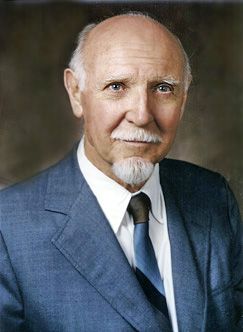
Raymond Cattell is a psychologist who is best known for his 16-factor personality model, developing the concept of fluid versus crystallized intelligence, and working with factor and multivariate analysis.
Early Life
Raymond Cattell was born on March 20, 1905, in a small town in England. He developed an interest in science early on in life and became the first person in his family to attend college. He earned his BS in chemistry from the University of London when he was just 19. After witnessing the devastation of World War I, Cattell developed an interest in using science to solve human problems. He was also influenced by other thinkers of the time, including George Bernard Shaw, Aldous Huxley, and H. G. Wells. He earned his Ph.D. in psychology from the University of London in 1929.
Career and Death
After teaching for a few years at Exeter University, Cattell was invited to teach at Columbia University by pioneering psychologist Edward Thorndike. In 1938, he became a professor at Clark University, and in 1941, he moved to Harvard after being invited by Gordon Allport. In 1945, Cattell took a position at the University of Illinois where he established a research department. At the time, the school was developing a pioneering computer that allowed Cattell to conduct factor analysis on a much larger scale than was previously possible.
In 1973, Cattell retired from the University of Illinois. He eventually settled in Hawaii, where he continued to teach, write, and enjoy his life-long passion for sailing. He died on February 2, 1998.
Contributions to Psychology
In addition to his research in personality, motivation, and intelligence, Cattell’s work with multivariate analysis left a lasting mark on psychology. While earlier research in psychology focused on single variables in isolation, Cattell pioneered the use of multivariate analysis that allowed researchers to view individuals as a whole and study aspects of human behavior that could not be studied in a lab setting.
Cattell is well-known for his 16 personality factors, which he and numerous colleagues developed by utilizing factor analysis to identify 16 different fundamental components of personality. He subsequently developed the 16PF Personality Questionnaire, which is still widely used today.
Cattell also influenced the work of other psychologists. In a review of eminent psychologists, Raymond Cattell’s professional writings ranked as the seventh most frequently cited in psychology journals over the past 100 years. When judged for overall eminence, Cattell was ranked 16th.
Selected Publications
If you’re interested in reading some of Cattell’s works, here are a few to consider:
Thanks for your feedback!
What is your feedback?
Helpful
Report an Error
Other
