

Have you ever walked into a room and forgotten why you went there? Forgotten someone’s name… even though you know you know it? Lost your train of thought mid-sentence?
Most of us laugh these moments off. We blame stress. Lack of sleep. Getting older.
But here’s what’s really happening…
Memory doesn’t suddenly “go bad” one day. It slowly gets weaker over time as the systems in your brain that form and protect memories start to wear down.
And this is exactly why scientists have been studying a very unusual natural compound for years:
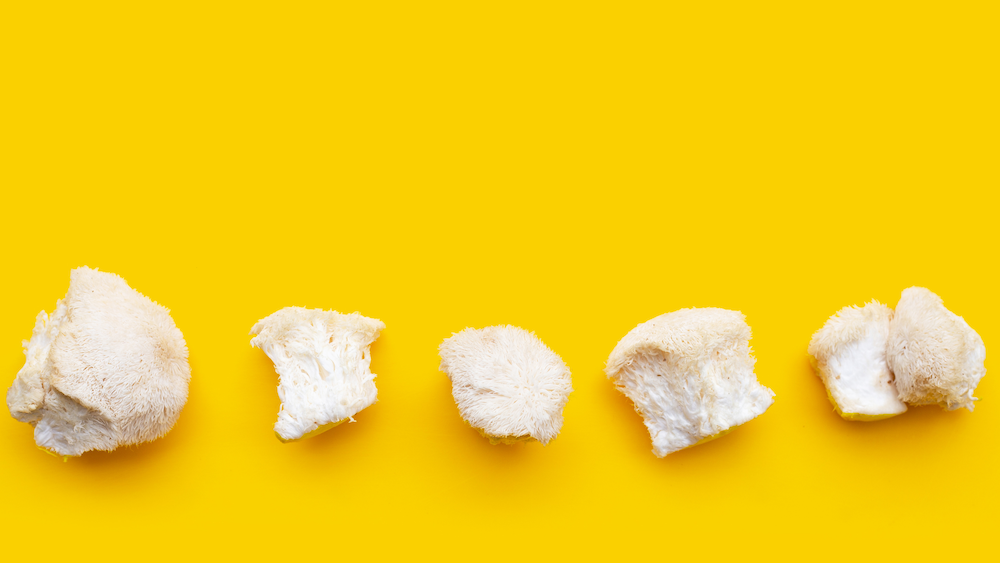
🍄 Lion’s Mane mushroom.
Not because it gives you a quick burst of focus. Not because it’s a stimulant. But because research shows Lion’s Mane may support the actual physical parts of your brain that create, store, and protect memories.
In fact, one human study in older adults with memory decline showed measurable improvements in cognitive test scores after taking Lion’s Mane for just a few months. [1]
That got researchers’ attention.
Since then, studies have been looking at how Lion’s Mane interacts with memory pathways in the brain — and what they’ve found is pretty remarkable.
This isn’t about hype.
This is about what the research actually shows.
The Human Study That Put Lion’s Mane on the Map
The reason Lion’s Mane first caught scientists’ attention wasn’t theory.
It was a human study.
Researchers ran a randomized, placebo-controlled trial with older adults who had something called mild cognitive impairment (MCI).
MCI is the stage between normal aging and more serious memory loss. People with MCI often notice:
- Forgetting words more often
- Trouble recalling recent events
- Difficulty concentrating
- Feeling mentally “slower” than they used to
In this study, participants took Lion’s Mane every day for 16 weeks.
Another group took a placebo.
At the end of the study, the group taking Lion’s Mane scored significantly higher on cognitive tests than the placebo group. [1]
That alone is impressive.
But here’s the part that really stood out to researchers:
When participants stopped taking Lion’s Mane, their scores slowly began to drop again.
This suggested something very important:
Lion’s Mane wasn’t masking memory issues.
It was actively supporting the brain systems involved in memory — and when that support stopped, the benefit faded.
For scientists, this was the first real clue that Lion’s Mane might be doing something meaningful inside the brain related to memory function.
Memory Depends on Two Critical Brain Proteins (NGF & BDNF)
To understand why Lion’s Mane may help memory, we need to talk about two very important brain helpers:
NGF (Nerve Growth Factor) and BDNF (Brain-Derived Neurotrophic Factor).
You can think of them like fertilizer for your brain cells.
These proteins help:
- Brain cells stay alive
- Form new connections
- Strengthen existing connections
- Support learning and memory formation
When NGF and BDNF levels are healthy, your brain is better at creating and storing memories.
When they decline, memory often declines too.
This is where Lion’s Mane gets interesting.
Lion’s Mane contains natural compounds called hericenones and erinacines. In lab and animal studies, these compounds have been shown to stimulate NGF and BDNF pathways in the brain. [2, 3, 4]
In simple terms:
Lion’s Mane doesn’t “rev up” your brain like caffeine.
It may help feed the systems your brain uses to build and protect memories in the first place.
That’s a very different kind of support — and it’s one reason researchers are so interested in it.
Protecting Brain Cells = Protecting Memory (Anti-Inflammatory & Antioxidant Effects)
Making new memories is only part of the story.
You also have to protect the brain cells you already have.
Over time, two big problems can wear down brain cells:
- Inflammation in the brain
- Oxidative stress (damage from unstable molecules called free radicals)
Both are strongly linked to memory decline as we age.
When brain cells are inflamed or under constant oxidative stress, they don’t communicate as well. They don’t repair as well. And they don’t form memories as well.
This is another place Lion’s Mane may help.
Research on Lion’s Mane shows it has anti-inflammatory and antioxidant properties that may help reduce these stressors in the brain. [5, 6]
That means Lion’s Mane may not only help the brain form new connections…
It may also help protect existing brain cells from the kinds of damage that slowly weaken memory over time.
Because when you protect brain cells, you protect memory.
The Myelin Connection: Speed of Brain Communication
Memory isn’t just about storing information.
It’s also about how fast different parts of your brain can talk to each other.
Your brain cells send messages through long “wires” called neurons. These wires are wrapped in a protective coating called myelin.
You can think of myelin like the plastic coating around an electrical wire.
When myelin is healthy:
- Signals move quickly
- Communication is clear
- Recall feels sharp
When myelin weakens:
- Signals slow down
- Thoughts feel foggy
- Memory and recall can suffer
Here’s where Lion’s Mane becomes even more interesting.
New research shows that compounds in Lion’s Mane may help support the cells responsible for making and maintaining myelin. [7, 8]
In simple terms:
Lion’s Mane may help keep the “wiring” in your brain well insulated — allowing memory signals to travel more smoothly and efficiently.
That’s a part of memory support most people never hear about.
Does Lion’s Mane Work in Healthy Adults? (The Honest Answer)
So far, we’ve looked at studies in people with memory decline and the ways Lion’s Mane may support brain cells.
But what about healthy adults? Can Lion’s Mane make a healthy brain sharper?
Here’s the honest answer from the research:
The results are mixed.
Small studies in younger, healthy adults have shown improvements in areas like: [9, 10]
- Attention
- Processing speed
- Mental performance under stress
But these studies did not show dramatic, instant memory boosts.
And when researchers tested Lion’s Mane as a single dose, they found little to no effect.
👉 This tells us something important.
Lion’s Mane is not a stimulant. It’s not like caffeine. It’s not meant to give you a quick mental jolt.
Instead, the research suggests Lion’s Mane may work best when taken consistently over time, supporting the brain’s memory systems for better brain health as you age.
That’s a very different kind of benefit — and a much more realistic one.
Can Lion’s Mane Compounds Actually Reach the Brain? (The Real Bottleneck)
There’s a question almost no one asks about supplements:
Even if it works in studies… does your body actually absorb it?
Most people worry about the blood–brain barrier — and that is important.
The brain is protected by this barrier, which blocks many substances from entering brain tissue. If something can’t cross it, it can’t affect memory.
Here’s the good news:
Research shows that Lion’s Mane’s key compounds — hericenones and erinacines — can cross the blood–brain barrier. [11]
That’s a big deal.
But here’s the part most blogs leave out:
👉 Crossing the blood–brain barrier isn’t the biggest problem.
👉 Getting these compounds into the bloodstream in the first place is.
Many of Lion’s Mane’s most powerful compounds are poorly absorbed when taken in standard capsule or powder form. They can break down in digestion or pass through the body before ever making it into circulation.
And if they never make it into the blood…
They never get anywhere near the brain.
This absorption issue is one of the biggest reasons Lion’s Mane doesn’t work the same for everyone — even though the research behind it is strong.
That’s also why delivery method matters just as much as the mushroom itself.
Learn how nano liposomal delivery unlocks the true potential of Lion’s Mane >
Keep reading — because once you understand how absorption changes everything, the memory research around Lion’s Mane starts to make a lot more sense.
Who Lion’s Mane May Be Most Helpful For
Based on the research, Lion’s Mane isn’t for someone looking for a quick mental “buzz.”
It’s most helpful for people who want to support their brain and memory over time.
This includes:
- Adults who notice small memory slips happening more often
- People dealing with brain fog or mental fatigue
- Aging adults who want to protect their cognitive health
- Students and professionals who want long-term brain support, not a short burst of focus
Lion’s Mane works in a quiet way.
It supports the systems that help your brain:
- Form memories
- Protect brain cells
- Keep communication between brain areas strong
That kind of support doesn’t feel dramatic overnight.
But over months and years, it can make a meaningful difference in how sharp and reliable your memory feels.
Lion’s Mane Isn’t a Brain Booster. It’s Brain Maintenance.
Lion’s Mane doesn’t act like a stimulant.
It doesn’t “force” your brain to work harder.
Instead, the research shows it may support the very systems your brain uses to create, store, and protect memories:
- Supporting NGF and BDNF, the proteins tied to learning and memory
- Helping protect brain cells from inflammation and oxidative stress
- Supporting healthy myelin for clear brain communication
- Showing real promise in human studies of memory decline
This is why scientists are so interested in it.
Because Lion’s Mane isn’t about a quick mental boost.
It’s about long-term brain support.
Why Delivery Matters
Even the best ingredients can fall short if they aren’t absorbed well.
That’s why Purality Health’s Nano Liposomal Lion’s Mane is designed differently.
Its nano liposomal delivery system helps protect Lion’s Mane’s active compounds and supports better absorption — so more of what you take can actually make it into your bloodstream and to the brain where it’s needed most.
If you’re looking to support memory the smart way — by supporting the brain itself — Lion’s Mane is one of the most research-backed places to start.
