

Key Takeaways
- Bring any necessary medication in your carry-on to help manage panic attacks.
- Use visualization techniques before flying to picture a calm and smooth flight.
- Find distractions like books or music to keep your mind busy during the flight.
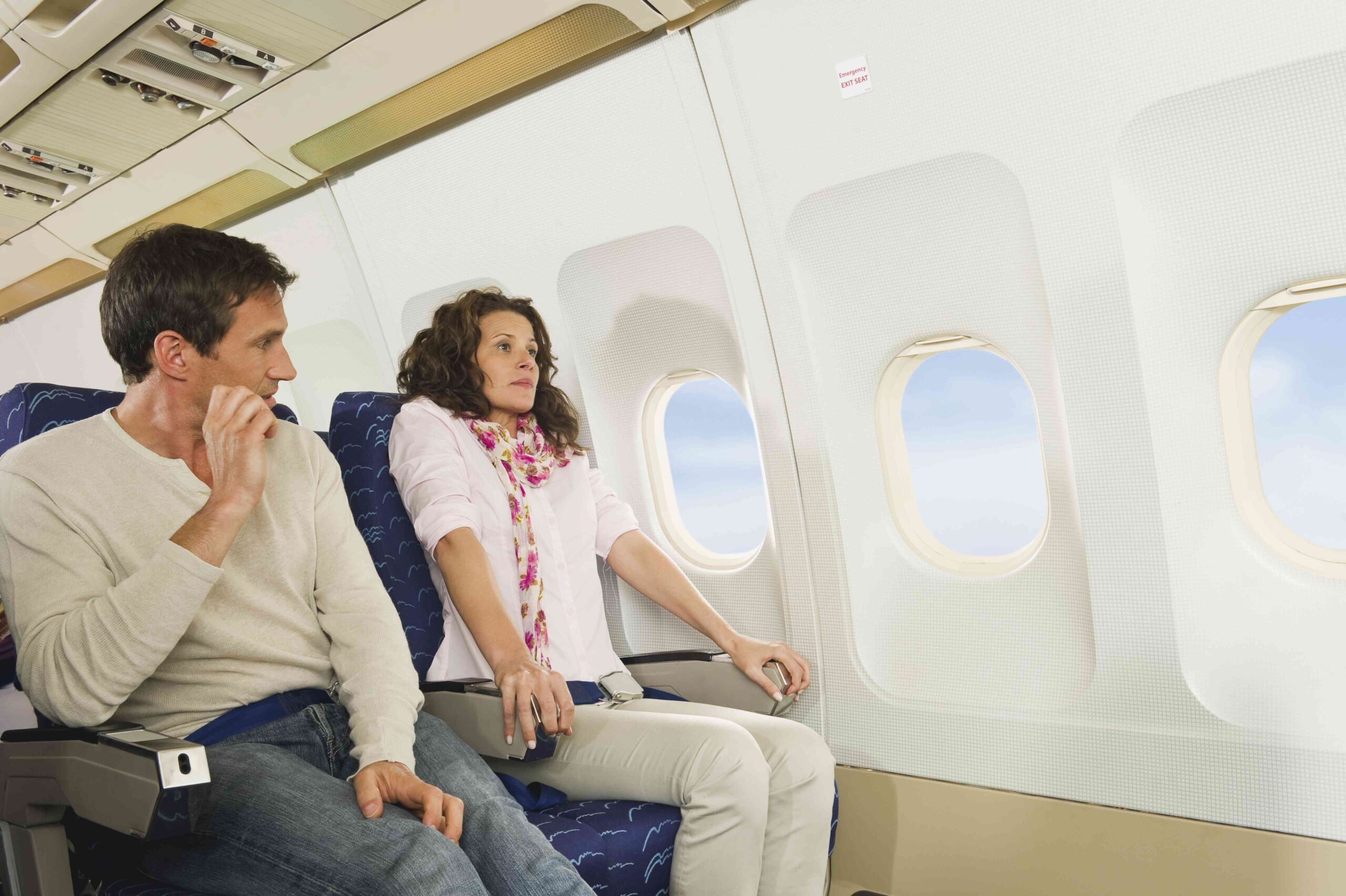
Whether caused by a fear of flying or by a different mental health condition, many people experience panic attacks while traveling by airplane. A panic attack involves sudden, intense feelings of fear and anxiety. These attacks often last between five and 20 minutes, but can also last longer.
Common reasons for panic attacks on a plane include a fear of flying, but they can also be caused by claustrophobia or the fear of enclosed spaces. These attacks can be challenging enough to manage while on the ground and may seem even more difficult when you are on a flight.
This article discusses some strategies for managing panic attacks on a plane, including:
- Taking medication for panic attacks
- Using visualization
- Practicing relaxation techniques
- Finding healthy distractions
- Taking classes to combat fear of flying
- Seeking support from other fliers
- Thinking realistically
Have Medication on Hand
If you want to try a medication for panic attacks, see your doctor well in advance of your flight. Many physicians are booked in advance and may not be able to see you on short notice. Additionally, your doctor may want you to try a medication before a flight to determine how you react to it, so it is better to allow plenty of time.
Anti-anxiety medications can provide you with quick relief from panic attack symptoms, providing you with a tranquilizing effect that can minimize the physical and mental associations of feeling fearful while flying.
Your doctor may prescribe an anti-anxiety medication such as:
- Ativan (lorazepam)
- Klonopin (clonazepam)
- Librium (chlordiazepoxide)
- Valium (diazepam)
- Xanax (alprazolam)
These belong to a class of medications known as benzodiazepines. Because they can be habit-forming, they are usually only prescribed as a short-term anxiety solution.
It may seem obvious, but you will want to make sure that your medication is with you in your carry-on instead of in your checked luggage.
Be certain that your prescription is up to date, including your name, prescribing doctor, and prescription number. If you only use this medication occasionally, be certain that it is not expired, and that you have the appropriate amount for your round trip.
Visualize a Smooth Fight
During the weeks leading up to your flight, use visualization to envision a smooth flight. Put aside some time each day to work on this strategy:
- Get into a comfortable position and close your eyes.
- Use your imagination to see yourself going to the airport. Imagine getting onto the plane, feeling calm and relaxed about your flight.
- Use all your senses, thinking about how the plane sounds as it takes off, what you might see through the window, and how you will feel steady as you remain in your seat.
- Breathe deeply as you visualize your flight.
When you are ready to come out of your visualization, remind yourself how calm you feel, and then slowly open your eyes.
If you practice regularly before your next flight, you may feel less anxious once on board.
Find Healthy Distractions
There are many things you can do to help keep your mind off your fear of flying. Refocus your thoughts by bringing along things that will keep you occupied, such as:
- Books
- Magazines
- Music
- Podcasts
- Crossword puzzles or other games
Simple movements can help you release tension that has built up in your body due to feelings of anxiety. When permitted, try getting up every so often to do a few stretches. You can even get up and walk the aisle a few times to allow your body to stretch.
Many nervous flyers find that the loud noises of the plane trigger anxious thoughts. You may find it helpful to bring along earplugs to reduce these sounds. You can also bring headphones and listen to your favorite music or a relaxation guide to help you feel calmer.
Practice Relaxation Techniques
Practice other relaxation techniques in advance as well. These strategies may help you let go of anxiety and remain more tranquil throughout your next flight. Exercises that you can practice beforehand include deep breathing, progressive muscle relaxation (PMR), and meditation.
Breath control can be particularly effective for managing feelings of fear and anxiety quickly. Research suggests that breathing techniques can help induce a relaxation response within a few minutes.
Take a Fearless Flying Class
Frequent fliers or those seeking long-term assistance for their fear of flying may want to consider taking a class or online course that addresses this issue. These classes help in skill development along with cognitive-behavioral interventions that assist in changing fearful thoughts and behaviors.
Such classes are available through a number of airlines, including:
- British Airways hosts a “Flying With Confidence” program that is led by a clinical psychologist and flight crew members
- Virgin Atlantic offers a “Flying Without Fear’ course
If an in-person course is not available in your area, there are also online courses available that can help. Similarly, you may consider therapy with a specialist who can assist you in managing this fear.
Seek Support on the Plane
Let your fellow travelers know that you feel nervous about flying. Sometimes just opening up about your fears can calm your nerves and make you feel less worried about how others will react if you do have a panic attack.
Research also suggests that having social-support figures can play a role in minimizing or preventing the formation of fear associations.
You may also want to let flight attendants know about your concerns. Pilots and flight attendants understand that many people fear flying and often strive to provide a great experience.
Think Realistic Thoughts
People who have panic attacks are often susceptible to faulty or negative thinking that can contribute to symptoms and fears. Even if you feel fearful, try to remind yourself that thousands of flights are traveling safely. Reassure yourself that you too will make it to your destination safely.
Tell yourself that if a panic attack does occur, you will be able to manage it. Also remind yourself that the physical sensations you experience only signify that you feel anxious, but are not an indication that you are in any actual danger.
Verywell Mind uses only high-quality sources, including peer-reviewed studies, to support the facts within our articles. Read our editorial process to learn more about how we fact-check and keep our content accurate, reliable, and trustworthy.
-
University of Michigan Health. Panic attacks and panic disorder.
-
Garakani A, Murrough JW, Freire RC, et al. Pharmacotherapy of anxiety disorders: current and emerging treatment options. Front Psychiatry. 2020;11. doi:10.3389/fpsyt.2020.595584
-
National Institute of Mental Health. Panic disorder: When fear overwhelms.
-
Jallo N, Ruiz RJ, Elswick RK, French E. Guided imagery for stress and symptom management in pregnant African American women. Evid Based Complement Alternat Med. 2014;2014:840923. doi:10.1155/2014/840923
-
Phuphanich ME, Droessler J, Altman L, Eapen BC. Movement-based therapies in rehabilitation. Phys Med Rehabil Clin N Am. 2020;31(4):577-591. doi:10.1016/j.pmr.2020.07.002
-
Russo MA, Santarelli DM, O’rourke D. The physiological effects of slow breathing in the healthy human. Breathe (Sheff). 2017;13(4):298-309. doi:10.1183/20734735.009817
-
Carpenter JK, Andrews LA, Witcraft SM, Powers MB, Smits JAJ, Hofmann SG. Cognitive behavioral therapy for anxiety and related disorders: A meta-analysis of randomized placebo-controlled trials. Depress Anxiety. 2018;35(6):502-514. doi:10.1002/da.22728
-
Hornstein EA, Eisenberger NI. Unpacking the buffering effect of social support figures: Social support attenuates fear acquisition. PLoS One. 2017;12(5):e0175891. doi:10.1371/journal.pone.0175891
-
Kertz SJ, Koran J, Stevens KT, Björgvinsson T. Repetitive negative thinking predicts depression and anxiety symptom improvement during brief cognitive behavioral therapy. Behav Res Ther. 2015;68:54-63. doi:10.1016/j.brat.2015.03.006
Thanks for your feedback!
What is your feedback?
Helpful
Report an Error
Other
