

Key Takeaways
- Mindfulness meditation can reduce stress and anxiety by helping you focus on the present.
- You should practice mindfulness in a quiet place where you won’t be distracted.
- Starting with short sessions helps you get used to meditation without feeling overwhelmed.
Practicing mindfulness meditation can be an effective way to manage feelings of stress and anxiety, and can even be used as a relaxation technique for panic disorder. This meditation technique can help you slow down racing thoughts, decrease negativity, and calm both your mind and body.
Research across age groups, gender, and geographical borders has shown how powerful a practice it can be. A 2015 study, for example, demonstrated a significant drop in anxiety and stress among nursing students practicing mindfulness meditation techniques.
There were similar findings in a study of adolescents in the U.S. diagnosed with anxiety. The common thread among these and other studies is the way mindfulness meditation helps people—particularly those with anxiety who often worry about the past or future—focus on the present moment.
How to Practice Mindfulness Meditation
When you first begin meditating, you may be surprised at how challenging it can be to sit in silence. Believe it or not, part of the practice of mindfulness is becoming aware of how the act of sitting still may put your thoughts in turbo drive. The key is not to judge the mind but to instead simply observe it. To get started with the practice, ease in with sessions of only a few minutes. Once you develop a more regular, familiar practice, you can gradually increase your time.
It’s also important to meditate in an area where you won’t be distracted by your surroundings or interrupted by people, pets, or phones. Remove your shoes and any heavy jewelry or restricting clothing. The goal is to meditate in a space that’s as peaceful and comfortable as possible. Once you establish a time and place, begin building a foundation for your meditation exercise with these four steps.
Find a Comfortable Position
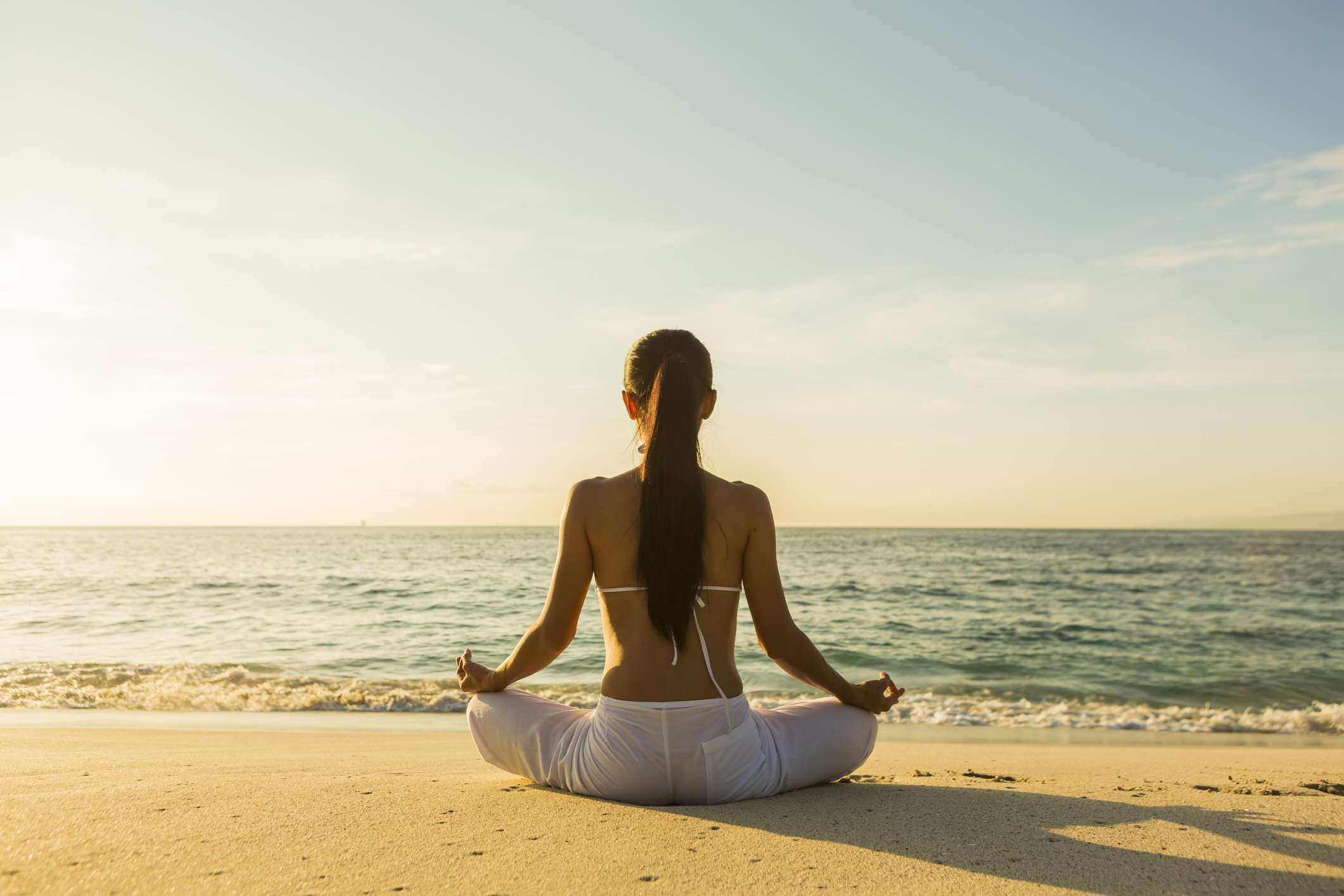
Many people sit on the floor with legs crossed and spine tall. You may prefer sitting with legs outstretched, upright in a chair, or lying on your back. Find a position that feels comfortable enough that you won’t be distracted by your body, but not so at ease that you’re unaware of your body—or might fall asleep. Know that you can change your position any time should you become uncomfortable or develop muscle cramps.
Bring Your Awareness to the Present
Once you’re sitting comfortably in a quiet area, start focusing your attention inward. Close your eyes and begin with breathing. Simply notice your breathing pattern, but don’t try to change it; this will help bring your awareness to the present moment. If you notice your mind wandering, bring attention back to your breath. Once you have observed the natural rhythm of your breath, allow it to grow deeper to support relaxation.
Acknowledge Your Thoughts
Initially, practicing meditation can increase feelings of anxiety or self-judgment. Am I doing this right? What should I be doing? Rather than trying to suppress that inner dialogue, recognize it and wait for it to pass. This will help you learn how to sit with uncomfortable thoughts without responding. Over time, you may feel less anxious and experience more inner peace.
Finish Your Meditation
When your meditation feels complete or you’ve reached your desired time, open your eyes. Gradually come out of your meditation with some gentle stretches. Take some time to reflect on your practice.
It can be hard to keep track of time during meditation. If you’re worried that you will go over your designated time, consider using an alarm or timer that has a gentle sound. This will keep your attention away from the clock and back on your practice.
Improve Your Meditation Practice
Once you’ve built a foundation, you may notice previous signs of anxiety—like ruminating on past events or insomnia—greatly reduced. But like any new modality, it may take some practice. Experiment with your practice to find what works best for you.
Mindfulness meditation can be done at any time of day. You may find that meditating when you wake up helps you reduce morning anxiety. Or perhaps you find that meditating in the evening allows you to get a better night’s rest. Try different times of day to determine what suits you best.
Verywell Mind uses only high-quality sources, including peer-reviewed studies, to support the facts within our articles. Read our editorial process to learn more about how we fact-check and keep our content accurate, reliable, and trustworthy.
-
Chen KW, Berger CC, Manheimer E, et al. Meditative therapies for reducing anxiety: A systematic review and meta-analysis of randomized controlled trials. Depress Anxiety. 2012;29(7):545-562. doi:10.1002/da.21964
-
Ratanasiripong P, Park JF, Ratanasiripong N, Kathalae D. Stress and anxiety management in nursing students: Biofeedback and mindfulness meditation. J Nurs Educ. 2015;54(9):520-524. doi:10.3928/01484834-20150814-07
-
Blum H, Rutt C, Nash C, Joyce V, Buonopane R. Mindfulness meditation and anxiety in adolescents on an inpatient psychiatric unit. J Health Care Chaplain. 2019:1-19. doi:10.1080/08854726.2019.1603918
-
Carter KS, Carter R. Breath-based meditation: A mechanism to restore the physiological and cognitive reserves for optimal human performance. World J Clin Cases. 2016;4(4):99-102. doi:10.12998/wjcc.v4.i4.99
-
Hofmann SG, Sawyer AT, Witt AA, Oh D. The effect of mindfulness-based therapy on anxiety and depression: A meta-analytic review. J Consult Clin Psychol. 2010;78(2):169-183. doi:10.1037/a0018555
-
Edenfield TM, Saeed SA. An update on mindfulness meditation as a self-help treatment for anxiety and depression. Psychol Res Behav Manag. 2012;5:131-141. doi:10.2147/PRBM.S34937
-
Robins JL, Kiken L, Holt M, Mccain NL. Mindfulness: An effective coaching tool for improving physical and mental health. J Am Assoc Nurse Pract. 2014;26(9):511-518. doi:10.1002/2327-6924.12086
Additional Reading
-
Sarris J, Moylan S, Camfield DA, et al. Complementary medicine, exercise, meditation, diet, and lifestyle modification for anxiety disorders: A review of current evidence. Evid Based Complement Alternat Med. 2012;2012:1-20. doi:10.1155/2012/809653.
Thanks for your feedback!
What is your feedback?
Helpful
Report an Error
Other
