

Key Takeaways
- Neurofeedback therapy uses electrical sensors on the head to track brain reactions.
- The therapy helps with conditions like ADHD, anxiety, and insomnia by changing how the brain functions.
- Different types of neurofeedback therapy target different brain frequencies for specific conditions.
Ever wonder why you have the reactions that you do? Why your natural response in one situation is the way it is, and why it’s different from other responses you have in different situations? And do you want to change those reactions and responses?
Neurofeedback therapy can give you insight into your natural reactions, learn to retrain the way your brain functions, and help you identify patterns to discuss with your therapist.
This article covers the types and techniques of neurofeedback therapy, its benefits and efficacy, and what you should consider before trying it.
What Is Neurofeedback Therapy?
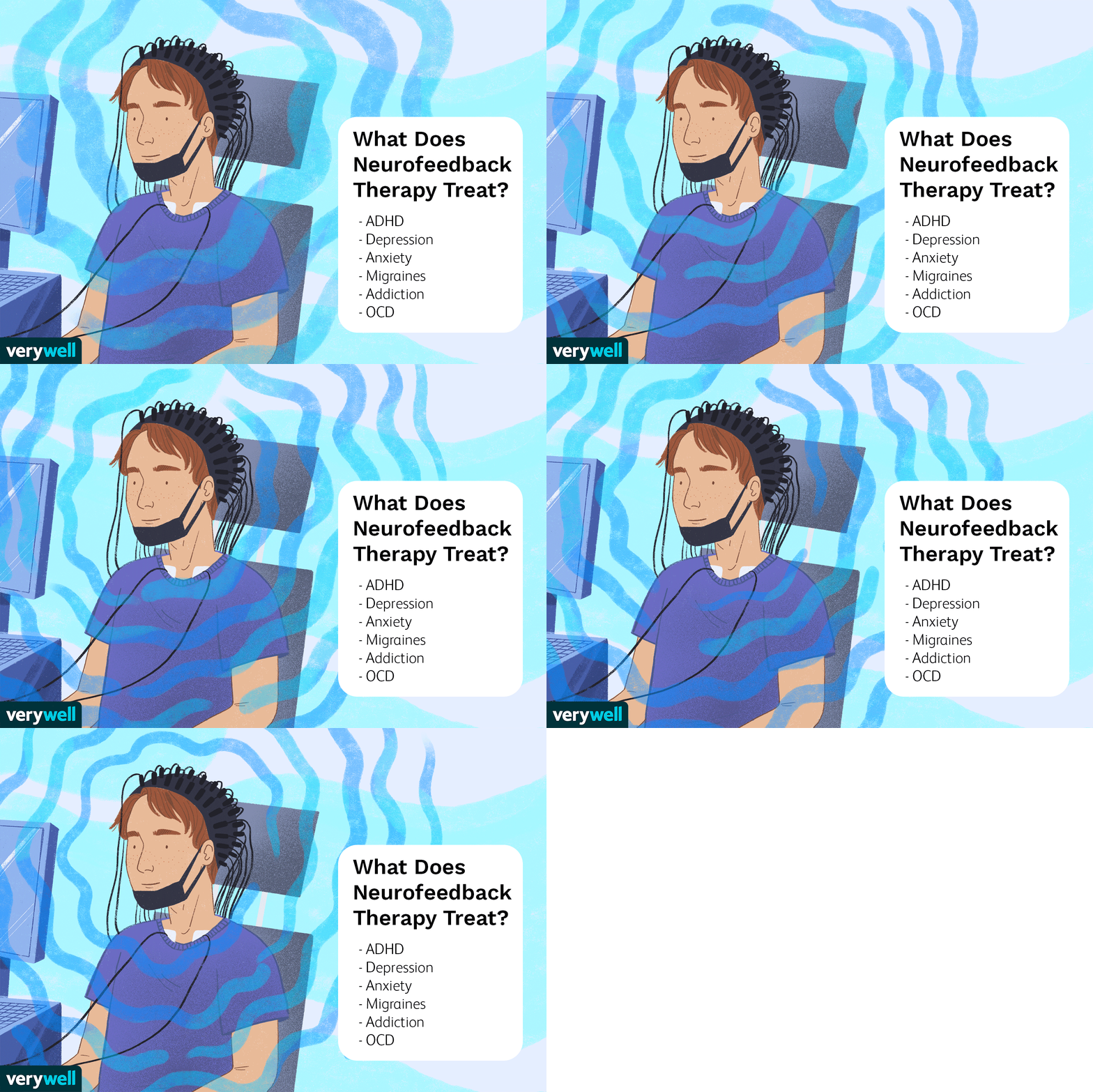
While it may sound super futuristic (because it involves attaching electrical sensors to your head), neurofeedback therapy is pain-free and much less intimidating than it may seem.
The band or electrodes placed on the head monitor different parts of the brain, depending on where they’re placed. Then, through audio or visual feedback, patients can see how their brain reacts to different prompts that a therapist or practitioner gives them.
The reactions are noted by a graph so that the person can see how they naturally react. Following this therapy, patients can then work with a professional to understand why they have these reactions. This can help patients better understand the root of their feelings based on their natural reactions that they may not even realize are occurring.
Types of Neurofeedback Therapy
Neurofeedback therapy has proven to be useful in helping diagnose or treat a few different conditions, and each condition is associated with a slightly different type of neurofeedback therapy.
For each type, the electrodes attached to the skin look for certain brain frequencies—which is basically the speed at which brain waves are being emitted—that can show how a person is reacting.
Different types of frequencies represent different types of brain functions or reactions.
Frequency/Power Neurofeedback
This is the most simple and common type of therapy, and it’s sometimes even referred to as “surface neurofeedback.” It involves attaching two to four electrodes to the head to detect frequencies related to ADHD, anxiety, and insomnia.
Slow Cortical Potential Neurofeedback (SCP-NF)
This type of therapy aims to help people dealing with ADHD, epilepsy, and migraines. It has even been tested in children who have ADHD as a potential alternative to pharmacological solutions.
Low-Energy Neurofeedback System (LENS)
In addition to helping people with hyperactive disorders, neurofeedback can also help those with low energy. This type of therapy aims to change the patient’s brainwaves while lying motionless with their eyes closed. It’s been used to help people with insomnia, fibromyalgia, restless legs syndrome, anxiety, depression, and anger.
This type of therapy doesn’t require any conscious effort from the patient. This type works by attaching the electrodes to the head to identify the areas where brain activity is low.
The electrodes then emit really low magnetic field frequencies that, over time, can potentially change how the brain functions.
Hemoencephalographic (HEG) Neurofeedback
This type of neurofeedback therapy is for people who have terrible migraines. The electrodes show where the blood flow is in the brain and work to use this information to increase blood flow and reduce the pain or reoccurrence of migraines.
Live Z-score Neurofeedback
This type of neurofeedback is for people who have insomnia. According to one case study, it even improved a group’s symptoms after 15 sessions that were 20-minutes each.
Low-Resolution Electromagnetic Tomography (LORE-TA)
This therapy requires 19 electrode attachments, and that’s because it’s monitoring the brain for particular brain activities pertaining to obsessive-compulsive disorder, addiction, and depression. This type of therapy has revealed lots of intricate details about the inner workings of the brains of people with an addiction.
Functional Magnetic Resonance Imaging (fMRI)
This is still a method of neurofeedback therapy that is the most research-based. It’s using electrodes to map out the inner workings of the brain.
Techniques
If you’re seeking out neurofeedback therapy for a mental health condition such as depression, a psychologist will typically perform it and will ask you some questions based on the issues that you’re looking to address.
You might also be required to go into a doctor’s office, where a professional will place the electrodes on your head. It’s also likely that you will be watching a movie or listening to audio content while they monitor your brain activity.
Typically, you’ll be able to see your brain’s reactions in real-time. One clinic describes an example of patients watching a movie and the screen getting brighter when their brain produces certain brainwaves. Conversely, the screen gets dimmer when the brain produces less favorable brainwaves. Because you see this in real-time, the idea is that you can learn how to produce the brain waves that keep the screen bright. This shows the potential to one day use this therapy to block out negative thoughts and reduce the effects of addictive behaviors.
What Neurofeedback Therapy Can Help With
There are several ways that neurofeedback therapy can be helpful, and this therapy is constantly being researched. However, these are the main conditions for which people tend to seek out neurofeedback therapy:
- ADHD
- Depression
- Anxiety
- Insomnia
- Migraines
- Addiction
- Obsessive-compulsive disorder
- Low energy
- Anger control
If you’re looking for help with a specific condition, you definitely need to research to make sure that the doctor that you’re interested in visiting specializes in neurofeedback therapy for that condition.
Benefits of Neurofeedback Therapy
The biggest benefit of neurofeedback therapy is that it can display the inner workings of the brain. This can display reactions to things that you weren’t consciously aware of, which can help you identify unhelpful behaviors and work to change them.
Another benefit of neurofeedback therapy is that it shows your brain’s reactions in real-time. This allows you to understand your reactions better and to see them from an unbiased source. This is particularly good for those that struggle with anger management as they can often be sensitive to outside input.
Effectiveness
While it’s still being researched as a solution for many conditions, neurofeedback therapy has been effective in small group studies. However, the effectiveness also depends on the number of sessions as well as the condition.
In addition to its efficacy in treating the conditions mentioned above, it also led to increased brain activity in a study with 20 older adults. The group members took memory and IQ tests before and after eight sessions of a 30-minute exposure to gamma or beta neurofeedback. After each treatment, they found a significant increase in the individuals’ brain activity, which shows that the aging brain may be capable of more than initially thought. That said, the researchers did not find any difference in cognitive functioning after the neurofeedback therapy.
It’s also been shown to have an impact on kids with ADHD. In one study, both parents and kids reported significant differences after spending a summer in intensive neurofeedback training.
Things to Consider
It’s important to note that neurofeedback therapy is still being researched.
Additionally, some people have found that the sessions are not covered by insurance and can be time-consuming regarding the number of sessions. There is also a question of whether or not the benefits are long-lasting.
That said, many doctors and scientists believe that neurofeedback holds the keys to developmental and addiction issues. Moreover, both individuals and families involved in double-blind clinical trials have reported improvements after sessions.
How to Get Started
The International Society for Neuroregulation & Research allows people to search for therapists or doctors based on location, specialty, and keywords.
When searching for a practitioner, make sure you call their office first to ask about insurance coverage and different payment options. You can also ask questions about the number of electrodes that they typically use and what they’re looking for in patients with your background, as well as the expected number of sessions.
Once you’ve moved on to your first session, you can expect to go over your medical background and the issues you want to address. Sessions can range from something that looks like more traditional talk therapy all the way to you sleeping while being monitored. Some practitioners will have you watch a movie, listen to music, or play a game—all while being monitored under electrodes, of course.
