

Key Takeaways
- Play therapy helps children understand their emotions and express themselves through play activities.
- There are two main types of play therapy: directive, where therapists guide activities, and non-directive, where children play freely.
- Play therapy is effective for children with emotional issues, especially those who have experienced trauma or have communication difficulties.
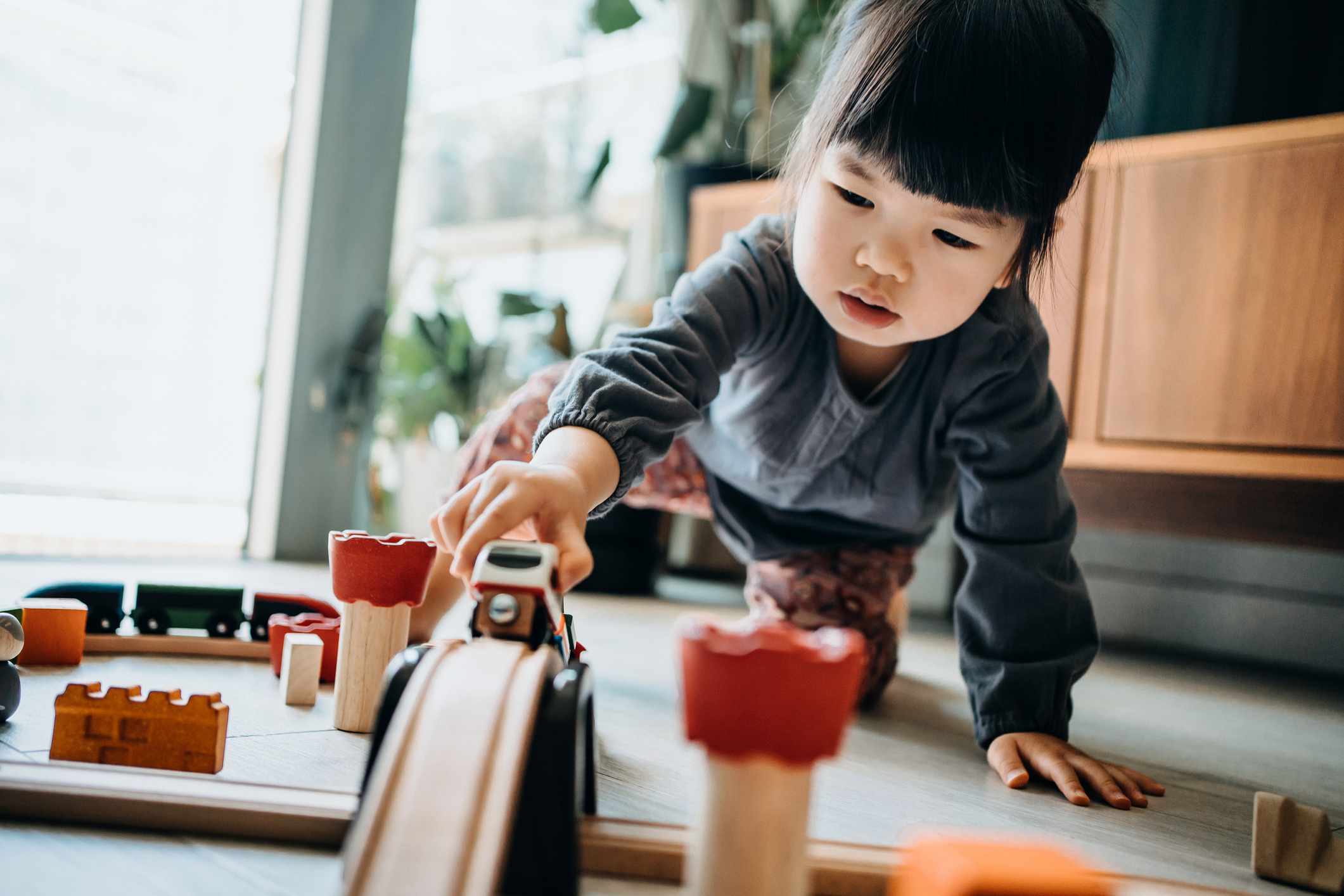
Play therapy is a form of psychotherapy primarily for children (but sometimes, adults) working through emotional and mental issues. It helps children express themselves and learn about the world through their natural love of play. Therapists use it primarily for children, but adults can benefit, too.
A play therapist guides a person through play therapy in a comfortable, safe environment using play activities such as painting, dancing, and playing board games. Play therapists sometimes ask other family members,, parents or guardians to get involved in the playtime activities.
Types of Play Therapy
The two main forms of play therapy used by play therapists are:
- Directive Play Therapy: With directive play therapy, the therapist takes a hands-on approach and leads the child through guided play activities to help them express themselves. They’ll typically give specific instructions and supervise the child as they go through it.
- Non-directive Play Therapy: Non-directive play therapy makes use of a less controlled environment. The therapist leaves the child to engage in whatever play activities they might enjoy and express themselves with limited interference.
Techniques
Various techniques can be used in play therapy, depending on your child’s needs and preferred play activities.
Play therapy sessions typically last 30 to 45 minutes. The therapist creates a comfortable and safe environment where the child can play and then observes the child’s interactions with the toys provided.
As the child becomes more comfortable, the therapist introduces specific play activities to address the child’s issues. Common techniques used by play therapists include:
- Using building blocks
- Creating art
- Engaging in sand play
- Playing board games
- Playing with dolls
- Puppet play
- Having tea parties
- Playing card games
- Strategy games like chess or checkers
- Playing hide-and-seek
- Building with LEGOs
What Play Therapy Can Help With
Play therapy can be particularly beneficial for children who have difficulty communicating and expressing themselves in a healthy way.
Children who have experienced trauma or stressful events may find play therapy helpful in regaining a sense of normalcy. It can also be beneficial for children with disorders that affect their emotional and social expressions.
Research suggests play therapy may be effective for children with conditions such as:
Benefits of Play Therapy
People often underestimate the benefits of play therapy. Concerned parents may struggle to see how their children benefit from “just playing.” However, children naturally communicate through play, with or without a therapist’s guidance.
For example, a child playing aggressively with toys might actually be reflecting a violent domestic situation they are witnessing.
Benefits of play therapy include:
- It provides a way for children who struggle with verbal communication to express themselves through play activities. A child who refuses to speak might express their thoughts or needs by drawing or painting.
- It creates a space where a child will feel comfortable being themselves instead of other more traditional forms of psychotherapy.
- It allows the child to take charge of their therapy process. Effective play therapy allows the child to use toys and mediums they are most comfortable with and go at their own pace.
- It helps children understand their emotions, especially if they had struggled with doing this before.
- It helps children build up their communication and social skills with time. After several sessions, a child who wasn’t speaking might start to utter several phrases.
Effectiveness
Further research into the effectiveness of play therapy still needs to be carried out. Most traditional forms of therapy might not connect with children who are as young as 3 to 12 years old.
In a 2009 study on the effectiveness of play therapy with aggressive children, researchers divided a group of students with a history of aggressive behavior into two groups. One group was exposed to play therapy and the other group was used as a control group. At the end of the study, the researchers found that the children who had been exposed to play therapy showed significant improvement in aggressive behaviors over the children in the control group.
A 2005 analysis of 93 studies conducted between 1953 to 2000 on the effectiveness of play therapy with children also supports the theory that it’s an effective method of therapy for children. The review found that this form of therapy produced positive effects, even more so when the parents of the child in therapy were involved. It also found that this form of therapy appeared to be effective across age and gender.
Things to Consider
While a play therapist will take the lead during play therapy, the child’s parent or guardian also has an important role to play.
The play therapist will typically have a joint consultation with the parent and guardian and the child and also separate consultations with all parties involves. This is done to completely understand the child’s needs. When looking for a play therapist for your child, it’s important to ensure they have the relevant experience and expertise.
How to Get Started
If you have a child who might benefit from play therapy or know someone who could you should get started by getting in touch with a licensed psychologist or psychotherapist who has expereience dealing with children, and with play therapy. Play therapy is typically done over several sessions, it’s also important to work with someone with who your child feels absolutely comfortable.
Get Help Now
We’ve tried, tested, and written unbiased reviews of the best online therapy programs including Talkspace, BetterHelp, and ReGain. Find out which option is the best for you.
Verywell Mind uses only high-quality sources, including peer-reviewed studies, to support the facts within our articles. Read our editorial process to learn more about how we fact-check and keep our content accurate, reliable, and trustworthy.
-
Center for Play Therapy , University of North Texas. What is play therapy? 2021
-
College of Education & Human Development, Georgia State University. What is play therapy? 2021
-
Ray DC, Blanco PJ, Sullivan J M, Holliman R. An exploratory study of child-centered play therapy with aggressive children. International Journal of Play Therapy.2009;18(3), 162–175. https://doi.org/10.1037/a0014742
-
Bratton S, Dee R, Tammy R & Jones L. The Efficacy of Play Therapy With Children: A Meta-Analytic Review of Treatment Outcomes. Professional Psychology: Research and Practice. 2005 http://dx.doi.org/10.1037/0735-7028.36.4.376
Thanks for your feedback!
What is your feedback?
Helpful
Report an Error
Other
