

Key Takeaways
- Openness means being willing to try new things and have new ideas.
- People with high openness like new experiences and are often very creative.
- Having low openness can make people want to keep things familiar and avoid change.
Openness refers to how open-minded you are to new ideas or experiences. Research has also connected this personality trait with creativity and intelligence. In the field of psychology, openness is sometimes called ‘openness/intellect’ or ‘open to experience.’
Here we explore what openness means, ways that it can affect your behavior, and how it is measured. We also discuss why some people are more open than others and provide steps you can take if you want to strengthen this aspect of your personality.
What Openness Means
Openness is one of the Big Five personality traits. The Big Five theory suggests that personality is composed of five major dimensions:
- Agreeableness
- Conscientiousness
- Extraversion
- Openness
- Neuroticism
Each of these dimensions is represented on a continuum. This means that you can be high in openness, low in openness, or somewhere in the middle.
Research indicates that whether you are high or low in the Big Five personality traits can impact your physical and mental health, relationships, and school and work performance.
High Openness
People high in the trait of openness tend to be more open-minded and willing to embrace new ideas and novel experiences. They approach unfamiliar things with a level of curiosity. They’re also good at thinking about and making connections between different concepts and ideas.
Being high in openness is associated with higher levels of creativity and increased creative achievement, particularly in the arts. Some research has even connected this trait with a higher level of intelligence. For instance, one study noted that people with genius-level intelligence often have high openness.
Low Openness
People low in openness tend to prefer routine and tradition. Unlike individuals with high openness, they approach new experiences and ideas with great caution and strive for familiarity instead.
Someone low in openness may pass up opportunities that involve change, even if those changes could lead to academic or career advancement. Rather than pursue a career that would be more rewarding, for instance, they may decide to stay in their current role because it is familiar.
Individuals with extremely low openness may be seen as rigid and close-minded, and they may find it difficult to cope with change.
Common Characteristics of Openness
A person high in openness tends to have several of the following characteristics:
- Adventurous and likes novel things
- Creative, often interested in artistic endeavors
- Enjoys hearing new ideas
- Intelligent and knowledgeable
- Likes thinking about abstract concepts
- Usually more liberal and open to diversity
Openness to experience is correlated with another psychological trait known as absorption. Absorption involves having a vivid imagination and increases one’s likelihood of having spiritual experiences, along with being linked with greater hypnotic susceptibility.
People high in openness enjoy things that are new, different, and surprising. They are also more likely to pay attention to their feelings and inner experiences.
Factors That Influence Openness
Is a person’s tendency to be open or closed to experience influenced by their genetics or environment? In psychology, this is known as the nature versus nurture debate, and research has found connections for each.
For example, one study found that openness predicted 18% of the brain’s default network function variation, suggesting a biological component to this trait. This network deals with retrieving episodic memories, future thinking, and creative cognition.
Other studies suggest that one’s environment plays a role in openness development. The way you were parented and your interactions with others can both impact how open you are to new ideas and experiences.
It’s important to recognize that environment can be a two-way street. Where you tend to spend most of your time can impact personality trait development, but your personality traits can also influence the types of environments you prefer to frequent.
Some studies suggest that openness tends to decrease with age.
Determining Your Level of Openness
Like the other personality dimensions, openness to experience is often measured using self-report inventories. These questionnaires typically contain a number of statements and people must choose a response that best reflects how much they agree with the statements on a scale of 1 (strongly disagree) to 5 (strongly agree).
How Open to Experience Are You?
If you are curious about how you might score on this personality trait, this informal quiz can give you a general idea. Examples of statements used to determine one’s level of openness include:
- I’m good at coming up with new ideas.
- I often think about the deeper meaning of things.
- I’m curious about how things work.
- I enjoy thinking about theoretical ideas.
- I have many artistic hobbies.
- I place a high value on aesthetics and artistry.
- I have an active imagination.
- I appreciate being around diverse groups of people.
- I enjoy philosophical discussions.
- I tend to daydream or easily get distracted by flights of fancy.
- I like going to cultural events, art museums, and poetry readings.
- I prefer theoretical discussions over making small talk.
If you strongly agree with most or all of these statements, you are likely very open to experience. If you strongly disagree, you might be low in openness. If your answers are somewhere in between, you are probably like most people and fall somewhere in the middle of the openness spectrum.
The advantage of self-reports is that they are quick and easy to administer. One potential downside, however, is that their results aren’t always reliable.
People sometimes answer in ways that they consider to be more socially desirable. In other instances, they select answers that reflect how they want to see themselves rather than choosing answers that are more reflective of their true thoughts and behaviors.
Ways Openness Can Affect Behavior
Your level of openness can impact the way you behave, also affecting the types of activities you may choose to pursue. Here are several effects to consider.
Creativity and Innovation
Openness to experience is the personality trait that research most closely links with creativity. People high in openness tend to be more creative in general, along with being more likely to pursue creative achievements, engage in divergent thinking, and take part in creative hobbies.
Research also strongly connects psychological openness with a greater likelihood of making breakthrough innovations. Breakthrough innovations are those that achieve a dramatic impact, such as changing industry dynamics or altering a specific market.
Learning and Knowledge
Open people tend to have a higher level of intrinsic motivation to pursue knowledge for its own sake. They’re curious about the world and want to learn more about how it works.
Openness has also been linked to what is known as ‘need for cognition.’ The need for cognition is a tendency to pursue activities that necessitate thinking, including thinking about ideas and engaging in mentally complex tasks.
People with a high need for cognition enjoy solving puzzles, brainstorming solutions to problems, and analyzing ideas.
Research adds that this trait is correlated not only with intelligence, but crystallized intelligence specifically. This type of intelligence involves the ability to use all of the facts and knowledge that a person acquires throughout life.
Political Attitudes
Your level of openness can affect where you stand politically. People high in openness tend to be more liberal. They’re more open toward and accepting of others from diverse social, cultural, and religious backgrounds. Conversely, low openness is associated with right-wing authoritarianism and conservativism.
At the same time, it’s important to remember that the development of certain political beliefs is far more complex than a singular personality trait. For example, some research suggests that political attitude may also be influenced by one’s genetic makeup.
Relationships
How open you are can play a role in how you handle your relationships. If you have low openness and are also low in trust, for example, you may experience greater anxiety in social situations. This can cause you to avoid large gatherings or to engage in behaviors that make you feel safer during social events.
In intimate relationships, your level of openness can affect your attitudes and behaviors related to sex. Some studies link greater openness with more frequent sexual activity in married couples. Others link higher levels of openness with increased sexual satisfaction.
Additional Impacts of Openness
People high in openness may be better equipped to deal with life changes. As an example, one study found that when workers switched from going into a workplace to doing their jobs remotely, those higher in openness had an easier time adapting to this change.
While being open is often considered a positive trait, this doesn’t mean that it doesn’t have any downsides. Because people high in openness are more willing to try different coping strategies, they also have an elevated risk of non-suicidal self-harm.
How to Increase Your Openness
If you want to be more open to ideas and experiences, there are a few things you can do:
- Change up your routine, such as driving a different way to work
- Make it a point to learn one new thing each day
- Set aside a few minutes every day to daydream or let your mind go wherever it would like
- Spend time with people from different backgrounds and cultures
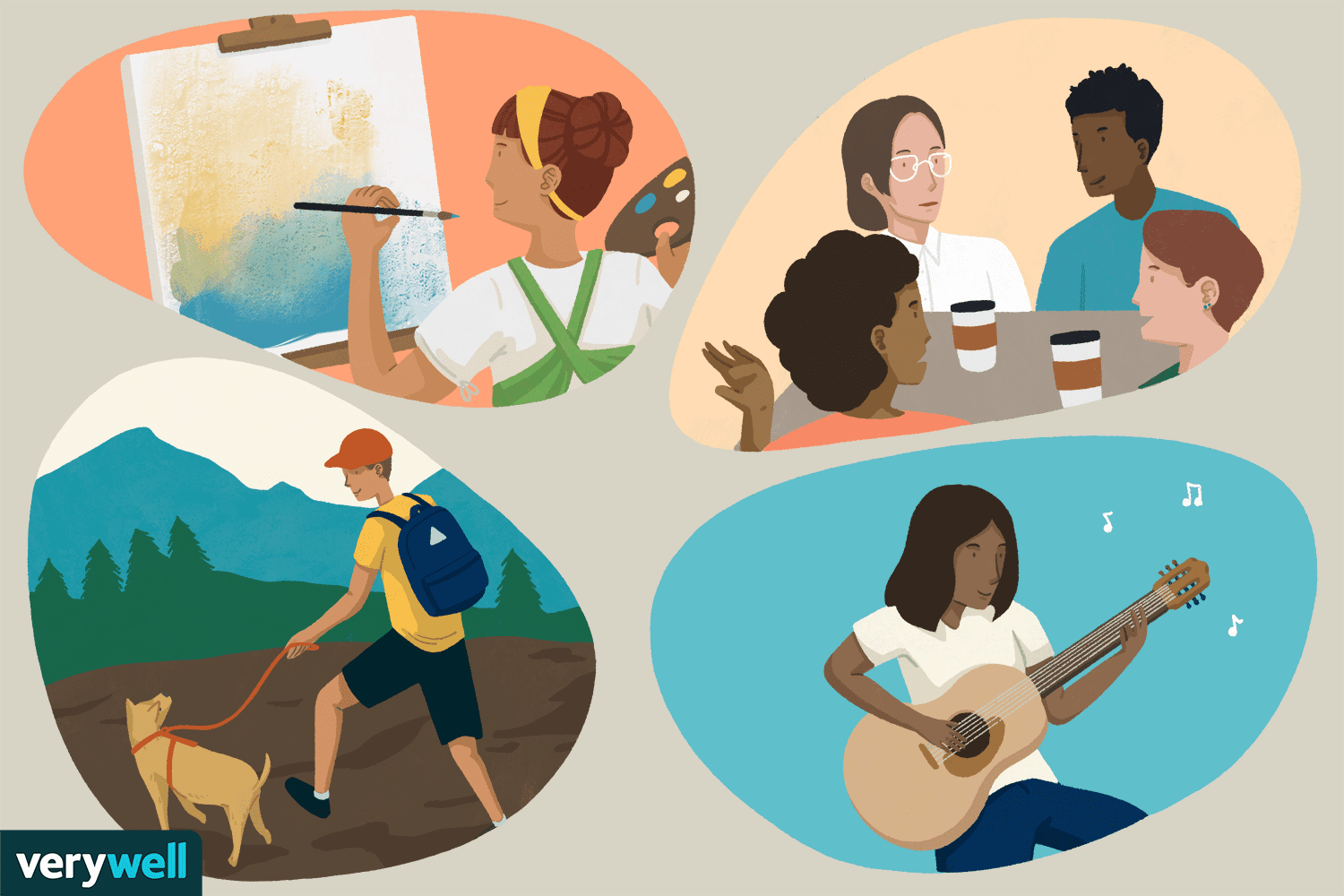
- Try a new hobby or participate in a new activity
