

Key Takeaways
- Vaping THC oil can cause serious lung injuries and has been linked to deaths.
- Many people who vape THC oil experience cognitive and motor skill issues.
- Young people are at a higher risk of addiction and withdrawal from vaping THC.
Vaping THC oil involves heating the oil and inhaling it through a vaporizing device like a vape pen or e-cigarette. Many healthcare providers are concerned about the health-related effects of this THC product type.
Marijuana use carries many risks, including addiction. Keep reading to learn more about the risks of THC oil, how to spot the signs that someone you know might have a marijuana addiction, and how you can get help with addiction, withdrawal, and recovery.
Overview of THC Oil
THC is the main psychoactive compound found in marijuana and the substance that produces intoxication effects. In addition to its psychoactive effects, THC is also believed to impact pain, mood, and other feelings. It creates these effects by impacting cannabinoid receptors in the brain.
While some states have legalized the medical and recreational use of marijuana and marijuana products, it is still illegal according to federal law. Marijuana use in any form also comes with short-term and long-term health risks.
Off-Label Uses for THC
The FDA has approved a few THC-containing medications for use with certain medical conditions, such as those related to cancer, AIDS, and epilepsy. However, these medications use purified chemicals that are either derived from or based on those contained within the marijuana plant.
Because the long-term impact of marijuana use in less-purified forms is unknown, the FDA does not approve of THC use in any form beyond these medications. This would include vaping THC oil.
Risks of THC Oil
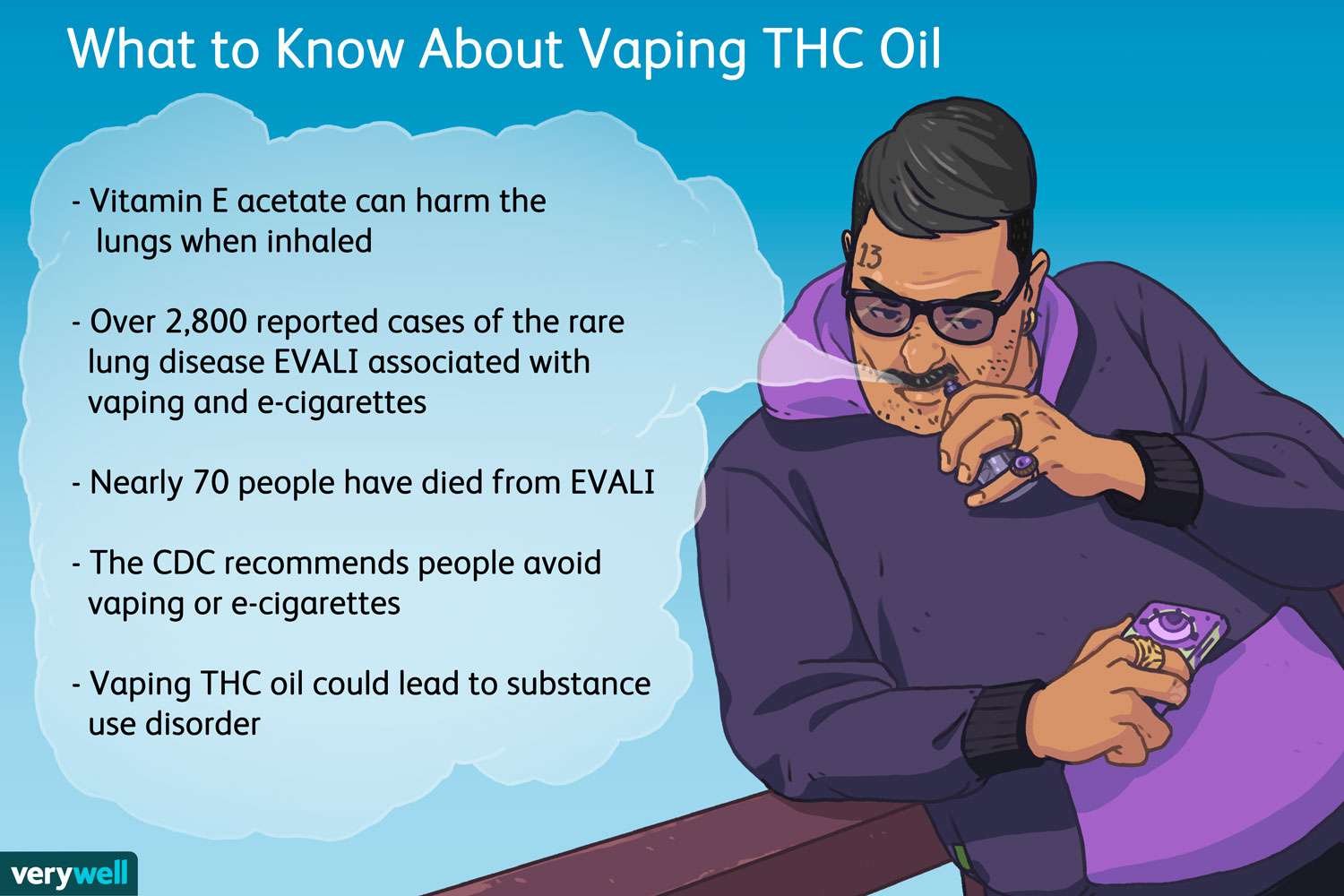
Research suggests that vaping THC oil, especially oil that contains vitamin E acetate, can be particularly harmful to the lungs. Vitamin E acetate, which is regularly added to THC when preparing it for use in e-cigarettes and vaping devices, is especially harmful when it’s inhaled.
In 2019, the dangers of vaping came to light. In September of that year, health officials began investigating an outbreak of a severe lung disease associated with vaping and e-cigarettes. By December, 2,561 cases of the lung disease, often referred to as e-cigarette or vaping use-associated lung injury (EVALI), had resulted in hospitalization or death.
Avoid Vaping THC Due to High Risk of Lung Injury
Nearly 70 deaths have been confirmed from EVALI, spanning 29 states and the District of Columbia. Additionally, 82% of people hospitalized reported using THC-containing products, with 33% reporting the use of these products exclusively.
Currently, the CDC recommends that people avoid using e-cigarettes and vaping products—particularly those that contain THC oil. The Food and Drug Administration (FDA) has joined the CDC in this recommendation.
Vaping THC oil just once can significantly impact your lungs. A study in the Journal of the American Medical Association found that first-time and infrequent users of marijuana were more likely to experience adverse reactions from vaping THC oil.
This study’s authors suggest that the negative impacts of this THC ingestion method are largely due to the enhanced delivery of the oil. This was evidenced by participants having more pronounced effects and experiencing significant impacts on their motor skills and cognitive abilities.
Marijuana concentrates, such as those used in vaping, also have incredibly high THC levels—up to four times as high as those found in top-shelf marijuana. This may also explain why their effects are more enhanced. Research suggests that some forms of THC oil contain THC levels up to 70%, compared to 30% in dried flower forms of marijuana. Regularly using such products increases the risks of cognitive impairment, dependence, psychosis, and withdrawal symptoms.
Other Risks of Vaping THC Oil
There are a number of other risks that have been associated specifically with marijuana use. Among them are:
Longer-lasting side effects of marijuana use include learning, memory, and sleep issues. People who use marijuana repeatedly over time may also experience effects such as:
- Increased risk of addiction
- Increased risk of chronic cough
- Increased risk of schizophrenia (if a genetic risk also exists)
- Learning and memory issues
Vaping can injure the lungs, resulting in symptoms such as a rapid onset cough, breathing troubles, nausea, vomiting, diarrhea, and weight loss. Vaping cannabis is also associated with cognitive impairments and an increased risk for dependence, particularly among young people.
Signs of THC Oil Use
How do you know if someone in your life might be vaping THC oil? Signs of marijuana use can include:
- Being drowsy during the daytime
- Having bloodshot eyes
- Inability to judge time
- Increased cough or wheezing
- Increased hunger for no apparent reason
- Lack of focus or inability to concentrate
- Secretive behavior
- Trouble with coordination
- Unusually talkative
- Vaping devices or oils in their possession or in their room
- Weird, unexplained smells (some THC vaping oils are flavored, resulting in a variety of scents)
Marijuana vaping use is on the rise, particularly in certain age groups. For instance, the number of college-age students who’ve vaped in the past month increased from 5.2% to 14% in just two years’ time. A 2022 study adds that the number of teens vaping cannabis in the last 30 days increased seven-fold from 2013 to 2020.
How to Recognize THC Vaping Oil & Devices
The appearance of THC oil vaping devices can vary, ranging from having a pen-like shape to being rectangular or oval. The oil either comes pre-filled in the device or is sold in compact containers (pods) for refillable devices. The Centers for Disease Control and Prevention (CDC) offers a helpful visual dictionary for identifying both THC vaping devices and oils.
Other Concerns About THC Oil
There are a couple of misconceptions surrounding both THC and vaping.
THC Is Not the Same as CBD
Some people confuse THC with CBD (cannabidiol), another cannabinoid found in the cannabis plant. However, it’s important to note that CBD oil and THC oil impact the body in completely different ways.
One notable difference is that while THC has psychoactive properties, CBD does not. As a result, CBD does not make you intoxicated. CBD is also believed to work with other receptors in the body to produce an overall feeling of well-being.
There are also legality differences. As of April 2024, 38 states, three territories, and the District of Columbia have approved the use of marijuana for medical purposes. As of November 2023, 24 states, three territories, and the District of Columbia have approved marijuana for recreational use.
Even though these states and territories allow marijuana use for medical or recreational purposes, it is still illegal under federal law.
Conversely, the 2018 Farm Bill removed hemp (of which CBD oil is a derivative) from the definition of marijuana, making it legal federally as long as it contains 0.3% THC or less.
Vaping THC Is Not Safer Than Smoking It
It is a common misconception that vaping is less risky than smoking. A 2018 Gallup Poll found that most Americans believe that vaping is less harmful than smoking, with 40% of the respondents indicating that marijuana was “not too” harmful. Some think this because vaping involves inhaling vapor rather than smoke. The issue is that there isn’t enough research to support this belief.
Risks of Vaping THC
Research indicates that the dangers of vaping include:
- having no regulation of the compounds in vaping products (so you don’t know what you’re getting)
- the fact that vaping delivers a larger amount of THC;
- and the potential of heating coils in vaping devices to increase exposure to carcinogens.
Other health experts warn that vaping marijuana may even damage the lungs more so than smoking or vaping nicotine. This doesn’t mean that vaping nicotine is safe, but that vaping THC oil is thought to create a greater amount of lung damage.
A study published in Addiction adds that while vaping nicotine may be safer than smoking cigarettes, the same may not hold true when it comes to marijuana. In fact, additives like vitamin E acetate may make this delivery method even more dangerous than smoking marijuana, putting the person’s lungs at a greater risk for injury.
Vaping THC oil is not safer than smoking, and may lead to increased exposure to carcinogens, greater lung damage, and an increased risk for serious lung injury.
Tolerance, Dependence, and Withdrawal
If you vape THC oil regularly, you may develop a tolerance, potentially through the way cannabis creates neuroadaptive changes in the brain. Vaping THC oil can also lead to a substance use disorder.
The National Institute on Drug Abuse (NIDA) estimates that between 9% and 30% of people who use marijuana develop some sort of substance use disorder. Also, people who begin using marijuana before they turn 18 are four to seven times more likely than adults to develop cannabis use disorder.
Vaping THC can lead to dependence, addiction, and withdrawal.
Addiction
The National Institute on Drug Abuse shares that cannabis use disorder can turn into a marijuana addiction if the usage of this drug cannot be stopped even when it interferes with various aspects of your life. This could include causing issues at work, school, or home.
Additionally, because some confuse dependence with addiction, it is unclear exactly how many people may be addicted to marijuana. Though, the Substance Abuse and Mental Health Services Administration (SAMHSA) estimates that one in 10 people using marijuana will develop an addiction.
In a survey of 9,003 U.S. adults, one-half of them said that they felt that addiction is a risk of marijuana use.
Withdrawal
People with a history of long-term marijuana use (including vaping THC oil) may experience mild withdrawal symptoms if they stop. These include:
Symptoms such as these can make it difficult to quit using marijuana. Though they are typically mild, if they are bothersome or severe, talk to your healthcare provider. They may be able to help.
How to Get Help
Several options exist for people who want help with their marijuana use. Ones that seem to provide the best outcome include:
- Cognitive behavioral therapy, which includes learning how to identify and correct behaviors, resulting in better self-control and the resolution of issues contributing to drug use
- Contingency management, which is a form of behavioral therapy that involves monitoring certain behaviors and instituting rewards if a specific positive behavior occurs, or rewarding a lack of the behavior if that is the desired outcome
- Motivational enhancement therapy, which helps promote motivation within the individual to change, and to engage in treatment
At this time, no medications are FDA-approved to treat cannabis use disorder, but research is ongoing for several options that may help by relieving issues related to stress, anxiety, and trouble sleeping.
Recovery from THC Oil Use
In addition to exploring your treatment options, it can also be helpful to enlist support resources as you recover from an addiction to THC oil. Options include:
- Choose how you will quit: There are two main options for quitting marijuana use: gradual tapering or cold turkey. Tapering your use can minimize withdrawal symptoms, but quitting cold turkey may be an option if you don’t think you can reduce your use gradually on your own.
- Join support groups: Joining a support group for marijuana addiction can be an excellent source of encouragement, information, and strength.
- Find distractions: Look for ways to cope with drug cravings such as finding distractions. Engaging in hobbies or spending time with friends are strategies that can help take your mind off cravings. Exercise has also been shown to be an effective way to deal with marijuana cravings.
