

Key Takeaways
- You can stop overthinking by recognizing unhelpful thought patterns and challenging negative assumptions before they spiral out of control.
- Healthy distractions, mindfulness, and self-acceptance can shift your focus away from worry.
- If overthinking affects your mood or daily life, therapy can teach you tools to manage your thoughts more effectively.
Overthinking can make even simple decisions feel overwhelming. While it might seem that analyzing every detail might lead to better answers, it often leaves you stuck in a cycle of worry and indecision that prevents you from taking action. Learning how to stop overthinking starts with recognizing that your thoughts are no longer helpful.
Instead, try noticing when your thoughts start to spiral. Find healthy ways to distract yourself and challenge your negative assumptions. Developing greater self-acceptance and strengthening your communication skills can also help you address a tendency to overthink.
Verywell / Laura Porter
Understanding Overthinking and Why It’s Hard to Stop
Overthinking involves thinking about a certain topic or situation excessively and analyzing it for long periods of time. When you overthink, you have a hard time getting your mind to focus on anything else. It becomes consumed by the one thing you are thinking about.
While some people believe that overthinking may be helpful since it involves looking at an issue or problem from nearly every viewpoint possible and anticipating future events, the opposite is true. Research suggests that overthinking is associated with feelings of depression, anxiety, and post-traumatic stress disorder (PTSD).
Everyone overthinks sometimes. Maybe you keep thinking about all the things that could go wrong when you give your presentation next week, or you’ve wasted countless hours trying to decide what to wear to your upcoming job interview.
Finding ways to stop overthinking can help you take action in your life rather than simply thinking about things that are bothering you. Instead of going over something again and again, you can start taking the steps necessary to resolve the situation.
How to Know If You’re Overthinking
If you’re wondering whether you are overthinking a particular situation or concern, there are a few things you can look for. Signs of overthinking include:
- An inability to think about anything else
- Being unable to relax
- Constantly feeling worried or anxious
- Fixating on things outside of your control
- Feeling mentally exhausted
- Having a lot of negative thoughts
- Replaying a situation or experience in your mind
- Second-guessing your decisions
- Thinking of all the worst-case scenarios
Why It Happens
Not Being Solution-Focused
Overthinking is different from problem-solving. Overthinking is about dwelling on the problem, while problem-solving involves looking for a solution.
Imagine a storm is coming. Here’s an example that shows the difference between overthinking and problem-solving:
- Overthinking: “I wish the storm wouldn’t come. It’s going to be awful. I hope the house doesn’t get damaged. Why do these things always have to happen to me? I can’t handle this.”
- Problem-solving: “I will go outside and pick up everything that might blow away. I’ll put sandbags against the garage door to prevent flooding. If we get a lot of rain, I’ll go to the store to buy plywood so I can board up the windows.”
Problem-solving can lead to productive action. Overthinking, on the other hand, fuels uncomfortable emotions and doesn’t look for solutions.
Experiencing Repetitive Thoughts
Ruminating—or rehashing the same things over and over again—isn’t helpful. But, when you’re overthinking, you might find yourself replaying a conversation or situation in your head repeatedly or imagining something bad happening many times.
Dwelling on your problems, mistakes, and shortcomings increases your risk of mental health problems such as anxiety, insomnia, substance use, and PTSD. As your mental health declines, you are more likely to ruminate on your thoughts. It’s a repetitive cycle that can be tough to break.
Your Brain Won’t Shut Off
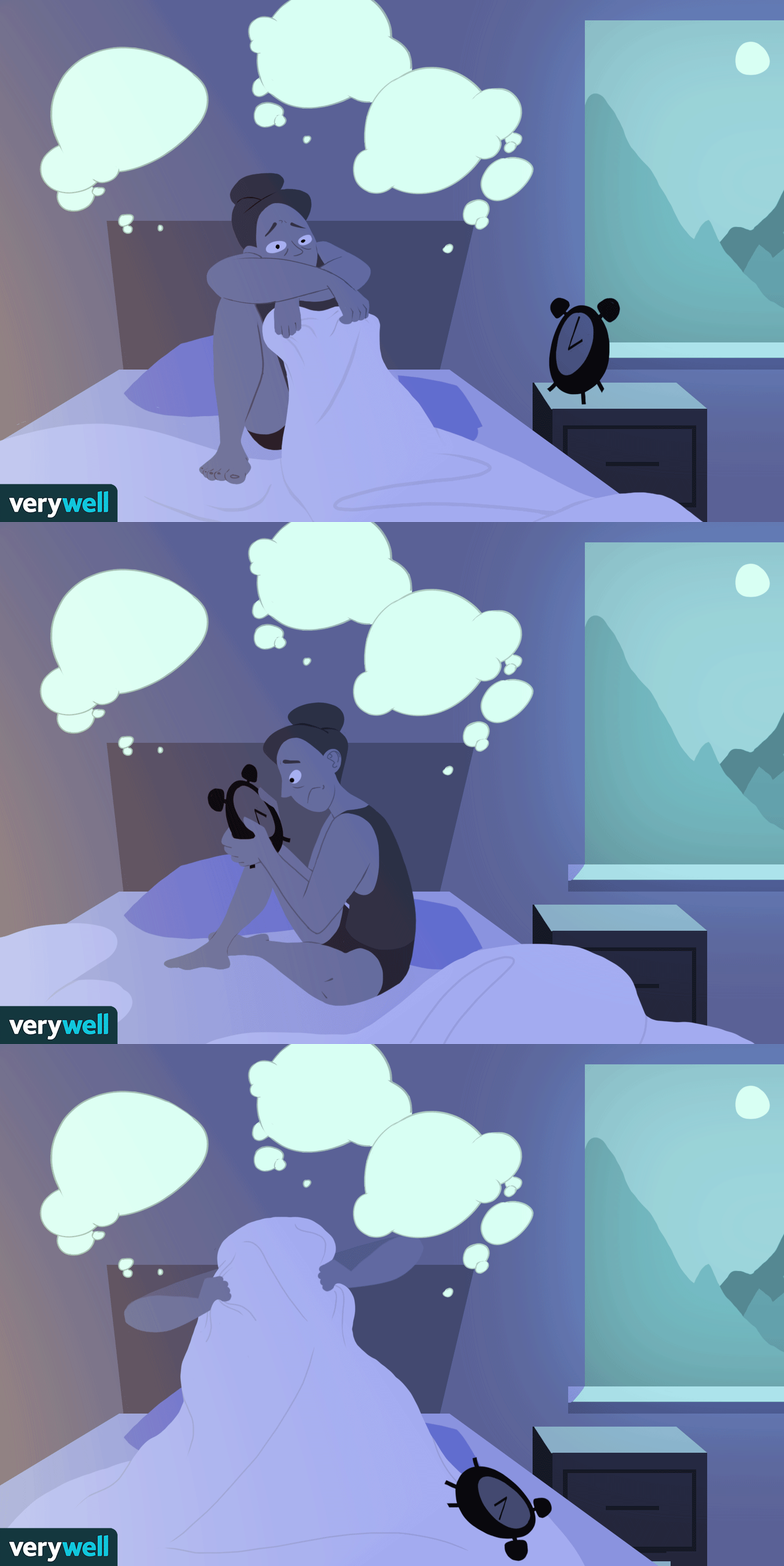
When you’re overthinking, you might feel like your brain won’t shut off. When you try to sleep, you might even feel as though your brain is on overdrive as it replays scenarios in your head and causes you to imagine bad things happening.
Research confirms what you likely already know—rumination interferes with sleep. Overthinking makes it harder to fall asleep.
Overthinking impairs the quality of your sleep too. So it’s harder to fall into a deep slumber when your brain is busy overthinking everything.
Difficulty falling asleep may contribute to more worrisome thoughts. For example, when you don’t fall asleep immediately, you might imagine being overtired the following day. That may cause you to feel anxious, which may make it even harder to fall asleep.
Struggling With Making Decisions
You might try to convince yourself that thinking longer and harder helps you. After all, you’re looking at a problem from every possible angle. But overanalyzing and obsessing actually become a barrier. Research shows that thinking too much makes it tough to make decisions.
If you’re indecisive about everything from what to eat for dinner to which hotel you should book, you might be overthinking things.
It’s very likely that you are wasting a lot of time looking for second opinions and researching your options when ultimately, those little choices might not matter so much.
Remember, your time is valuable too.
Second-Guessing Decisions
Overthinking sometimes involves beating yourself up for the decisions you have already made.
You could waste a lot of time thinking your life would be better if you’d only taken that other job or not started a business. Or maybe you get upset with yourself for not seeing red flags sooner—because you believe they should have been obvious!
Overthinking can take a toll on your mood and may make it even more difficult to make decisions in the future.
While a little healthy self-reflection can help you learn from your mistakes, rehashing and second-guessing is a form of mental torture.
Common Ways People Overthink
There are also different types of overthinking that a person might engage in. Many of these are caused by cognitive distortions, which are negative or distorted ways of thinking.
- All-or-nothing thinking: This type of overthinking involves only seeing situations in black or white. Instead of looking at both the good and the bad, you might analyze an event only in terms of it being a total success or a total failure.
- Catastrophizing: This type of overthinking involves thinking things are worse than they are. For example, you might fear that you will fail an exam. This leads to worry that you will fail the class, which will lead to failing school, not getting a degree, and not being able to find a job. This type of overthinking sets you up to worry about unrealistic worst-case scenarios.
- Overgeneralizing: This form of overthinking happens when you base a rule or expectation for the future on a single or random event from the past. Instead of accepting that different outcomes are possible, you might assume that certain things will “always” or “never” happen. In this case, overgeneralizing one event from the past to every event in the future often leads to overthinking and worrying about things that might never occur.
How It Affects Your Life
Overthinking is not a mental illness, and while overthinking can make you anxious, it is not necessarily the same thing as anxiety. However, it can often play a role in several mental health conditions. Some disorders that are associated with overthinking include:
Overthinking can have a bidirectional relationship with mental health issues. Stressful events, depression, and anxiety can make people more prone to overthinking, and then this overthinking contributes to worse stress, anxiety, and depression.
Overthinking can also take a serious toll on relationships. Assuming the worst and jumping to incorrect conclusions can lead to arguments and conflicts with other people. Obsessing about every little thing other people do and say can also mean that you misunderstand what they are trying to convey.
It can also lead to relationship anxiety and behaviors like constantly needing reassurance or attempting to control other people. Such behavior can harm your relationships with others.
Ways to Finally Stop
Getting out of your head can be a challenge. Research shows thinking less about a problem might actually be the key to developing better solutions. Here are a few ways to stop overthinking.
Distract Yourself
Rather than sit and think about a problem for endless amounts of time, you can distract yourself for a bit. Research has found that it can be helpful to distract yourself from a stressor by engaging in healthy activities that generate positive emotions.
Your brain may find better ways to work out a solution in the background while you’re distracted with another task, like working in the garden. Or, you might “sleep on it” and discover that your brain solves the problem for you while you’re sleeping.
A brief distraction can give you a break. And it may get your mind focused on something more productive. And, your brain might even develop a solution for you when you stop thinking about the problem.
Challenge Negative Thoughts
Remind yourself that your thoughts are not facts. Every thought you have will not be truthful, accurate, or even realistic. Learning how to reframe them in a more positive way can help relieve the tendency to overthink.
Example
Negative thought: I am always saying the wrong things. I’m sure people think I am an idiot.
Challenge: Is it true that I always say the wrong things, 100% of the time? Has anyone told me that I sound like an idiot?
Reframed thought: There are times I could articulate my thoughts more clearly, and I feel frustrated when that happens. I am considering taking a speech class at the local college to improve my communication skills.
When you find yourself overthinking, challenge these thoughts. Ask yourself if they are realistic. Consider alternative scenarios. It can be difficult at first, but learning to call out your own overthinking can help you learn to replace negative thoughts with more helpful ones.
Work on Your Interpersonal Skills
Studies have found that improving your interpersonal skills can help stop you from overthinking since these skills greatly affect this particular habit. Ways to develop stronger interpersonal skills include:
Meditate
Meditation can be an excellent tool for redirecting your thoughts more positively. As you meditate, work on focusing on your breath. The goal is not to clear your mind, but rather to focus it on something positive (or neutral) and practice redirecting your focus whenever your thoughts wander.
With practice, it will be much easier to stop overthinking before it becomes a more serious problem. Research has found that a 10-minute meditation can be an effective way to stop intrusive thoughts and worry.
Practice Self-Acceptance
Overthinking often stems from dwelling on past mistakes or worrying about things that you cannot change. Instead of berating yourself for things you might regret, try working toward being more accepting and compassionate of yourself.
Research suggests that people who extend themselves such compassion are more likely to use adaptive coping strategies.
Strategies that may help you become more self-accepting include:
- Thinking about the aspects of yourself that you like and appreciate
- Practicing gratitude
- Cultivating a strong support system made up of people who can provide encouragement and love
- Forgiving yourself for things you regret
- Remembering that no one is perfect and everyone is a work in progress
Get Therapy
If you can’t break free from overthinking, consider getting professional help. Overthinking may be a symptom of a mental health issue, like depression or anxiety. On the flip side, it may also increase your susceptibility to developing mental health problems.
A mental health professional may teach you skills that will help you stop obsessing, ruminating, and dwelling on things that aren’t helpful. They may also help you identify coping strategies that work for you, such as mindfulness or physical exercise.
If you feel like your brain is on overdrive, talk to your healthcare provider. They may be able to refer you to a therapist who can help you put an end to overthinking.
