

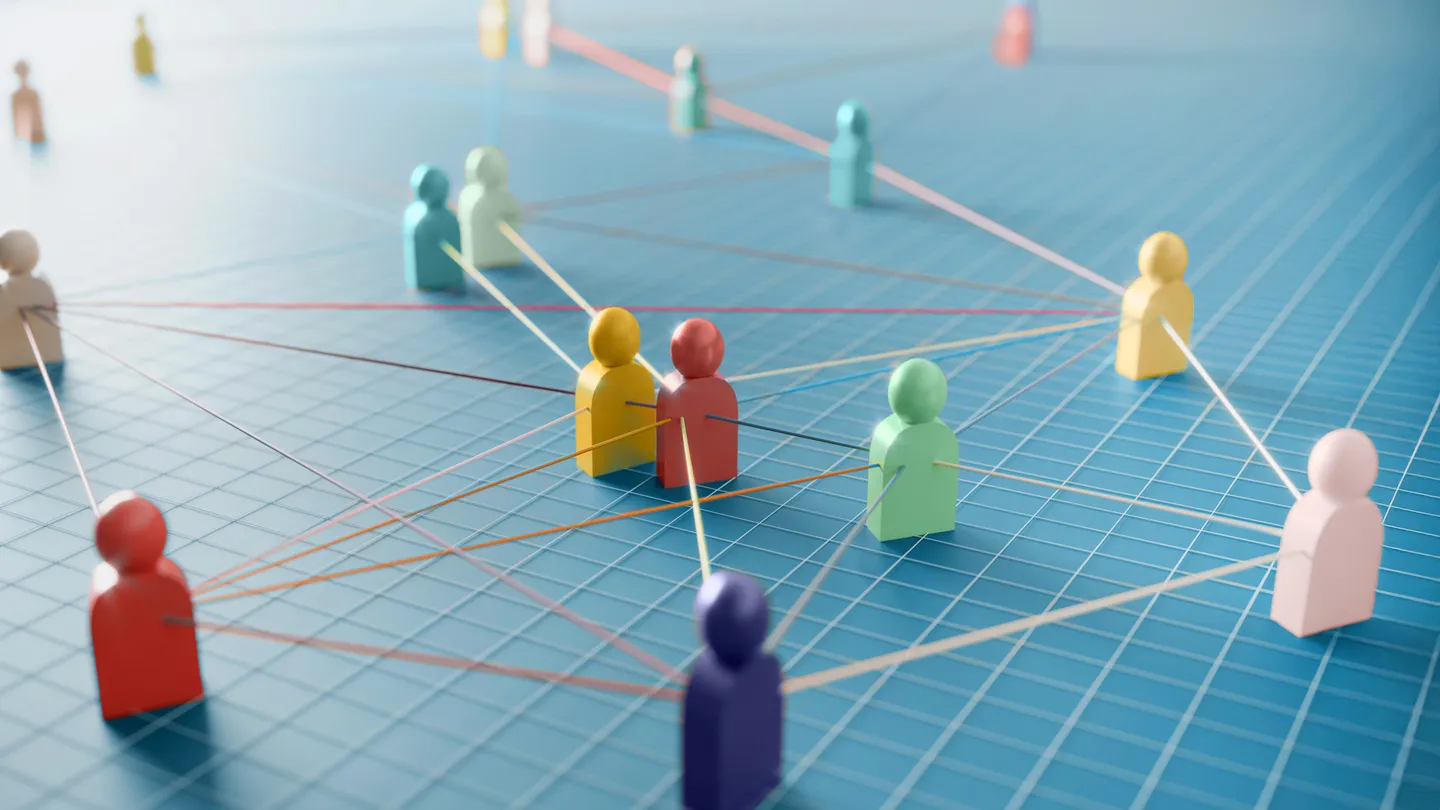
Taking care of your social life could pay dividends when it comes to your health and lifespan. New findings suggest that there may be longevity benefits related to strong social relationships, especially for people who cultivate them in multiple settings and maintain those connections for years.
Using data from more than 2,100 adults in the long-term Midlife in the United States (MIDUS) project, researchers found that people with more cumulative social advantage — defined as strong social connections among family and friends, as well as in religious and community settings, sustained over one’s lifetime — experienced slower rates of cellular aging and lower chronic inflammation levels.
[1]
Lead study author Anthony Ong, PhD, a professor of psychology at Cornell University in Ithaca, New York, says that the findings demonstrate a connection between social ties across various spheres of life and tangible biological resilience.
“Specifically, we provide molecular evidence that higher cumulative social advantage is associated with slower biological aging and reduced chronic, low-grade inflammation. This suggests that it’s the clustering and compounding of diverse social resources over the life course that shape the fundamental biological processes of aging,” he says.
How Social Ties Affect Biological Markers of Aging
Participants provided blood and urine samples so that researchers could measure cellular aging, inflammation, and hormone levels tied to stress.
Participants also answered questions related several key areas that shape cumulative social advantage, or the sum total of a person’s connections over their lifetime:
- Familial support growing up
- Connection with community and neighborhood
- Involvement in religious or faith-based communities
- Ongoing emotional support from family and friends
By combining biological measurements with a totaled social advantage score, researchers found that higher scores were tied to the following:
- Slower cellular aging, measured by blood-based DNA methylation “clocks” that can reflect biological age and disease risk
- Lower levels of interleukin-6, a pro-inflammatory marker found in blood serum linked to heart disease, diabetes, and neurodegenerative diseases like Alzheimer’s
Notably, researchers didn’t find a link between social ties and short-term markers of stress, such as the hormones cortisol and catecholamine.
“The fact that we saw strong protective links in the long-term systems, like epigenetics and inflammation, but no significant link in the short-term stress hormone output, was unexpected. However, this might be due to how these hormones were measured; collecting overnight urine samples may not be sensitive enough to capture the dynamic changes in stress hormones that happen throughout the day,” says Dr. Ong.
What Are Epigenetics?
The findings add to a growing body of research around the biological mechanisms that turn genes on or off in the cells in the body, known as epigenetics.
[2]
“In simple terms, epigenetic aging is a way of measuring your body’s true biological age, which can be faster or slower than your chronological age, which is the number of years you’ve been alive. We measure this using ‘epigenetic clocks,’” says Ong. “As we age, these patterns change predictably. An epigenetic clock analyzes these patterns to determine how fast or slowly your body is aging.”
He adds that the epigenetic clocks used in the study — scientifically known as GrimAge and DunedinPACE — can help predict death and chronic disease risk.
In addition to slowing biological aging and reducing inflammation, previous evidence has highlighted the ways that social relationships can impact a range of health outcomes. One notable example is the recent finding that social isolation can significantly increase the risk of having or dying from a heart attack or stroke and negatively impact brain health.
[3]
“Social circumstances, both objective and subjective, have measurable biologic change that is related both to aging and to illness,” says Jeremy Nobel, MD, MPH, a primary care doctor and public health researcher at Harvard Medical School and the Harvard T.H. Chan School of Public Health in Boston.
“This can allow us to compare the influence of certain external factors on the speed of aging at the cellular level, and it can also allow us to measure the impact of various interventions on aging, which is exciting for those like me who are working as public health practitioners.”
Dr. Nobel says that the current findings are observational, rather than interventional — which would’ve allowed for measuring the rates of cell aging and inflammation over a period of time, he says.
The researchers add that the study’s cross-sectional design was only able to show that social advantage was associated with slower aging — rather than definitively proving that social advantage caused the slower aging.
“It is possible there is reverse causality — meaning that people who are already in poorer health might withdraw from their social relationships, leading to low social advantage, rather than low social advantage causing poor health. We need future longitudinal studies to establish clear temporal order,” Ong explains.
In addition, while the study adjusted for factors such as age, income, and education, there’s a possibility that other unmeasured variables — such as genetics, environmental factors, or early life adversity — had an impact on social opportunities and biological outcomes, which could have potentially led to some biases in the results.
The Secret to Living a Longer Life?
To reap the benefits of your social ties, Nobel recommends adjusting your perspective: “View social connections to be as important as diet, exercise, and sleep,” he says. Where you go from there depends on how you best connect with others, but Ong offers a few suggestions on where to start.
For example, you might work to strengthen existing relationships, an area where he suggests prioritizing depth and consistency. This might look like:
- Making time for mutual conversation
- Maintaining genuine trusted confidants
- Investing in community relationships through active involvement
When it comes to striking up new connections, getting involved in your community can be beneficial, Ong says. You could, for example:
- Join a neighborhood group.
- Participate in local events.
- Contribute through volunteering or mentorship.
- Engage in group practices that allow for the fostering of shared purpose, which may or may not be faith-based.
It may be even better if your preferred activities allow for creative engagement like dancing, visual arts, and music, Nobel says. These activities allow people to engage on an authentic level.
“Authenticity really matters to our mind, and then what matters to our minds in terms of loneliness matters to our biology,” says Nobel. “I invite people to view loneliness as a signal, just like thirst is a biological signal that we need hydration. Loneliness does impair our health, so it’s not surprising that we, our bodies and our minds, have generated a mechanism to tell us to go out and connect with others.”
