

Key Takeaways
- Taste aversions happen when you avoid a food after it made you feel sick once.
- Unlike usual classical conditioning, taste aversions can occur after just one bad experience.
- You can develop a taste aversion even if the sickness occurred many hours after eating the food.
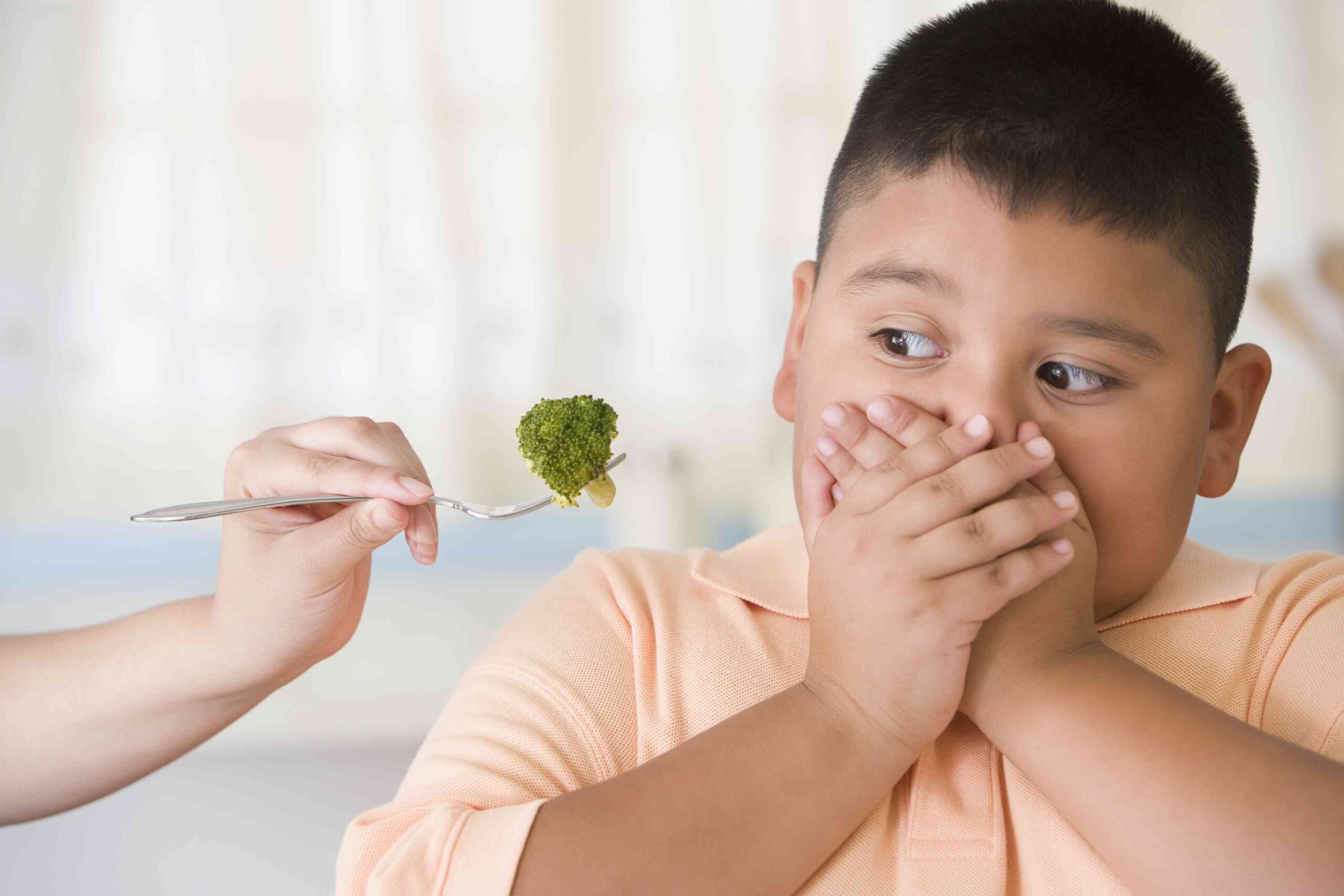
A conditioned taste aversion involves the avoidance of a certain food following a period of illness after consuming the food. These aversions are a great example of how classical conditioning can result in behavioral changes, even after just one incidence of illness.
What Is Conditioned Taste Aversion?
Have you ever become ill after eating something and later found the thought of eating the that food made you feel queasy? A conditioned taste aversion can occur when eating a substance is followed by illness. For example, if you ate sushi for lunch and then became ill, you might avoid eating sushi in the future, even if it had no relationship to your illness.
While it may be expected that we would avoid foods eaten immediately before contracting an illness, research has shown the consumption of the food and the onset of the illness do not necessarily need to occur close together to develop conditioned taste aversions. They can develop even when there is a long delay between the neutral stimulus (eating the food) and the unconditioned stimulus (feeling sick).
In classical conditioning, conditioned food aversions are examples of single-trial learning. Just one pairing of the previously neutral stimulus and the unconditioned stimulus can establish an automatic response.
Conditioned taste aversions are quite common and can last between several days to several years.
Examples
Imagine that you are on vacation and eat a chicken enchilada at a restaurant. Hours after eating the enchilada, you become violently ill. For years after that incident, you might be unable to bring yourself to eat a chicken enchilada and may even feel queasy when you smell foods that remind you of the particular dish.
This conditioned taste aversion can occur even if you know your illness is not connected to eating that particular item. In reality, you might be fully aware that you picked up a nasty stomach virus from one of your traveling companions who had been ill just days before the trip.
Consider your own aversions to certain foods. Can you link your distaste for particular items to a period of illness, queasiness, or nausea? You may realize you avoid specific types of food for years simply because you consumed them before you became ill.
Understanding Taste Aversions
Taste aversions occur both consciously and unconsciously. In many cases, people may be completely unaware of the underlying reasons for their dislike for a certain of food. So why do these taste aversions occur, especially when we consciously realize that the illness was not tied to a particular food?
Conditioned taste aversions are a great example of some of the fundamental mechanics of classical conditioning.
Is that all there is to these conditioned taste aversions? The scenario described above does not exactly fit with the standard expectations for classical conditioning. First of all, the conditioning occurred after just a single pairing of the neutral stimulus and unconditioned stimulus (UCS). Second, the time span between the neutral stimulus and UCS is usually just a matter of seconds. In the case of a conditioned taste aversion, the time-lapse often amounts to several hours.
While it may seem to violate the general principles of classical conditioning, researchers have been able to demonstrate the effects of conditioned taste aversions in experimental settings.
In one such experiment, psychologist John Garcia fed flavored water (a previously neutral stimulus) to lab rats. Several hours later, the rats were injected with a substance (the UCS) that made them ill. Later, when the rats were offered flavored water, they refused to drink it.
Explaining These Aversions
Because Garcia’s research contradicted much of what was previously understood about classical conditioning, many psychologists were unconvinced by the results. Pavlov suggested any neutral stimulus could elicit a conditioned response if occurring close to each other but, if that were true, why would feelings of sickness be associated with the food that was eaten hours earlier? Wouldn’t the illness be associated with something that had happened right before the symptoms occurred?
“Taste aversions do not fit comfortably within the present framework of classical or instrumental conditioning,” Garcia noted. “These aversions selectively seek flavors to the exclusion of other stimuli. Interstimulus intervals are a thousand-fold too long.”
What Garcia and other researchers were able to demonstrate in their research was that, in some cases, the type of neutral stimulus used does have an influence on the conditioning process. So why does the type of stimulus matter so much in this particular case? One part of the explanation lies in the concept of biological preparedness. Essentially, virtually every organism is biologically predisposed to create certain associations between certain stimuli.
If an animal eats food and then becomes ill, it might be very important to the animal’s continued existence to avoid such foods in the future. These associations are frequently essential for survival, so it is no wonder they form easily.
Verywell Mind uses only high-quality sources, including peer-reviewed studies, to support the facts within our articles. Read our editorial process to learn more about how we fact-check and keep our content accurate, reliable, and trustworthy.
-
Lin JY, Arthurs J, Reilly S. Conditioned taste aversion, drugs of abuse and palatability. Neurosci Biobehav Rev. 2014;45:28-45. doi:10.1016/j.neubiorev.2014.05.001
Additional Reading
-
Garcia J, Ervin FR, Koellin RA. Learning with prolonged delay of reinforcement. Psychon Sci 5. 1996;121–122. https://doi.org/10.3758/BF03328311
-
Garcia J, Koelling RA. Relation of cue to consequence in avoidance learning. Psychonomic Science. 1966;4:123-124. doi:10.3758/BF03342209
-
Weiten, W. Psychology: Themes and variations. Belmont, CA: Thompson Wadsworth; 2007.
Thanks for your feedback!
What is your feedback?
Helpful
Report an Error
Other
