

Key Takeaways
- Human factors psychology helps design products and workplaces that fit human abilities and improve safety.
- Human factors psychologists study how people interact with machines to make them easier and safer to use.
- This field started during World War II to improve the safety and performance of military systems.
Human factors psychology focuses on the interaction between people and machines. Its findings are used to create and improve products, equipment, and environments in a way that complements human capabilities while maximizing performance and safety.
Here we take a closer look at this subfield of psychology to understand better what it is. If it sounds like an interesting career field to you, we also share what a human factors psychologist does, where this type of professional works, specialization options, and more.
What Is Human Factors Psychology?
Human factors is devoted to understanding how people interact with their environments and the products and objects in those environments. This interdisciplinary area of psychology focuses on a range of different topics related to human-machine or human-computer interaction. Among them are:
- Human capabilities and errors
- Product design
- Workplace safety and ergonomics
The terms “human factors” and “ergonomics” are often used synonymously, with “human factors” being commonly used in the United States and “ergonomics” being the preferred term in Europe.
Human factors applies principles of psychology to the designing of products and creating work environments that boost productivity while minimizing safety issues. This discipline differs a great deal from areas such as clinical psychology or counseling psychology as it does not focus on understanding individuals or psychological issues.
History of Human Factors Psychology
The field of human factors formally began during World War II, when a range of experts worked together to improve the performance and safety of manned systems. Since that time, it has continued to grow and plays a significant role in many other fields, including computing, manufacturing, product design, engineering, military, and government industries.
What a Human Factors Psychologist Does
Human factors psychologists spend much of their time performing research. They use what they know about human behavior, perception, attention, and cognition to create more usable products and work environments.
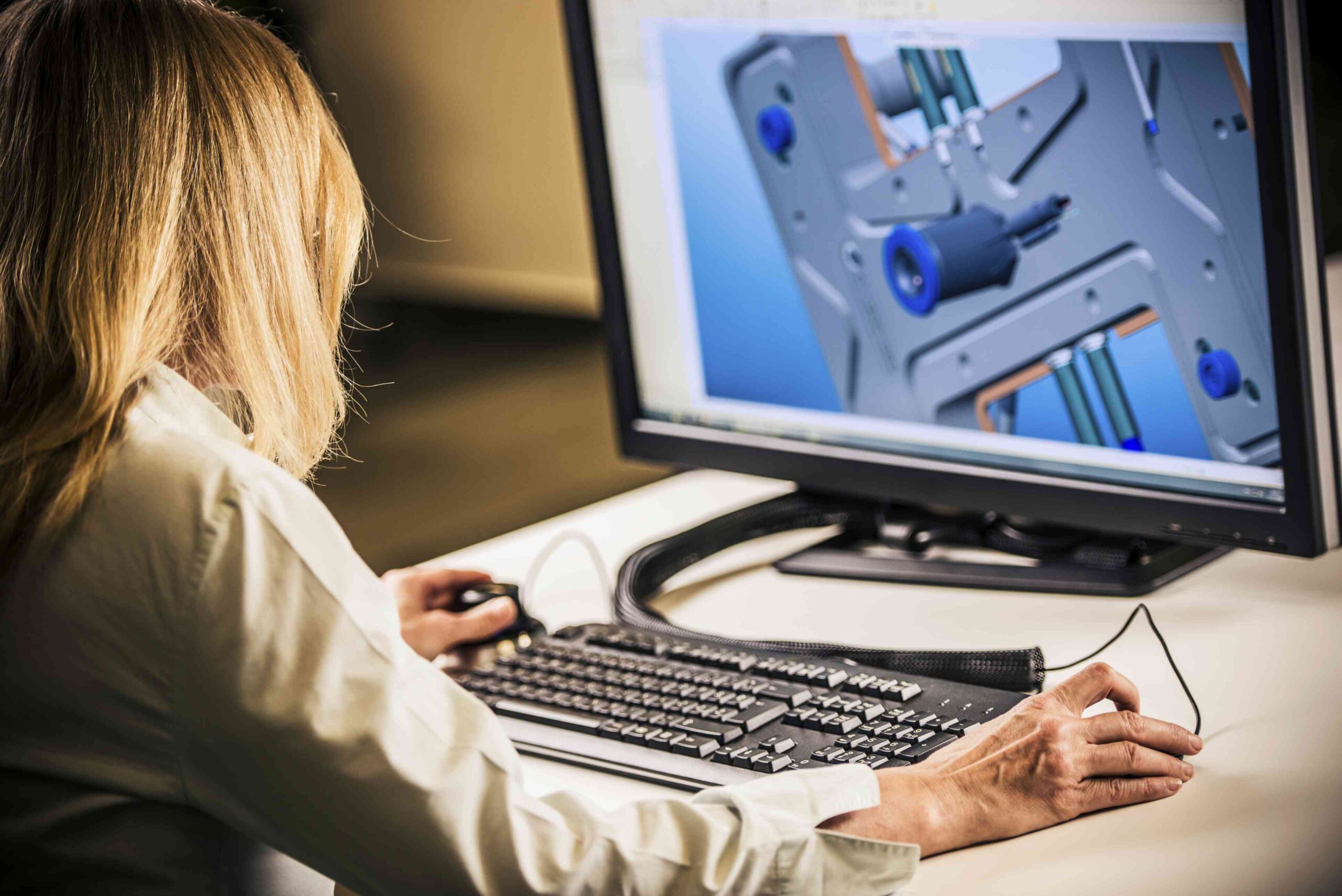
Human factors psychologists often work to solve real-world problems that impact human performance. For example, they might conduct research on a particular product used in a workplace, such as a screen interface used by workers at an electrical plant.
After researching how employees interact with and utilize the interface, the psychologist can redesign it to make it easier and safer to use, as well as more accurate. They can also help minimize potentially dangerous errors or correct errors that reduce workplace performance.
Other tasks a human factors psychologist might be involved in regularly include:
- Creating training programs
- Designing more reliable products
- Developing ergonomic workstations to reduce employee fatigue and injury
- Improving productivity and performance
Human factors psychologists help others by developing products that maximize usability. They also strive to improve worker safety and efficiency.
Specializations
Human factors psychologists may choose to specialize in a particular area. Some of the specialty areas within this field include:
Why Study Human Factors Psychology?
There are many great reasons to study human factors psychology. Two are that you can work in a variety of settings, and this position offers a higher-than-average salary.
Work Environment
Since human factors psychology can be applied to almost any situation that involves humans working with environments, products, and machines, professionals in the field can be employed in a broad range of settings. They might work for government agencies to evaluate and design defense products and tools, for example, or for private companies to design computers and software.
Work environments where a human factors psychologist might be found include:
- Academic institutions
- Consulting organizations
- Independent research facilities
- Governmental agencies
- Military-related research centers
Human factors psychology is a multidisciplinary field that often works with people in other areas, including engineering, medicine, and computer science.
Salary
The average salary for a human factors psychologist in the U.S. is $154,056 per year. When broken down, this equates to roughly $74 per hour or an income of $2,962 per week.
For comparison, the median weekly earnings for all full-time workers combined is $1,145. This places human factors psychologists among the top earners nationwide.
How to Start a Career in Human Factors Psychology
Most entry-level positions in this field require at least a bachelor’s degree. That said, many human factors psychologists have a master’s or doctorate degree specific to this area of study.
The Human Factors and Ergonomics Society (HFES) offers a list of HFES-accredited colleges that offer master’s and doctorate degree programs in human factors psychology or related fields. Among them are Arizona State University, Auburn University in Alabama, Clemson University in South Carolina, George Mason University in Virginia, and Virginia Tech.
Whether you decide to earn a bachelor’s degree in psychology or go for a master’s or doctorate in human factors psychology, you can make a positive difference in other people’s lives. Follow your dreams and it’s amazing what you can do!
Verywell Mind uses only high-quality sources, including peer-reviewed studies, to support the facts within our articles. Read our editorial process to learn more about how we fact-check and keep our content accurate, reliable, and trustworthy.
Thanks for your feedback!
What is your feedback?
Helpful
Report an Error
Other
