

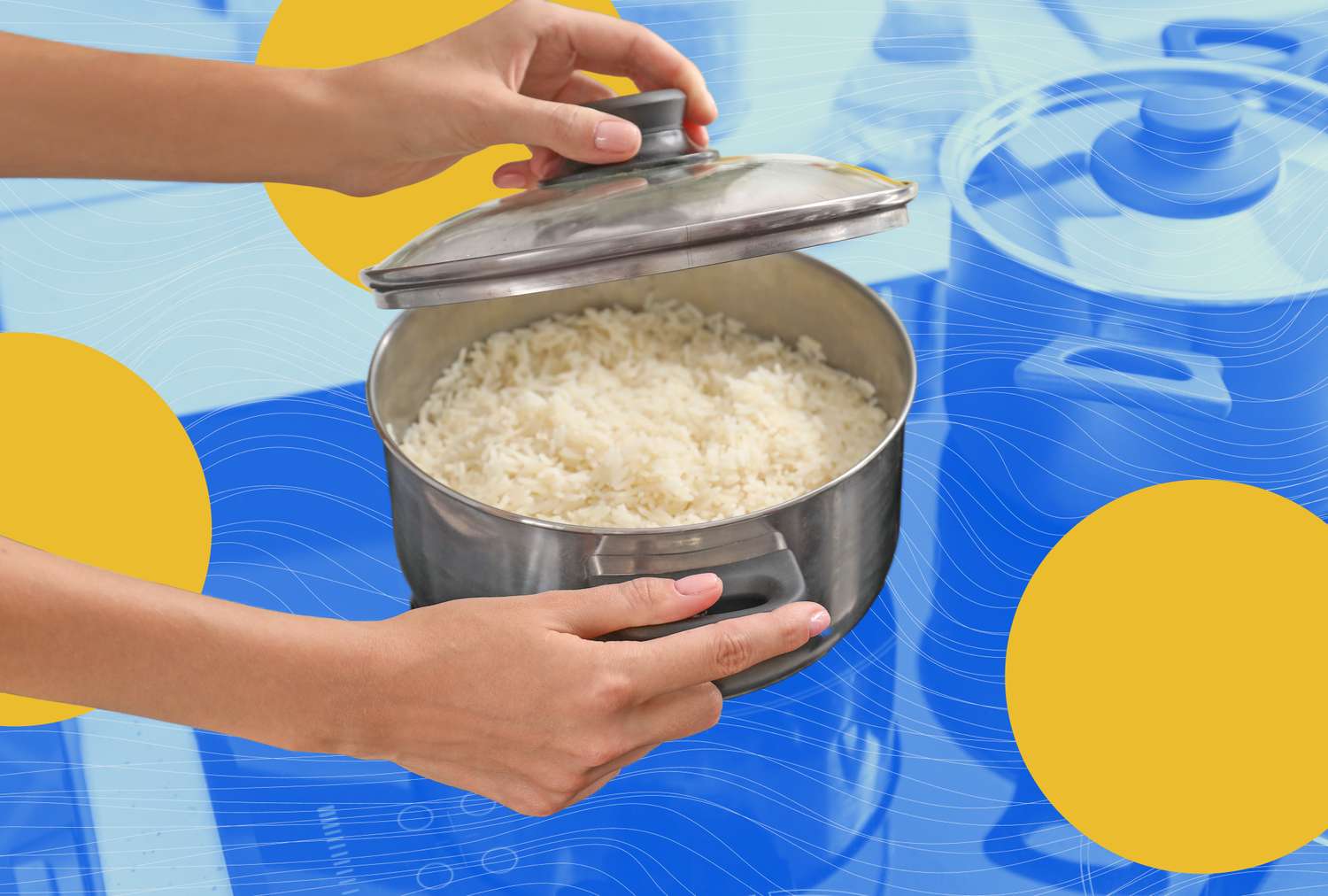
- Rice has some arsenic because of the soil it’s grown in and water used to flood the crop.
- Cooking rice like pasta, with lots of water that’s drained, can cut down arsenic levels by over 50 percent.
- Choosing white rice over brown, rinsing your rice, and buying U.S. grown rice can also help reduce levels.
Rice is a staple food for billions of people around the globe. But recent research on high levels of arsenic in rice has home cooks concerned about the long-term effects of consuming elevated amounts of this heavy metal over time—and searching for ways to lower the risk.
Arsenic is an element that occurs naturally in soil and water. There are two different types—organic arsenic and inorganic arsenic—but they don’t pose the same health risk. “Our bodies are better able to break down and process organic arsenic than inorganic arsenic,” says Christian Kelly Scott, Ph.D. “Some estimates find that around 60% of the arsenic in US rice is inorganic arsenic, which is linked to several kinds of cancers, cardiovascular diseases and increased risk of diabetes when consumed in significant amounts over long periods of time,” he adds.
Sources of arsenic in rice can vary depending on where it’s grown around the world, according Christine Bergman, Ph.D, RD. “Arsenic in rice comes mainly from naturally occurring minerals in soil and groundwater, but human activities such as using arsenic-contaminated irrigation water, past pesticide use and intensive groundwater pumping can increase how much arsenic dissolves in flooded fields and is absorbed by rice plants,” she says.
While arsenic in rice isn’t a major concern for adults, it understandably feels concerning, and not only because of how widely this grain is consumed. Here’s why cooking rice in lots of water, similarly to pasta, can help reduce the level of arsenic, plus other tips to reduce your exposure.
Why Cooking Rice Like Pasta Helps Reduce Arsenic in Rice
The good news is that a simple, accessible cooking method can reduce a large percentage of the arsenic in rice: cooking it with a high ratio of water, similar to the way you’d cook pasta. Using about 6-10 parts water for 1 part rice helps reduce arsenic content by 40 to 60 percent, according to the FDA. It’s worth noting that some of the nutrients in fortified rice, like folate and iron, are also reduced using this method.
Another cooking method that’s been effective in research studies is parboiling. Rice is boiled in a large volume of water for a few minutes to partially cook it before the initial cooking water is drained off. Then, it’s finished with a smaller volume of fresh water at a lower temperature until absorption, similar to the way rice is cooked on stoves and in rice cookers around the world. One study found that parboiling one part rice in four parts water before draining and finishing the process in two parts fresh water reduced arsenic levels by 54% for brown rice and 73% for white rice.
“This mid-process water change is the key step,” says Sara Bratager, senior food safety and traceability scientist at the Institute of Food Technologists. “As the rice boils, arsenic moves into the water. Draining that water and replacing it prevents the rice from reabsorbing the arsenic later in the cooking process.”
However, cooking rice in a large volume of water to remove arsenic—whether you parboil it or cook it completely—won’t necessarily work everywhere. Bergman points out that in places with elevated levels of arsenic in water supplies, this technique isn’t effective. Even in regions where these cooking methods do remove significant portions of the arsenic in rice, Scott, Bergman and Bratager agree that consuming a diversified diet that doesn’t rely too heavily on any one food is the most reliable way to reduce long-term risk from arsenic.
“While reducing arsenic in rice is both beneficial and an important area of ongoing research, it’s important to note that public health guidance emphasizes the need to limit overall arsenic exposure, which comes from many environmental sources,” Bratager says. “For this reason, it’s important to think about managing overall exposure rather than focusing on a single food.”
That’s especially true for babies and children, whose smaller bodies could be impacted more significantly by consuming rice containing high levels of arsenic. “Brown rice may be a poor fit for a weaning food, but if you’re cooking a diversity of grains, you’re going to have a lower arsenic content in general,” Scott says.
Tips for Cooking Rice Like Pasta
Unlike rice recipes that use the absorption method—or scientific studies, for that matter—you don’t typically rely on ratios when cooking pasta.
“Cooking rice like pasta takes the guesswork out of the process. You’re not relying on precise water-to-rice ratios or watching for the moment when all the liquid evaporates,” says Gen La Rocca, a chef and recipe developer. “Instead, the rice cooks in plenty of boiling water and absorbs what it needs. It’s one of the easiest ways to get consistent results without worrying about timing down to the minute.”
La Rocca recommends bringing a large pot of salted water to a boil, just like you would for pasta. Simply add the rice, then cook until it’s tender. As with other cooking methods, white rice typically takes less time, around 10 to 12 minutes, while brown rice will take more like 25 to 35 minutes. When the rice is done to your liking, drain away the water by pouring the contents of the pot into a fine mesh strainer. If you’re cooking a very large volume of rice at once, use a long-handled strainer to scoop it out of the pot rather than dumping it out.
Other Ways to Reduce Arsenic in Rice
- Use white instead of brown rice: The arsenic levels in brown rice are higher because it includes the bran and germ.1
- Seek out US-grown rice: Globally, white rice contains an average of 53% inorganic arsenic and brown rice 65%, significantly more than the US average for both types.1
- Rinse rice before cooking: If you prefer not to cook rice like pasta or parboil it, you can remove a smaller amount of arsenic from rice by rinsing it well.
The Bottom Line
Rice absorbs arsenic in much higher concentrations than other crops because the plants are flooded with water during cultivation. Concentrations of harmful inorganic arsenic can vary widely depending on where rice is grown, but studies indicate that rice grown in the US tends to contain lower levels than the global average. Cooking rice in a large volume of water like pasta (one part rice to six parts water) can reduce arsenic content, while parboiling and draining it before finishing cooking in a smaller volume of fresh water can lower it too. Other methods for reducing the health risk from arsenic in rice include eating white rather than brown rice, diversifying your diet and avoiding feeding rice to young children in large amounts.
