

Key Takeaways
- THC is not FDA-approved to treat anxiety and can be addictive.
- Low doses of THC may help relieve anxiety, but high doses can make it worse.
- Marijuana can lead to higher rates of anxiety, panic disorder, and depression.
Marijuana has been used as an herbal remedy for thousands of years. Today, marijuana is more widely legalized in the United States for medicinal and recreational use. Researchers have also begun to explore how compounds found in marijuana, including THC and CBD, might affect mental health conditions such as anxiety.
Research suggests that low doses of THC may produce a subjective sense of anxiety relief. However, higher doses tend to increase negative mood. While THC may have some possible beneficial mental health applications, there are still potential negative side effects of marijuana to consider.
It is also important to note that this research is still in its early stages. While some states have legalized marijuana or some cannabis-derived products, it is still illegal on the federal level.
This article covers what you need to know about THC for anxiety, including its effects and risks. It also explores the risk of addiction as well as alternative treatment options for managing anxiety.
How Cannabis Affects Anxiety
No cannabis-derived products are FDA-approved to treat anxiety or other mental health conditions. However, some research has suggested that the compounds found in cannabis, including THC and CBD, may offer some mental health benefits.
For example, there is some evidence to suggest that CBD could be helpful in the treatment of anxiety and addiction. However, more research is needed before any cannabis product can be recommended to treat anxiety.
However, this hasn’t stopped consumers from turning to THC and other cannabis products to relieve anxiety. According to one review, 50% of people who use medical marijuana do so to reduce anxiety symptoms.
Impact on Anxiety Symptoms
Two of the main compounds in cannabis—tetrahydrocannabinol (THC) and cannabidiol (CBD)—are linked with potential therapeutic effects for anxiety.
THC is the psychoactive compound in cannabis. THC is linked with feelings of euphoria, relaxation, and sociability in low doses.
Medical marijuana is sometimes used for panic attacks. However, in high doses, THC may induce panic attacks in some people.
Reduced Symptoms of Other Psychiatric Disorders
Scientists at Washington State University published a study in the Journal of Affective Disorders that found that smoking cannabis can significantly reduce self-reported levels of depression and stress in the short term.
Although, repeated use doesn’t seem to lead to any long-term reduction of symptoms, and in some individuals, it may increase depression over time.
Pain Relief
Cannabis may provide relief for physical pain—particularly among adults with chronic or neuropathic pain (caused by damaged nerves). More research is needed to compare marijuana’s effectiveness in relieving pain compared to other options.
Improved Sleep
Studies show that short-term cannabis use may lengthen the time a person is able to stay asleep. THC and/or CBD may help some fall asleep earlier and wake up fewer times during the night.
People who struggle to fall or stay sleep due to their anxiety may self-medicate with cannabis to try to improve their sleep. However, cannabis doesn’t improve sleep for everyone.
Risks of THC for Anxiety
Marijuana can affect your body in many ways beyond just getting you high. The high feeling you may experience after smoking or ingesting marijuana is due to tetrahydrocannabinol (THC), the chemical compound that gives marijuana its psychoactive effects.
The effects of THC do not come without risks, and long-term or frequent use has been associated with several potential side effects.
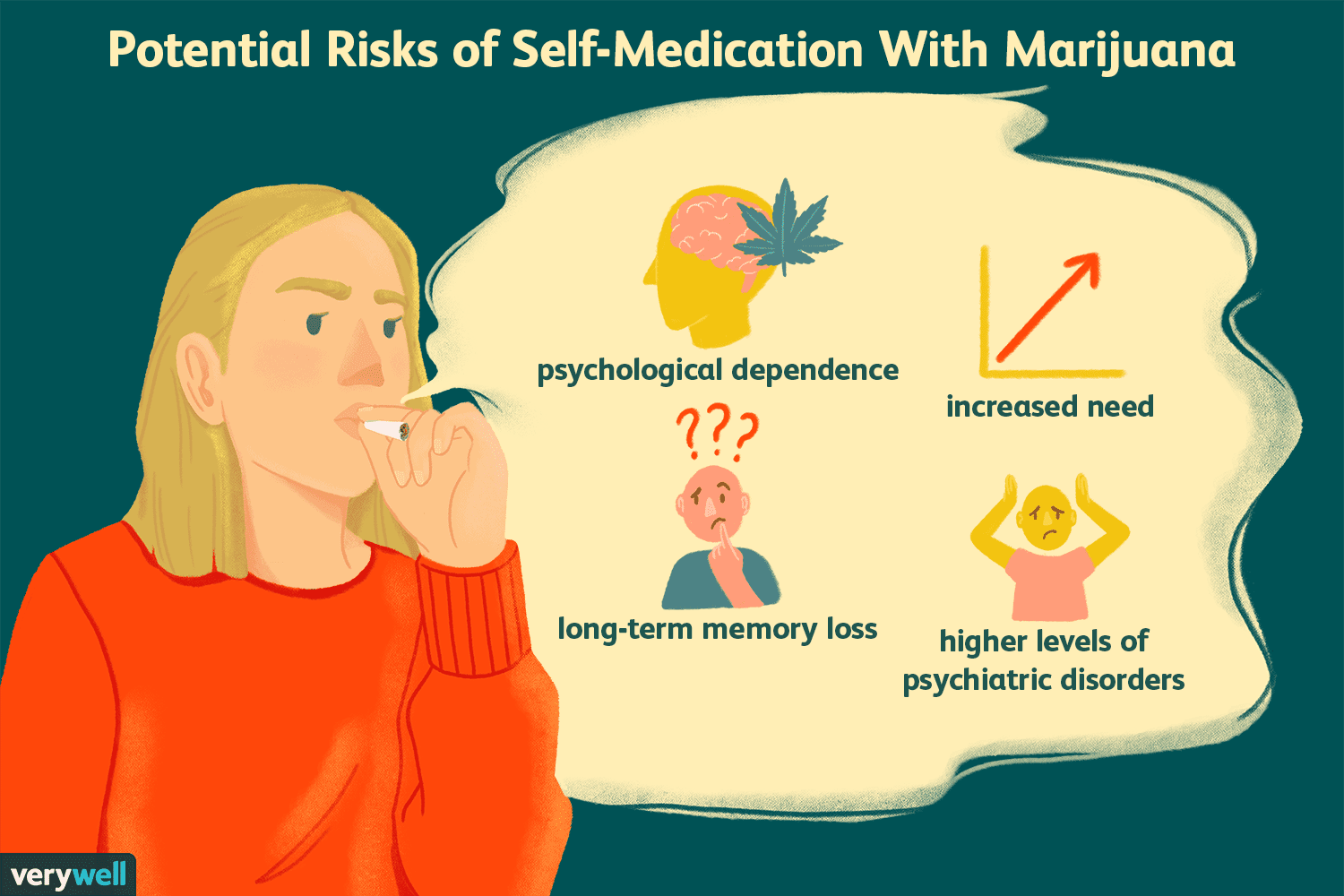
Higher Levels of Psychiatric Disorders
Various studies have found that young adults who self-medicate with marijuana actually have higher rates of:
While depression may trigger someone to use cannabis to relieve their symptoms, studies found that higher cannabis use is linked with worsened depression symptoms. More research is needed to understand whether cannabis may cause depression or increase the risk of depression.
Some research has shown that heavy use of marijuana in adolescents (particularly in teenage girls) can be a predictor of anxiety and depression—and increase the risk of suicide—later in life.
Certain susceptible individuals that use high-potency marijuana regularly may also be at a greater risk of developing psychosis later on.
Psychological Dependence
The central problem with using marijuana as an anxiety coping tool is that it can create a psychological dependence on the substance.
People may come to rely on marijuana because its effects are fast-acting; however, this may make some less likely to develop long-term behavior-based coping strategies that are more sustainable over time.
Long-Term Memory Loss
Several studies have found that long-term marijuana use can cause memory loss. Memory impairment occurs because THC alters one of the areas of the brain, the hippocampus, responsible for memory formation.
Increase in Anxiety Symptoms
People predisposed to higher levels of anxiety may be more likely to experience the negative effects of THC (i.e., dysphoria or panic).
THC can raise your heart rate, which, if you have anxiety, may make you feel even more anxious. Using too much marijuana can also make you feel scared, paranoid, or disconnected from reality.
Cannabis can also cause feelings of dizziness, nausea, confusion, and blurred vision, which can contribute to anxiety.
Cannabis Hyperemesis Syndrome
A rare consequence of frequent marijuana use, particularly with today’s more potent strains, is cannabis hyperemesis syndrome (CHS). This involves cyclical nausea and vomiting.
This is paradoxical and can be difficult to diagnose, as marijuana has been used to decrease nausea and vomiting in cancer treatment.
Those who have CHS sometimes find relief in hot baths and showers, but ultimately, abstinence from marijuana is necessary for long-term improvement.
Higher Tolerance
You can develop a tolerance to marijuana. This means that the more you use it, the more you will eventually need to use to get the same effects that you previously experienced.
Cannabis Use Disorder
Cannabis use disorder (also known as marijuana use disorder) is considered an addiction to cannabis in which a person cannot stop using the drug despite its negative impact on life. Signs of cannabis use disorder include:
- Continued use of marijuana despite adverse physical or psychological effects
- Continued use of marijuana despite social or relationship problems
- Engaging in high-risk activities (such as driving a car) while using marijuana
- Experiencing withdrawal symptoms when trying to stop
- Marijuana cravings
- Trying to quit but failing
- Withdrawing from activities or social events to use marijuana
Research suggests that around 30% of people who use marijuana will develop a cannabis use disorder. This risk is four to seven times higher for people who start using marijuana prior to the age of 18.
Cannabis Withdrawal Syndrome
Those who use marijuana heavily may find that if they try to cut back or stop using altogether, they experience symptoms of cannabis withdrawal syndrome (CWS), which include:
Physical Effects
Unfortunately, marijuana use may cause potentially dangerous physical effects such as:
- Cardiovascular strain
- Head rush or dizziness
- High blood pressure
- Impaired motor coordination
- Increased heart rate
- Increased risk of falling or fainting
Risks of Self-Medicating
When you use a substance to treat or cope with a medical problem or symptom without the supervision of a medical professional, it is called self-medicating. Self-medicating often produces an immediate relief of uncomfortable symptoms, reinforcing its use.
People will continue to self-medicate with a substance that temporarily relieves symptoms, even when the substance itself causes unpleasant side effects. Over time, it may be challenging to stop self-medicating despite these side effects. This can also increase a person’s risk for dependence and addiction.
Not enough is known about marijuana’s efficacy for particular medical conditions and its long-term consequences to be considered a safe treatment option.
Recap
While statistics suggest people often use medical marijuana to relieve anxiety, it is not without risks. Marijuana is associated with a higher risk for psychiatric disorders, dependence and addiction, memory loss, increased anxiety, cardiovascular effects, and withdrawal symptoms.
Legality of Marijuana for Anxiety
Some states have legalized the use of medical marijuana to treat a diagnosed anxiety disorder. The states and territories that have approved this use are:
- North Dakota
- New Jersey
- New Mexico
- Nevada
- Oklahoma
- Pennsylvania
- Puerto Rico.
- Virginia
A few other states, including California, New Hampshire, and Missouri, allow doctors to prescribe medical marijuana treatments at their discretion.
While some states have legalized marijuana for medicinal or recreational use, any product containing more than 0.3% THC is still considered illegal according to federal law.
Alternatives to Marijuana
Remember that some level of anxiety is normal and even helpful when you are confronted with something that feels threatening to you.
However, when feeling anxious becomes pervasive and challenging to control, it is best to seek professional help to discuss other forms of anxiety management.
Therapy
Proactive coping strategies, learned through counseling, support groups, as well as self-help books, and educational websites, can create lasting change without the negative components of extended marijuana use. You may work with a doctor to develop a treatment plan that is right for you.
Cognitive behavioral therapy (CBT) and other forms of therapy can help you determine the underlying cause of your anxiety and manage it more effectively. You may work with a doctor to develop a treatment plan that is right for you.
Working with a psychotherapist to manage your anxiety can give you a better handle on your condition in the long run.
Medication
The use of certain prescription medications such as selective serotonin reuptake inhibitors (SSRIs) has been firmly established as a safe and effective treatment for anxiety disorders.
Prescription medication is also preferable to marijuana since the long-term risks have been better studied and are potentially less significant compared to long-term marijuana use.
Some anti-anxiety medications are taken daily, while others are taken episodically during periods of extreme anxiety or during a panic attack.
A psychiatrist or primary care doctor may prescribe anti-anxiety medications, should you need one.
How to Get Help for Cannabis Use Disorder
Suppose you have been using marijuana or other THC-based products to relieve anxiety and feel that you might be dependent or addicted to these substances. In that case, there are treatments available that can help.
Cannabis use disorder is often treated with talk therapy, which can help you address patterns that contribute to substance use, increase your motivation to quit, and strengthen your ability to cope with stress.
Common types of therapy that are often used to treat cannabis use disorder include:
There are no FDA-approved medications to treat cannabis use disorder. However, your doctor may prescribe medications to treat co-occurring mental health conditions, including anxiety and depression.
