

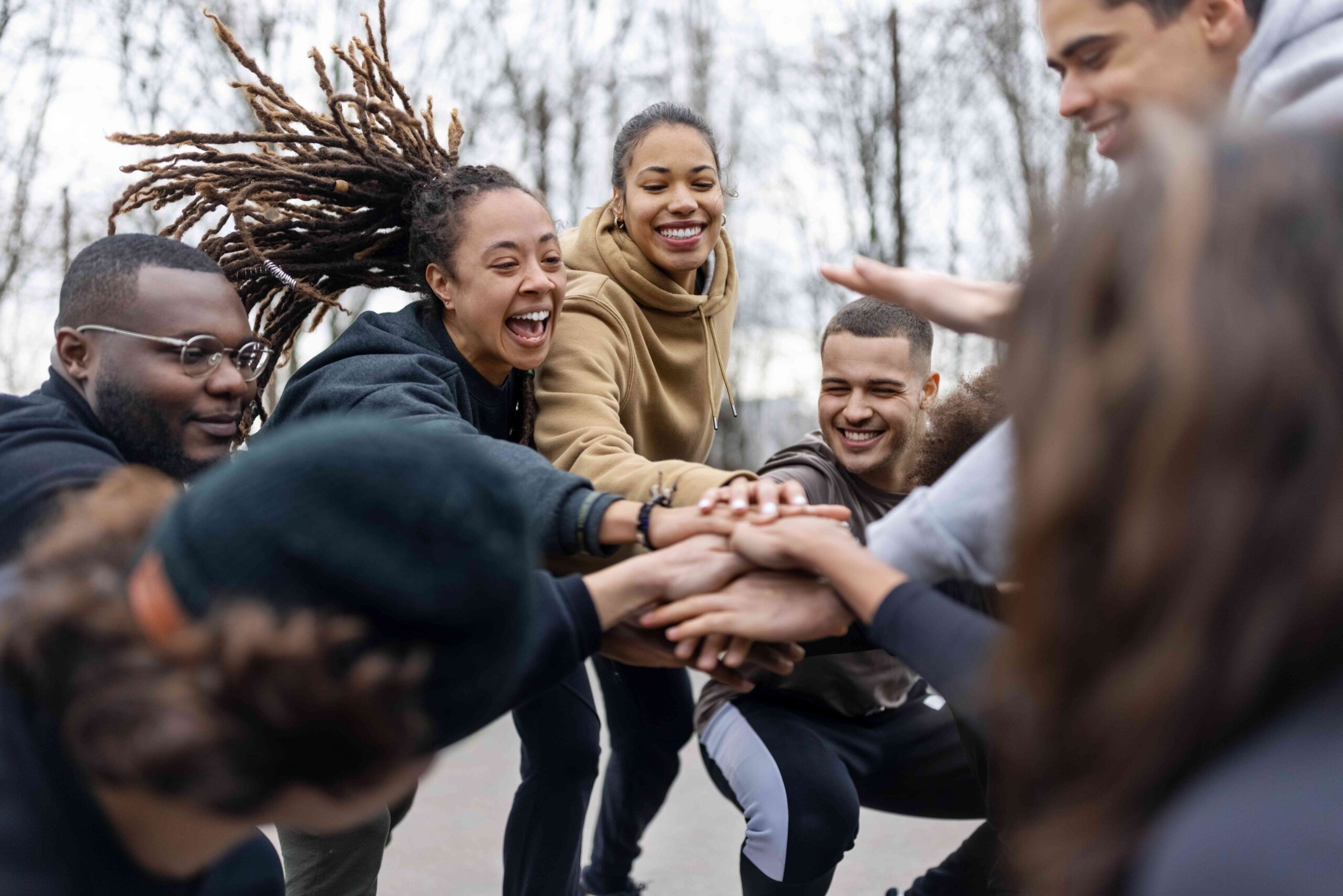
Key Takeaways
- Teamwork can help achieve better solutions by combining diverse perspectives.
- Trust among team members is important for commitment and success.
- Cooperation and respect lead to a more efficient and supportive team environment.
You’ve probably seen the phrase “Teamwork makes the dream work” printed on office mugs and motivational posters. But what exactly does it mean, and what does good teamwork look like?
The phrase “teamwork makes the dream work” essentially means that dividing tasks and responsibilities among a team can lead to better outcomes than a single person doing the same task, says Sabrina Romanoff, PsyD, a clinical psychologist and professor at Yeshiva University.
The saying was initially coined by American clergyman John C. Maxwell. Maxwell published an eponymous book in 2002, in which he wrote, “Teamwork makes the dream work, but a vision becomes a nightmare when the leader has a big dream and a bad team.” In his book, Maxwell discusses the importance of working together collaboratively and shares some principles for building a strong team.
The phrase caught on and has become popular over the years, but to understand what it truly means, we need first to learn more about why teamwork can be so beneficial. Let’s explore the benefits of teamwork, the characteristics of good teamwork, and some steps to help you be a good team player and build a strong team.
Why Teamwork Makes the Dream Work
So, why is teamwork so important when it comes to helping groups achieve their goals. Below, Dr. Romanoff explains why teamwork is important and the benefits it can offer:
- Improves efficiency and output: Teamwork is important because much more can be accomplished as part of a team than a single person working alone. Successful teams are much more efficient and effective at completing tasks than individuals.
- Produces better solutions: Teamwork allows diverse perspectives to tackle problems and find more resourceful and effective solutions than one person’s input alone. When multiple people contribute, it helps incorporate more knowledge, viewpoints, and feedback. Doing this ultimately helps teammates arrive at more holistic solutions.
- Offers a larger pool of resources: Each team member can contribute their efforts, knowledge, abilities, and strengths to the task at hand. The team can tap into the resources that each individual provides—which can go a long way as the group tackles new challenges.
- Promotes growth and learning: When people work together, there is an opportunity for each member of the team to learn and grow, both personally and professionally.
- Creates strong bonds among teammates: Collaborating on shared tasks, helping others, and working together helps teammates foster strong connections. People bond when they work together toward a common goal in an encouraging and supportive environment.
- Fosters a feeling of belonging: Teamwork also taps into our human need for belonging to a community or group and feeling like we are working towards something that is bigger than ourselves.
- Reduces stress: People tend to feel more supported when they’re part of a team. They often experience less perceived stress because they’re not facing the problem alone.
Characteristics of Good Teamwork
The truth is, that good teamwork is the backbone of a successful group—whether it’s at work, in the classroom, or in a more informal gathering. Getting along well is essential, but it’s about much more than that. According to Dr. Romanoff, these are some of the characteristics of good teamwork:
Shared Goal
A successful team articulates and agrees on a common goal that has meaning to its members. A shared understanding of the team’s goal is crucial so that everyone is on the same page and the team can operate as a cohesive unit.
Cooperation
It’s important for teammates to actively listen to one another, cooperate, and help one another out when required. A collaborative approach leads to more efficient and effective output.
Respect
When people feel respected by their teammates, they can freely share ideas and opinions without fear of rejection or judgment. This level of safety sets the stage for greater commitment among teammates, originality, and novelty.
Trust
There is trust that each member will deliver on their role for the team and meet their commitments. Team members take their responsibilities seriously and commit to following through on behalf of the individual members and the collective group. Each member is also trusted to put the team’s interests above their own.
Coordination
The team is well-organized, so everyone works systematically and efficiently toward deadlines and shared goals. Effective communication and coordination are the bedrock of good teamwork.
Strong Interpersonal Relationships
Great teamwork is characterized by strong interpersonal relationships. Team members care about each other, and relationships are deeper than just their roles in the team.
For instance, there is knowledge and sharing about people’s personal lives and interest in others’ talents, skills, and interests. Team members take the time to celebrate achievements or have social outings outside of work to get to know each other as people.
Effective Conflict Resolution
Some conflict is inevitable, but team members recognize that fact and can manage and resolve their differences successfully. They prioritize the team’s goal over individual differences and conflicts.
This means addressing issues among team members as they arise instead of pushing them under the rug, while also keeping differences among members in perspective so they don’t override the group’s mission.
How to Foster Good Teamwork
The thing is, building strong teamwork doesn’t just happen by accident. It often takes intention, effort, and a supportive environment. Sometimes, it requires intervention from a leader who can help create the right mix of communication, trust, and collaboration so the group can truly thrive.
Dr. Romanoff shares some strategies that can help you foster good teamwork:
- Define the goal: Define the mission and goal of the team. These can be co-constructed with your teammates, as team members are likely to have more buy-in when they have a role in choosing goals that are personally meaningful to them.
- Regularly ask for and provide feedback: Checking in with team members is the best way to implement needed change. This doesn’t have to be a formal process. Instead, openly discussing how team members feel can be normalized as part of the team’s culture.
- Maintain transparency: Be transparent, not just about the team’s goal but all of the smaller tasks and mandates that go along with it. This helps people understand how each job and agenda item contributes to the overall mission of the organization.
- Making learning a continuous priority: Offer training, reading material, and resources to help team members grow and connect with the entire group. Bring in people to teach new topics and host events where members can share new information and passions with their teammates.
- Recognize accomplishments: Give team members kudos for a job well done and have their good work acknowledged by their peers and managers.
- Foster a culture of gratitude: It can be helpful to foster a culture of gratitude by having members consider what they are grateful for within the team or in their day to help them reflect on what they appreciate in another.
Teamwork often takes work. There are practical ways that you can encourage teamwork in ways that are not only effective, but also enjoyable and sustainable over the long term.
How to Be a Good Team Player
Being a good team player is about more than just doing your part of the project. It also involves supporting others, maintaining a right attitude, and being able to work well with others.
Great teamwork involves listening, contributing, and being able to shift gears when needed.
If you’re wondering how to be a good team player, Dr. Romanoff has some suggestions that can help:
- Commit to the goal: Commit to the group process and the team’s goal.
- Take ownership: Take your tasks and responsibilities seriously. Be accountable to yourself and your teammates. Be cognizant of how your actions impact the team.
- Be flexible: Be flexible, open to change, and willing to take on new challenges or responsibilities to help your team.
- Work with your peers, not against them: Don’t compete with your peers. Instead try to work together toward a common goal and help each other out.
- Maintain a positive mindset: Be positive and optimistic. This mindset is contagious and will draw other team members towards you.
- Stay true to your values: Have integrity and speak your mind to advocate for the greater good and values of the group, even if it means going against what other group members are saying.
Verywell Mind uses only high-quality sources, including peer-reviewed studies, to support the facts within our articles. Read our editorial process to learn more about how we fact-check and keep our content accurate, reliable, and trustworthy.
-
Clark W. Teamwork: A multidisciplinary review. Child Adolesc Psychiatr Clin N Am. 2021;30(4):685-695. doi:10.1016/j.chc.2021.05.003
-
Sutherland BL, Pecanac K, LaBorde TM, Bartels CM, Brennan MB. Good working relationships: How healthcare system proximity influences trust between healthcare workers. J Interprof Care. 2022;36(3):331-339. doi:10.1080/13561820.2021.1920897
-
Rosen MA, DiazGranados D, Dietz AS, et al. Teamwork in healthcare: Key discoveries enabling safer, high-quality care. Am Psychol. 2018;73(4):433-450. doi:10.1037/amp0000298
-
Orchard C, King G, Tryphonopoulos P, et al. Interprofessional team conflict resolution: A critical literature review. J Contin Educ Health Prof. 2024;44(3):203-210. doi:10.1097/CEH.0000000000000524
Thanks for your feedback!
What is your feedback?
Helpful
Report an Error
Other
