

Key Takeaways
- Agoraphobia is a fear of being in places where you might find it hard to escape or get help.
- Common symptoms of agoraphobia include chest pain, dizziness, and a rapid heartbeat.
- Having a family history of anxiety disorders can increase the risk of developing agoraphobia.
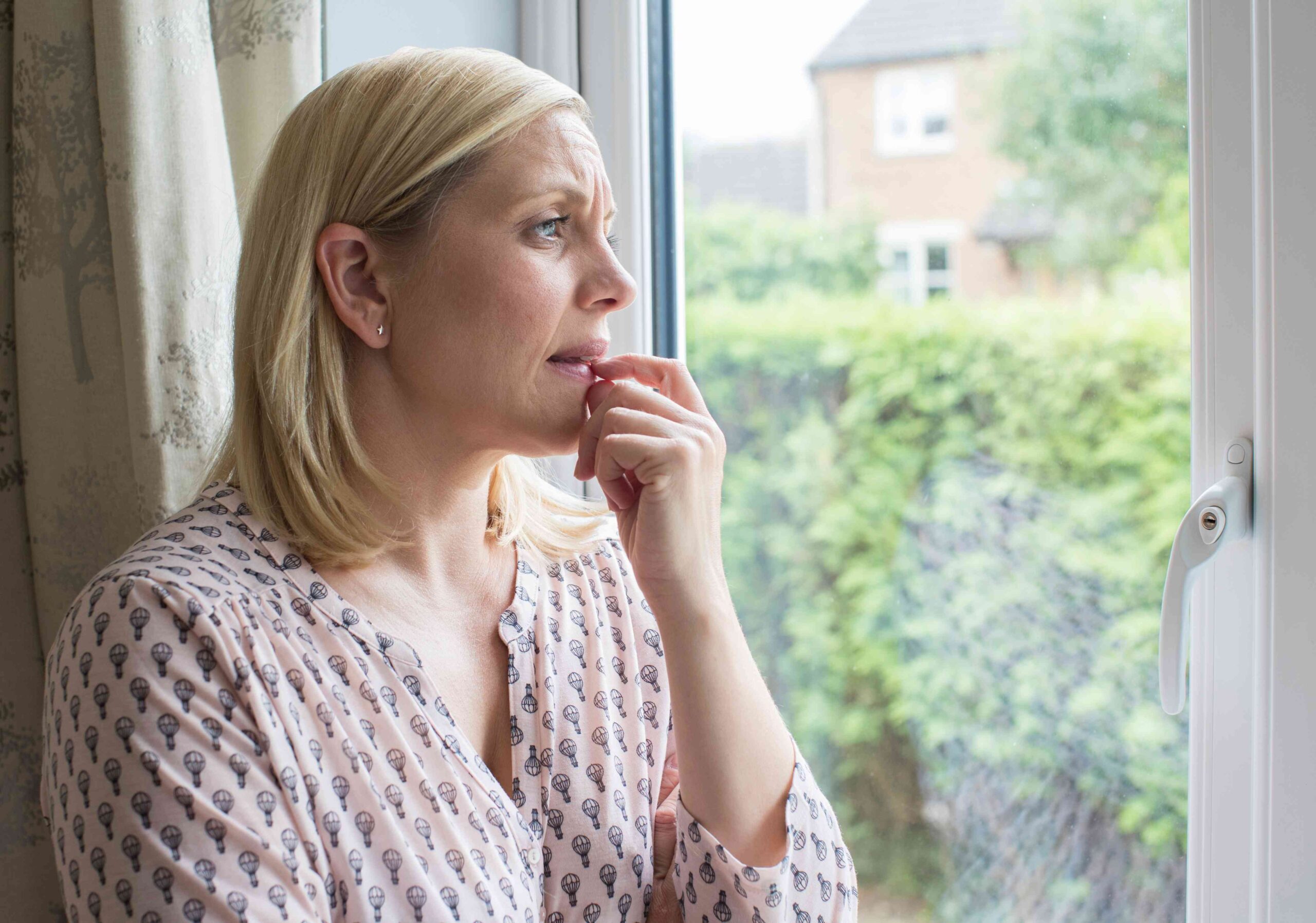
For many people, stepping outside the front door is just a part of daily life. But for people living with agoraphobia, just the thought of leaving the comfort of home can trigger intense feelings of anxiety. While fear of leaving the house can be one of the more visible signs of agoraphobia, that’s often only one part of a more complex condition.
Agoraphobia is characterized by severe anxiety of being in certain situations for which escape is difficult or potentially embarrassing, or where help is not readily available. People may develop a fear of leaving their own home as a way to avoid being in any place or situation where they might be trapped, panicked, embarrassed, or helpless.
The avoidance behaviors that occur in agoraphobia can lead to severe isolation. It can make it hard to engage in everyday things like work, socialization, and travel. Even tasks like going to the grocery store become extremely difficult.
Keep reading to learn more about agoraphobia, common symptoms, and what people can do to cope if they have this condition.
Understanding Agoraphobia
Agoraphobia refers to the fear of being in places or situations from which escape might be difficult (or embarrassing) or in which help may not be available in the event of an unexpected panic attack. Although it is an anxiety disorder that can occur on its own, it’s commonly a complication of panic disorder.
While many people assume agoraphobia is simply a fear of open spaces, it’s actually a more complex condition. In actuality, someone with agoraphobia is afraid to leave environments they know or consider to be safe. What’s considered “safe” and “unsafe” varies depending on the person, but some types of situations that people with agoraphobia commonly consider “unsafe” include:
- Being alone outside the home
- Being in a crowd or standing in a line
- Being on a bridge
- Traveling by bus, train, or automobile
The fear associated with agoraphobia is so intense that a person will usually go to great lengths to avoid these situations. These avoidance behaviors can grow over time, significantly impairing the person’s quality of life.
In the most extreme cases, agoraphobia can develop into a fear of leaving one’s house altogether. The person’s home becomes their “safe zone,” and they may avoid leaving it for days, months, or even years.
Symptoms of Agoraphobia
Being afraid to leave the house can be one symptom of agoraphobia, but not everyone who has the condition experiences it. Some common symptoms that people may experience when anxiety is triggered by a feared situation include:
- Chest pain
- Chills
- Choking sensations
- Dizziness
- Nausea
- Numbness
- Rapid heartbeat
- Sense of unreality
- Shortness of breath
- Sweating
- Trembling
What Causes Agoraphobia?
Experts are not 100% sure about the exact causes of agoraphobia, but there are a number of factors that tend to play a role, including:
Like other anxiety disorders, agoraphobia is believed to have a genetic component. Older research suggests that the condition has a heritability of around 48%, which means that genetic influences also play a part in causing the condition.
Past experiences can also play a role. If a person experiences a panic attack in a specific setting or situation, they may develop an intense fear that it will happen again.
Researchers also suggest that experiencing long periods of isolation (such as what some people faced during the pandemic) may increase feelings of fear and anxiety that can fuel agoraphobia.
How Is Agoraphobia Treated?
If you have agoraphobia, it is important to seek treatment as soon as possible, since the condition can worsen over time if left untreated. Treatment typically involves the use of both psychotherapy and medication.
- Psychotherapy often involves cognitive-behavioral therapy (CBT) and systematic desensitization. CBT can help people change negative thinking patterns that contribute to anxiety, while exposure treatments help people gradually confront the source of their fear.
- Medications can also help people manage feelings of anxiety. Some medicines that may be prescribed include antidepressants (like Prozac or Zoloft) and anti-anxiety medications (like Xanax)
Coping With Agoraphobia
While not a substitute for professional treatment, for those who may otherwise receive no help, self-help is a good starting point. The self-help strategies for agoraphobia outlined below can be used at home to help manage your symptoms.
Learn Relaxation Techniques
By learning and practicing relaxation techniques, you could reduce the level of your anxiety and the frequency of your panic attacks. You may even be able to defuse an attack in the making.
These skills are generally easy to learn and can be practiced for short durations of time to effectively reduce anxiety.
Keep Stress in Check
Stress and anxiety seem to go hand in hand—increase one and the other will soon follow. Relaxation techniques can help you manage stress and anxiety in the moment and may also be helpful to deal with your stressors head-on. Identify those things causing you the most stress in your life so you can create a plan to eliminate them.
Practice Systematic Desensitization
The goal of systematic desensitization is to become gradually desensitized to the triggers that are causing your distress. The process usually starts with imagining yourself in progressively more anxiety-provoking situations and using relaxation techniques to combat your feelings of anxiety.
Once you have successfully managed your anxiety in your imagination, you can use your relaxation techniques in real-life situations. This technique can be learned through a variety of self-help resources and applications, but it can be more helpful to learn desensitization through the guidance of a professional therapist.
Verywell Mind uses only high-quality sources, including peer-reviewed studies, to support the facts within our articles. Read our editorial process to learn more about how we fact-check and keep our content accurate, reliable, and trustworthy.
-
American Psychiatric Association (APA). Diagnostic and Statistical Manual of Mental Disorders. 5th ed, text revision. Washington, D.C.; 2022.
-
Keane L, Loades M. Review: Low self-esteem and internalizing disorders in young people – a systematic review. Child Adolesc Ment Health. 2017;22(1):4-15. doi:10.1111/camh.12204
-
Preti A, Piras M, Cossu G, et al. The burden of agoraphobia in worsening quality of life in a community survey in Italy. Psychiatry Investig. 2021;18(4):277-283. doi:10.30773/pi.2020.0342
-
Mosing MA, Gordon SD, Medland SE, et al. Genetic and environmental influences on the co-morbidity between depression, panic disorder, agoraphobia, and social phobia: A twin study. Depress Anxiety. 2009;26(11):1004-1011. doi:10.1002/da.20611
-
Harvard Health Publishing. Agoraphobia: Has COVID fueled this anxiety disorder?
-
Zulfarina MS, Syarifah-Noratiqah SB, Nazrun SA, Sharif R, Naina-Mohamed I. Pharmacological therapy in panic disorder: Current guidelines and novel drugs discovery for treatment-resistant patient. Clin Psychopharmacol Neurosci. 2019;17(2):145-154. doi:10.9758/cpn.2019.17.2.145
Thanks for your feedback!
What is your feedback?
Helpful
Report an Error
Other
