

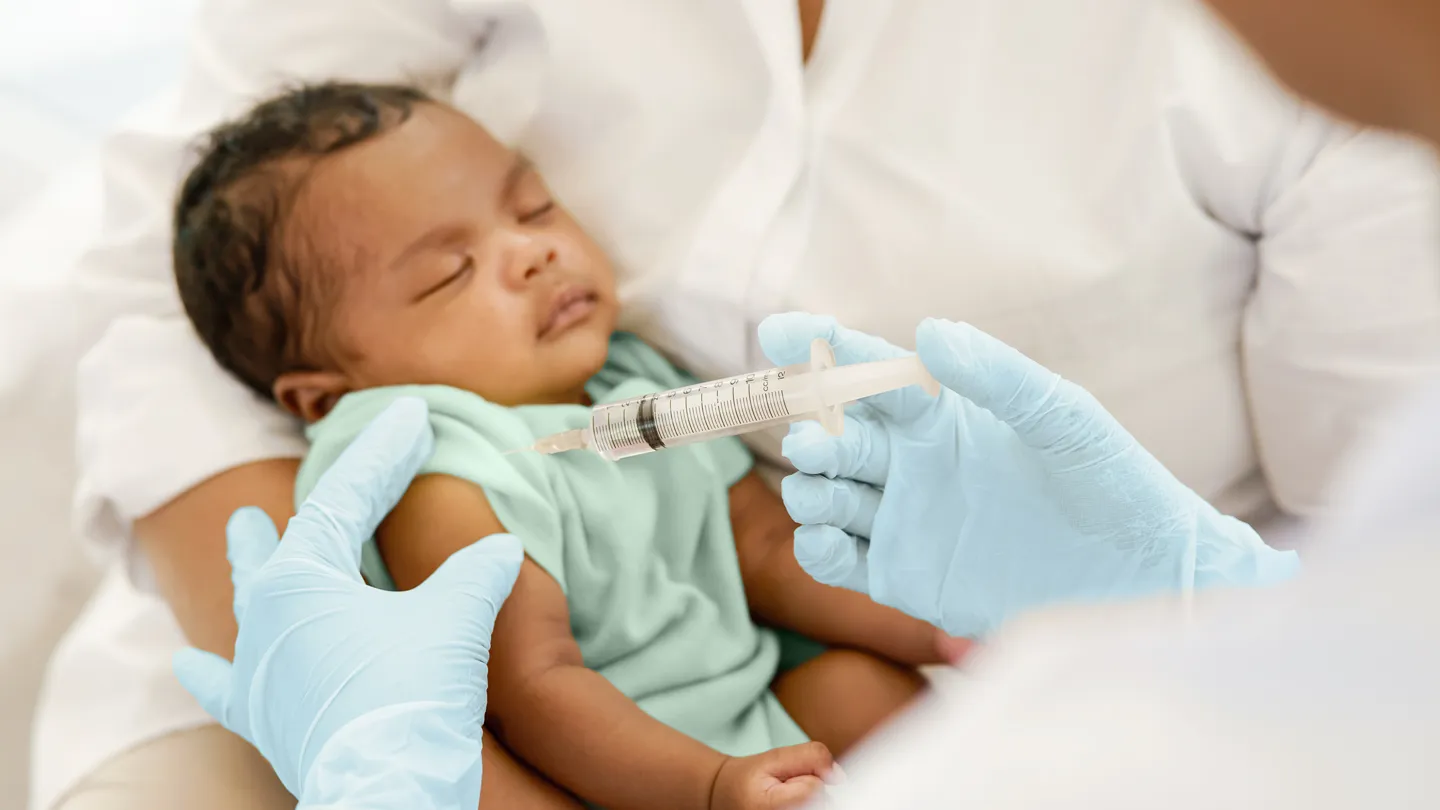
The U.S. Centers for Disease Control and Prevention (CDC) has reduced the number of vaccines recommended for all children, citing a desire to bring American practices in line with countries like Denmark that require fewer routine immunizations for kids.
Before the announcement on January 5, the CDC had recommended 17 vaccines for children. The CDC has lowered that number to 11.
“After an exhaustive review of the evidence, we are aligning the U.S. childhood vaccine schedule with international consensus while strengthening transparency and informed consent,” said Health and Human Services Secretary Robert F. Kennedy Jr. in a statement. “This decision protects children, respects families, and rebuilds trust in public health.”
[1]
Physician organizations and scientists who’ve studied vaccines have expressed concern that the revised recommendations contradict considerable evidence in support of the current childhood immunization schedule and that the change will lead to an increase in illnesses, hospitalizations, and deaths.
New Childhood Vaccine Recommendations
For six vaccines previously recommended for all children on the routine immunization schedule, the CDC now advises shots only for kids deemed high risk or when there is shared decision-making between parents and a child’s healthcare provider.
The Department of Health and Human Services (HHS) didn’t define which children would be considered “high risk.” HHS did, however, recommend that all vaccines be given in limited circumstances and that they be covered by insurance at no cost to patients.
The CDC still recommends all children receive the following shots to protect against 11 illnesses:
- Measles, mumps, and rubella (MMR)
- Polio
- Chicken pox
- Haemophilus influenzae type b (Hib)
- Human papillomavirus (HPV) — however, the CDC is now recommending only 1 dose, not 2 or 3
- Diphtheria, tetanus, and whooping cough (DTaP/Tdap)
- Pneumococcal disease
Following Denmark’s Vaccine Plan
The new childhood vaccine schedule closely resembles recommendations in Denmark, a country with free universal healthcare and a fairly homogeneous population that’s a fraction the size of the United States.
“The United States is not Denmark, and there is no reason to impose the Danish immunization schedule on America’s families,” said Andrew Racine, MD, PhD, the president of the American Academy of Pediatrics (AAP), in a statement. “America is a unique country, and Denmark’s population, public health infrastructure, and disease risk differ greatly from our own.”
[3]
Pediatricians Condemn New Vaccine Recommendations
AAP described the changes to the U.S. vaccine recommendations as arbitrary and dangerous, and said it will publish its own guidelines to promote shots that the CDC no longer recommends for all children. Parents with questions about vaccines or any other medical issue should talk to their child’s pediatrician, the AAP advises.
“Pediatricians explain the benefits of vaccinations and the risks of the diseases they are designed to prevent,” says Peter Hotez, MD, PhD, a professor of pediatrics, molecular virology, and microbiology at Baylor College of Medicine and a co-director of the Texas Children’s Hospital Center for Vaccine Development in Houston.
Learning how to discuss the pros and cons of vaccination with parents “was a basic part of my pediatric residency training in Boston during the 1980s, and I don’t believe that’s changed,” Dr. Hotez says. “But here is what has changed: a systematic attempt by HHS to erode public confidence in childhood vaccines, in terms of their necessity, effectiveness, and safety.”
Some parents confused or inconvenienced by the changing recommendations around vaccinations will ultimately choose to immunize their children anyway. “But more likely, this change will lead to sizable reductions in routine childhood vaccination,” says Nathan Lo, MD, PhD, a physician scientist and an assistant professor of infectious disease at Stanford University in California.
Hospitalizations and Deaths Will Rise, Vaccine Experts Predict
Fatalities during the last flu season offer a snapshot of what happens when kids don’t get immunized, says John Swartzberg, MD, a clinical professor emeritus of infectious diseases and vaccinology at the University of California in Berkeley.
“Nearly 290 children died from this virus during the previous influenza season,” says Dr. Swartzberg. “Most of these children were unvaccinated.”
At the same time, recommended vaccines for rotavirus have nearly eliminated thousands of childhood hospitalizations for this illness, and the RSV vaccine has resulted in a marked decline in hospitalizations and deaths, Swartzberg says.
“Not recommending these three vaccines will lead to more illness, hospitalizations, and deaths,” Swartzberg says.
The meningococcal and hepatitis A and B vaccines also protect against serious and potentially life-threatening disease.
