

Key Takeaways
- Cipralex is a type of SSRI used to treat depression and anxiety by increasing serotonin in the brain.
- Do not stop taking Cipralex without talking to your healthcare provider as it can cause withdrawal symptoms.
- Cipralex can cause side effects like tiredness, dizziness, and sexual problems; tell your healthcare provider if these happen.
Cipralex is the brand name for escitalopram in the United Kingdom. In the United States, this drug is available under the brand name Lexapro and approved by the U.S. Food and Drug Administration (FDA) for the treatment of depression and generalized anxiety disorder (GAD).
Cipralex is available in tablet and liquid form. It belongs to a group of drugs known as selective serotonin reuptake inhibitors (SSRIs). Learn more about the uses of Cipralex, as well as potential side effects. We also discuss dosage information and precautions you should understand before taking this medication.
How Cipralex Works
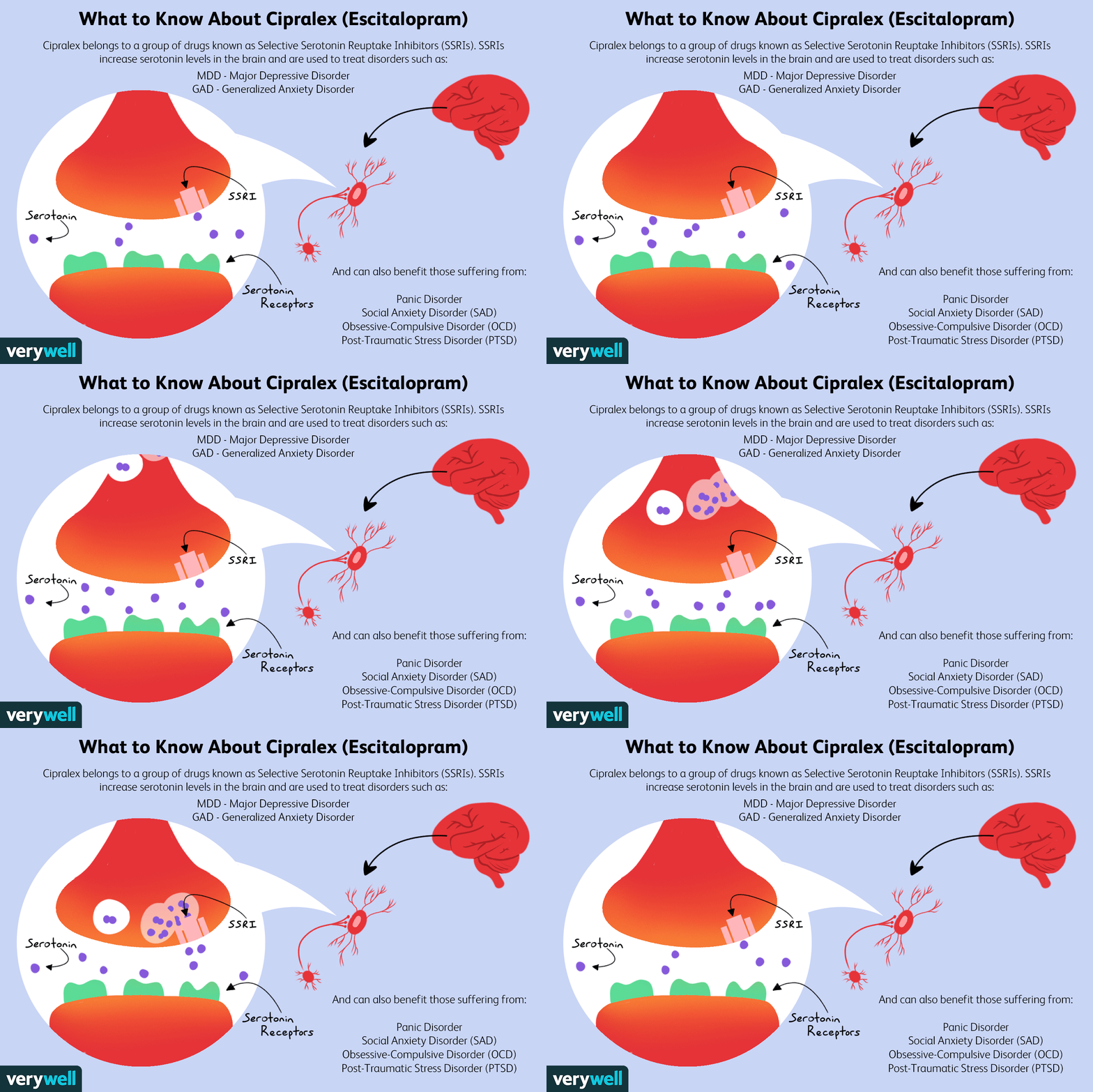
SSRIs work by increasing serotonin levels in the brain. Serotonin is a neurotransmitter that can help stabilize mood. SSRIs like Cipralex prevent or inhibit serotonin from being reabsorbed by nerve cells, a process known as reuptake. This keeps serotonin available for longer periods in the synapse.
While current research does not suggest that chemical imbalances are the cause of depression, balancing serotonin levels with SSRIs such as Cipralex may play a role in relieving symptoms of depression and anxiety.
Cipralex Uses
Cipralex is used to treat a form of depression called major depressive disorder (MDD) and generalized anxiety disorder (GAD). Research suggests that escitalopram, the active ingredient in Cipralex, may also be effective for helping with:
It can take a couple of weeks to feel better once you start taking Cipralex. You also may not experience the full benefits of the medication until you’ve been following a recommended treatment plan for several months.
How Long Does Cipralex Take to Work for Anxiety?
After starting escitalopram, you may feel physical changes in one to two weeks (such as improved sleep, energy, and appetite). Changes in mood may take longer—between six and eight weeks.
Before Taking Cipralex
Talk to your healthcare provider about all medications, supplements, and vitamins you currently take. While some drugs pose minor interaction risks, others may contraindicate use or prompt careful consideration as to whether the pros of treatment outweigh the cons in your case.
Precautions and Contraindications
You should not take Cipralex if you are allergic to escitalopram, take monoamine oxidase inhibitors (MAOIs), or take medicines for heart rhythm problems or other drugs that may affect your heart’s rhythm, such as:
- Antipsychotic medications (e.g., phenothiazine derivatives, pimozide, and haloperidol)
- Certain antihistamines (e.g., hydroxyzine and mizolastine)
- Certain antimicrobial agents (e.g., sparfloxacin, moxifloxacin, erythromycin IV, pentamidine, and anti-malarial treatment, particularly halofantrine)
- Class IA and III antiarrhythmics, which are medications that prevent and treat abnormal heart rhythms
- Tricyclic antidepressants
Additionally, you should tell your physician if you are pregnant or planning to become pregnant. As with most antidepressants, you should not take Cipralex if you are pregnant or breastfeeding unless you and your care provider have discussed the risks and benefits involved.
Prior to starting Cipralex, it’s important to tell the prescribing physician if you have any of the following conditions or illnesses, as they may need to take this into consideration:
Cipralex Dosage
Cipralex comes in tablets and a liquid solution. Check your prescription and talk to your physician to make sure you are taking the right Cipralex dose for you.
Cipralex should not typically be taken by individuals under the age of 18, but a physician may prescribe this drug for patients under 18 if they feel that the benefits outweigh the risks.
Oral Tablets
Cipralex tablets are available in 5 milligrams (mg), 10 mg, and 20 mg strengths. The following listed dosages are according to the drug manufacturer:
- For adults with depression, social anxiety disorder (SAD), generalized anxiety disorder (GAD), and obsessive-compulsive disorder (OCD): The recommended dose of Cipralex tablets is 10 mg taken as one daily dose. The dose may be increased by your physician to a maximum of 20 mg per day.
- For adults with panic disorder: The starting dose of Cipralex tablets is 5 mg as one daily dose for the first week before increasing the dose to 10 mg per day. The dose may be further increased by your physician to a maximum of 20 mg per day.
- For older patients (ages 65 and older): The recommended starting dose of Cipralex tablets is 5 mg taken as one daily dose. The dose may be increased by your physician to 10 mg per day.
Oral Drops Solution
Cipralex liquid oral solution comes in a strength of 20 mg per milliliter (ml). The following listed dosages are according to the drug manufacturer:
- For adults with depression, SAD, GAD, and OCD: The normally recommended dose of Cipralex is 10 mg (10 drops) taken as one daily dose. The dose may be increased by your physician to a maximum of 20 mg (20 drops) per day.
- For adults with panic disorder: The starting dose of Cipralex is 5 mg (5 drops) per day for the first week before increasing the dose to 10 mg (10 drops) per day. Your physician may increase the dose to a maximum of 20 mg (20 drops) per day.
- For older patients (ages 65 and older): The recommended starting dose of Cipralex is 5 mg (5 drops) taken as one daily dose. The dose may be increased by your physician to 10 mg (10 drops) per day.
How to Take and Store
Cipralex tablets can be taken with or without food. As with all medicines, combining Cipralex tablets with alcohol is not advised.
When taking Cipralex oral drops solution, count the required number of drops into your drink (water, orange juice, or apple juice), stir it briefly, and then drink all of it. Do not mix the Cipralex with other liquids and do not mix it with other medicinal products.
Follow your physician’s instructions for taking Cipralex. Ask them or your pharmacist if you have any questions about this medication. Do not stop taking the medication without talking to your physician as stopping abruptly may cause discontinuation symptoms.
Side Effects of Cipralex
Most people only experience a few mild side effects when taking Cipralex. As your body adjusts to the drug, the side effects should go away. If you notice they are getting worse or are interfering with your quality of life, talk to your physician.
Common Side Effects
Like all medicines, Cipralex can cause side effects. The most common side effects for escitalopram include:
- Decreased appetite and weight loss
- Dizziness
- Dry mouth
- Excessive tiredness, drowsiness, or yawning
- Flu-like symptoms (such as runny nose and sneezing)
- Increased sweating
- Gastrointestinal issues (diarrhea, constipation, heartburn, nausea, and stomach pain)
- Sexual problems (such as decreased sex drive, difficulty achieving orgasm; in men, erectile dysfunction or problems with ejaculation)
- Shaking
- Sleep problems
Severe Side Effects
Seek immediate help if you experience any of the following unusual but serious side effects:
- Abnormal bleeding or bruising
- Coordination issues or unsteadiness
- Difficulty breathing or swallowing
- Fever or joint pain
- Hallucinations
- Headaches
- Memory loss or trouble thinking
- Painful urination
- Rash, hives, or blisters
- Seizures
- Significant changes in mood or personality
- Suicidal thoughts or behaviors
- Unusual excitement
This overview of the use of Cipralex for mental health conditions does not cover every possible outcome of taking this medication. If you have been prescribed this medication by your healthcare provider, be sure to follow the instructions carefully. If you have additional questions, they are best answered by a medical professional.
Verywell Mind uses only high-quality sources, including peer-reviewed studies, to support the facts within our articles. Read our editorial process to learn more about how we fact-check and keep our content accurate, reliable, and trustworthy.
-
U.S. Food and Drug Administration. Lexapro (escitalopram) label.
-
Kirino E. Antidepressant efficacy of escitalopram in major depressive disorder. In: Melatonin, Neuroprotective Agents and Antidepressant Therapy. doi:10.1007/978-81-322-2803-5_30
-
Pourhamzeh M, Ghasemi Morevej F, Arabi M, et al. The roles of serotonin in neuropsychiatric disorders. Cell Mol Neurobiol. 2022;42:1671-1692. doi:10.1007/s10571-021-01064-9
-
Moncrieff J, Cooper RE, Stockmann T, Amendola S, Hengartner MP, Horowitz MA. The serotonin theory of depression: A systematic umbrella review of the evidence. Mol Psychiatry. 2022;28:3243-3256. doi:10.1038/s41380-022-01661-0
-
Del Casale A, Sorice S, Padovano A, et al. Psychopharmacological treatment of obsessive-compulsive disorder (OCD). Curr Neuropharmacol. 2019;17(8):710-736. doi:10.2174/1570159X16666180813155017
-
Vork L, Mujagic Z, Drukker M, et al. The experience sampling method—evaluation of treatment effect of escitalopram in IBS with comorbid panic disorder. Neurogastroent Motility. 2018;31(1):e13515. doi:10.1111/nmo.13515
-
Qi W, Gevonden M, Shalev A. Efficacy and tolerability of high-dose escitalopram in posttraumatic stress disorder. J Clin Psychopharmacol. 2017;37(1):89-93. doi:10.1097.JCP0000000000000626
-
Carlini SV, Deligiannidis KM. Evidence-based treatment of premenstrual dysphoric disorder: a concise review. J Clin Psychiatry. 2020;81(2):19ac13071. doi:10.4088/JCP.19ac13071
-
Baldwin DS, Asakura S, Koyama T, et al. Efficacy of escitalopram in the treatment of social anxiety disorder: A meta-analysis versus placebo. Eur Neuropsychopharmacol. 2016;26(6):1062-1069. doi:10.1016/j.euroneuro.2016.02.013
-
National Alliance on Mental Illness. Escitalopram (Lexapro).
-
Lundbeck Canada Inc. Cipralex tablet label.
-
Electronic medicines compendium. Cipralex oral drops solution.
-
National Library of Medicine. Escitalopram.
Thanks for your feedback!
What is your feedback?
Helpful
Report an Error
Other
