

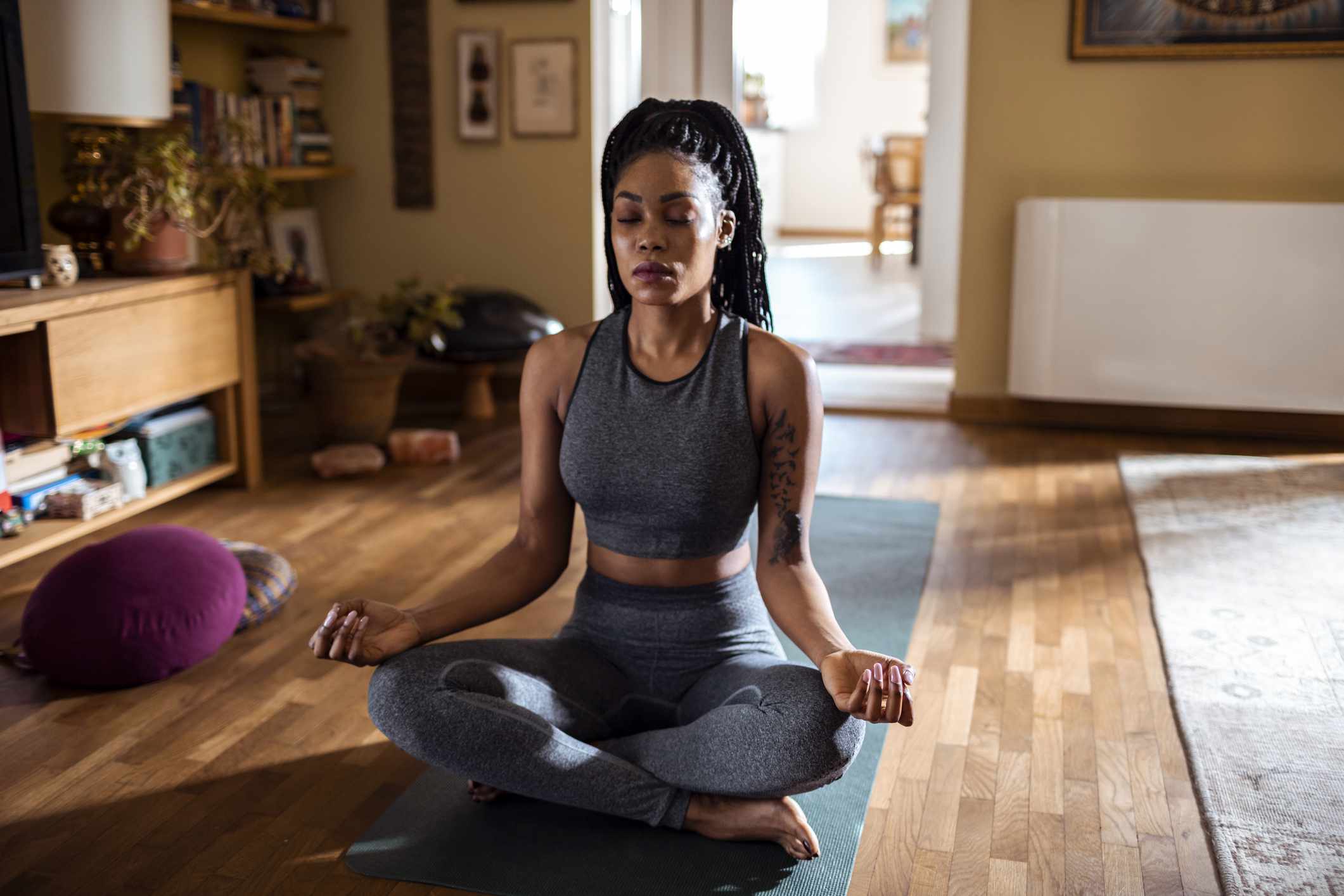
Key Takeaways
- The 4-7-8 breathing technique helps calm anxiety by activating the relaxation response in your body.
- To practice 4-7-8 breathing, inhale for 4 seconds, hold your breath for 7 seconds, and exhale for 8 seconds.
- Consistent practice twice a day can help make the breathing exercise more effective over time.
4-7-8 breathing is a technique for deep relaxation conceived by Harvard-trained medical doctor and founder of the Arizona Center for Integrative Medicine Dr. Andrew Weil.
Many people use this counting technique to manage stress and anxiety through controlled breathing. Specifically, it involves inhaling for the count of four, holding your breath for the count of seven, and exhaling for the count of eight.
In May of 2015, Dr. Weil popularized this breathing technique to help people manage stress and anxiety. The 4-7-8 breathing technique is based on the pranayama breathing exercise that is practiced during yoga for relaxation.
How 4-7-8 Breathing Works
Understanding “why” something works can be important, so here’s the explanation for this technique.
- The 4-7-8 breathing technique activates your parasympathetic nervous system, which promotes relaxation.
- Activating this system suppresses the sympathetic nervous system, which triggers the body’s stress response, like the fight or flight reaction.
- While you can use this technique to calm anxiety in the moment, Dr. Weil emphasizes that it is best used as a daily preventative practice.
- Regular use can make this voluntary practice a natural habit.
- The speed with which you do the breathing practice does not matter. Instead, focus on maintaining the 4-7-8 ratio, where the exhale is longer than the inhale, as advised by Dr. Weil.
How to Practice 4-7-8 Breathing
If you want to begin this breathing practice but aren’t sure how to get started, it’s helpful to know that it is one of the most straightforward techniques you can learn.
Though the technique is simple, paying attention to each step is important.
Here is a list of steps on how to practice this breathing technique. You can also watch Dr. Weil explain the procedure himself.
Step 1. Find a quiet, comfortable place to sit without interruptions.
Step 2. Press your tongue gently against the back of your upper front teeth.
Step 3. Exhale completely through your open mouth around your tongue.
Step 4. Close your mouth and inhale quietly through your nose for a count of 4.
Step 5. Hold your breath for a count of 7.
Step 6. Exhale audibly through your mouth for a count of 8. Fully empty your lungs.
Step 7. Repeat these steps for a total of four cycles.
The more often that you can practice this technique, the more quickly you will notice results. Ideally, according to Dr. Weil, you should practice at least twice a day though you can do it more often if you are so inclined.
Within just a few short minutes, this breathing technique will help activate your parasympathetic response and slow down your heart rate while lowering blood pressure. You can use 4-7-8 breathing in many different instances, including when feeling stressed or anxious before bedtime, which is another great reason why practicing at night. Once you become comfortable with doing four cycles, you can increase to a maximum of eight cycles.
When to Use This Technique
The main goal of this breathing technique is to lower your stress response over time. This means practicing daily to notice an improvement in the long term. However, 4-7-8 breathing can also help keep you calm in a variety of stressful situations. You can use it to alleviate symptoms associated with stress, anxiety, and panic attacks. Below are some specific situations in which you might find this 4-7-8 breathing helpful.
- At work, when experiencing stress
- While driving in traffic or commuting to work each day
- Before giving a speech or presentation at school or work
- During an exam period at university/college
- At night when trying to fall asleep
- First thing in the morning, when you wake up
- When experiencing pre-class nerves in university/college
- If you are feeling overwhelmed, anxious, or stressed
- When practicing other relaxation exercises (e.g., progressive muscle relaxation, guided imagery)
- When doing yoga or tai chi
- When practicing mindfulness meditation
Benefits
While there is a lack of research on the 4-7-8 breathing technique specifically, other research shows the benefits of other similar deep breathing exercises.
- Reduced depression and anxiety. In one study, participants with COPD who practiced controlled breathing techniques experienced reduced symptoms of depression and anxiety.
- Improved sleep quality. In another study, people with insomnia experienced improved sleep quality after practicing slow, paced breathing exercises for 20 minutes before sleeping.
- Reduced stress levels. According to the American Institute of Stress, slow abdominal breathing can help reduce stress levels by slowing down your heart rate and lowering blood pressure. Additionally, it helps relax tense muscles and increase oxygen intake, both of which aid relaxation.
- Improved motor memory. Furthermore, another study showed improved motor memory in a group of 16 participants who practiced a 30-minute session of deep breathing.
- Improved pain processing. Finally, there is evidence that slow breathing can influence autonomic function and pain processing/perception.
Tips for Practicing This Technique
It might feel strange at first to practice breathing this way. Try to push through those initial feelings of discomfort. Practice this technique as often as you need to until it becomes automatic for you. Here are a few tips that might be helpful:
- Find a quiet place where others won’t bother you while performing the exercise.
- Make sure you are seated comfortably with good posture while practicing this exercise (don’t lie down).
- Try not to focus on other thoughts during practice. Instead, try and keep all attention focused on your breath.
Potential Pitfalls
While there are many ways to practice 4-7-8 breathing, you should consider whether a different approach works for you better than the one described here.
The biggest pitfall of a breathing technique like 4-7-8 breathing is that people forget to practice. It takes about 30 days to form a new habit, so be patient with yourself until this becomes part of your day-to-day routine.
It is important to remember that this breathing technique should not be used as a replacement for seeking help from professionals when necessary. Learning other relaxation techniques, such as progressive muscle relaxation and meditation, can also be helpful.
Verywell Mind uses only high-quality sources, including peer-reviewed studies, to support the facts within our articles. Read our editorial process to learn more about how we fact-check and keep our content accurate, reliable, and trustworthy.
-
Huffington Post. The 4-7-8 Breathing Technique Could Help You Fall Asleep In Just 60 Seconds, Scientist Claims.
-
Perciavalle V, Blandini M, Fecarotta P, et al. The role of deep breathing on stress. Neurol Sci. 2017;38(3):451-458. doi:10.1007/s10072-016-2790-8
-
Weil A. 4-7-8 Breathing: Health Benefits & Demonstration
-
Jerath R, Crawford MW, Barnes VA, Harden K. Self-regulation of breathing as a primary treatment for anxiety. Appl Psychophysiol Biofeedback. 2015;40(2):107-115. doi:10.1007/s10484-015-9279-8
-
Valenza MC, Valenza-Peña G, Torres-Sánchez I, González-Jiménez E, Conde-Valero A, Valenza-Demet G. Effectiveness of controlled breathing techniques on anxiety and depression in hospitalized patients with COPD: a randomized clinical trial [published correction appears in Respir Care. 2016 Nov;61(11):e3]. Respir Care. 2014;59(2):209-215. doi:10.4187/respcare.02565
-
Tsai HJ, Kuo TB, Lee GS, Yang CC. Efficacy of paced breathing for insomnia: enhances vagal activity and improves sleep quality. Psychophysiology. 2015;52(3):388-396. doi:10.1111/psyp.12333
-
American Institute of Stress. How Proper Breathing Can Reduce Stress.
-
Yadav G, Mutha PK. Deep Breathing Practice Facilitates Retention of Newly Learned Motor Skills. Sci Rep. 2016;6:37069. Published November 2016. doi:10.1038/srep37069
-
Busch V, Magerl W, Kern U, Haas J, Hajak G, Eichhammer P. The effect of deep and slow breathing on pain perception, autonomic activity, and mood processing–an experimental study. Pain Med. 2012;13(2):215-228. doi:10.1111/j.1526-4637.2011.01243.x
Thanks for your feedback!
What is your feedback?
Helpful
Report an Error
Other
