

Key Takeaways
- Psychopaths often lack empathy and are manipulative and narcissistic.
- Not all psychopaths are violent, but many can be linked to criminal behavior.
- Cognitive behavioral therapy may help reduce some psychopathic traits.
The term “psychopath” is used to describe someone who is callous, unemotional, and morally depraved. Although not an official mental health diagnosis, it is often used in clinical and legal settings to refer to someone who often is egocentric, antisocial, lacking remorse and empathy for others, and often has criminal tendencies.
Many psychopathy characteristics overlap with symptoms of antisocial personality disorder, a broader mental health condition used to describe people who chronically act out and break societal rules. However, only a small number of individuals with antisocial personality disorder are considered to be a psychopath.
Learn psychopath characteristics, the history of the term, and how to recognize if someone might be a psychopath. We also cover the differences between sociopath vs. psychopath, available treatments, and things you can do to cope with this type of person.
Common Psychopath Traits
Psychopathic behavior varies greatly from one individual to another. Some are sex offenders and murderers, while others may be successful leaders. It all depends on their traits. It’s also important to distinguish between a psychopath and someone with psychopathic traits.
It’s possible to exhibit psychopathic traits without being an actual psychopath. People with psychopathic traits don’t necessarily engage in psychopathic behavior. Only individuals with psychopathic traits who also exhibit antisocial behavior are considered to be psychopaths.
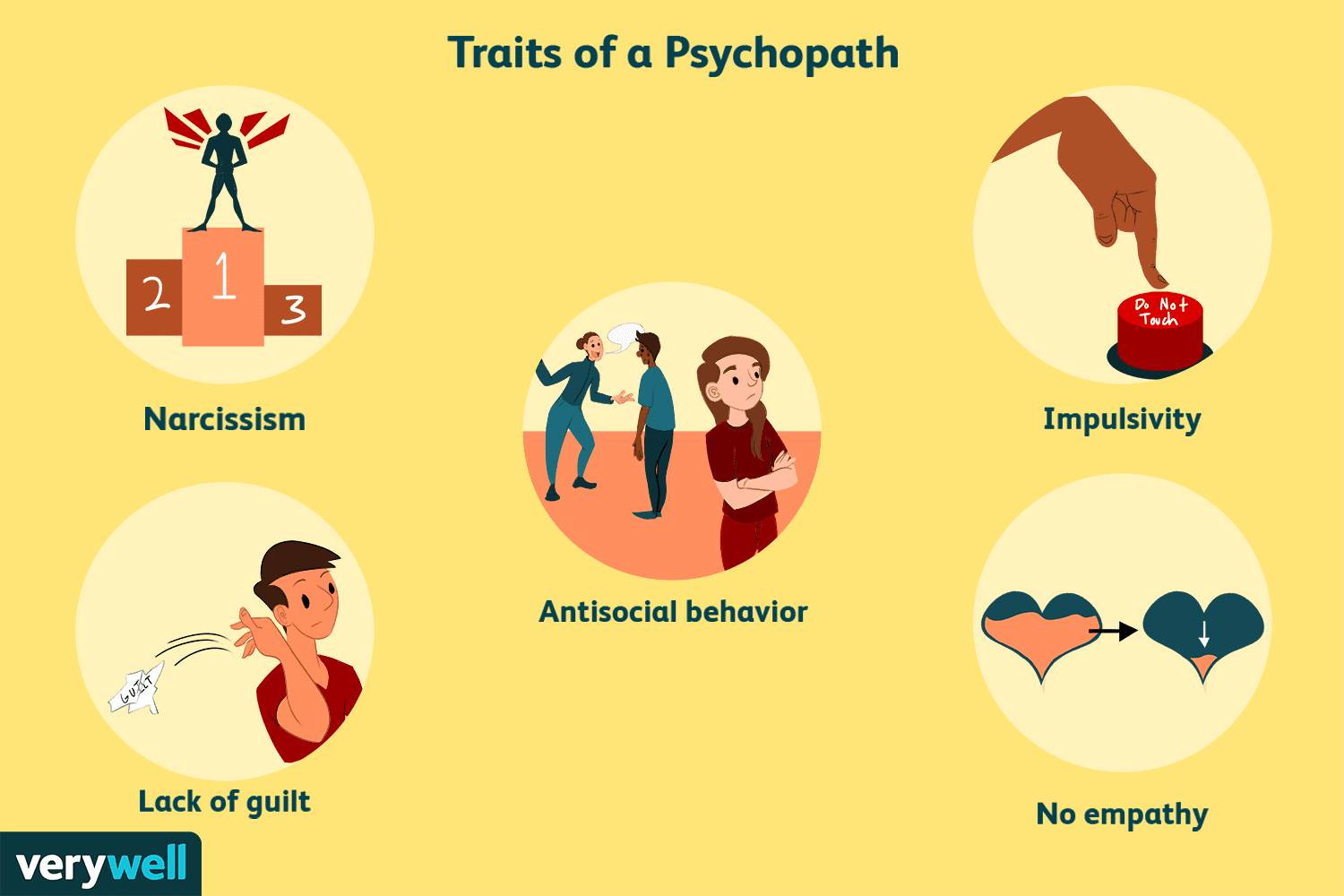
Psychopathic traits commonly include:
- Antisocial behavior
- Narcissism
- Superficial charm
- Impulsivity
- Callous, unemotional traits
- Lack of guilt
- Lack of empathy
- Lack of fear
One study found that about 29% of the general population exhibit one or more psychopathic traits, but only 0.6% are likely to fit the definition of a psychopath.
Psychopath vs. Narcissist
Some experts believe that narcissism and psychopathy exist on the same personality continuum and that both narcissists and psychopaths tend to have low humility and agreeableness, yet only a psychopath also has low conscientiousness.
Is There a Psychopath Test?
While there may be plenty of free “psychopath tests” floating around on the internet, two that are used most often are the Psychopathy Checklist-Revised (PCL-R) and the Psychopathic Personality Inventory (PPL).
- Psychopathy Checklist-Revised (PCL-R): The PCL-R is a 20-item inventory that assesses whether an individual exhibits certain traits and behaviors that could indicate psychopathy. It’s intended to be completed with a semi-structured interview and a review of available records, such as police reports or medical information. This psychopath test is often used to predict the likelihood that a criminal may re-offend, as well as their capacity for rehabilitation.
- Psychopathic Personality Inventory (PPL): The PPL is an alternative psychopath test that was introduced in 1996. This test is used to assess psychopathic traits in non-criminal populations. It may still be used with incarcerated individuals, but is more often applied to other populations, such as university students.
Signs of a Psychopath
Psychopathic traits may emerge during childhood and grow worse with age. The following are some of the most common signs of a psychopath.
Superficial Charm
Psychopaths are often likable on the surface. They’re usually good conversationalists and share stories that make them look good. Psychopaths may be funny and charismatic as well making them good leaders, whether it is a business or a cult.
Need for Stimulation
A psychopath loves excitement. They like to have constant action in their lives, and they frequently want to live in the “fast lane.”
Quite often, a psychopath’s need for stimulation involves breaking rules. They may enjoy the thrill of getting away with something, or they might even like the fact that they could “get caught” at any moment. Consequently, psychopaths often struggle to stay engaged in dull or repetitive tasks, and they may be intolerant of routines.
Pathological Lying
Psychopaths tell lies to look good and get out of trouble. They are known to tell lies even when it is easier to tell the truth. They also tell lies to cover up their previous lies. So, they have difficulty keeping their stories straight sometimes as they forget what they’ve said. If challenged by anyone, a psychopath will simply change their story again or rework the facts to fit the situation.
Grandiose Sense of Self-Worth
A psychopath has an inflated view of themselves. They see themselves as important and entitled. Psychopaths often feel justified to live according to their own rules, and they think that the laws don’t apply to them.
Manipulative
Psychopaths are really good at getting other people to do what they want. They may play on a person’s guilt while lying to get someone else to do their work for them.
Lack of Remorse
A psychopath doesn’t care how their behavior affects other people. They may forget about something that hurts someone, or they may insist that others are overreacting when their feelings are hurt. Ultimately, psychopaths don’t experience guilt for causing people pain. In fact, they often rationalize their behavior and blame other people.
Shallow Affect
Psychopaths don’t show many emotions—at least not genuine ones. They may appear cold and unemotional much of the time. But when it serves them well, a psychopath might exhibit a dramatic display of feelings. These are usually short-lived and quite shallow.
For example, a psychopath may show anger if they can intimidate someone, or they might show sadness to manipulate someone. But they don’t really experience these emotions.
Lack of Empathy
Psychopaths struggle to understand how someone else might feel afraid, sad, or anxious. It just doesn’t make sense to them. A psychopath is completely indifferent to people who are suffering—even when it’s a close friend or family member.
Parasitic Lifestyle
Psychopaths may have sob stories about why they can’t earn money, or they might often report being victimized by others. Then they take advantage of the kindness of others by depending on them financially. A psychopath uses people to get whatever they can with no regard for how the other person may feel.
Poor Behavioral Controls
Psychopaths struggle to follow rules, laws, and policies much of the time. Even if they set out to follow the rules, a psychopath usually doesn’t stick to them for long.
Promiscuous Sexual Behavior
Since they don’t care about the people around them, a psychopath is likely to cheat on their partners. They may engage in unprotected sex with strangers, or they may use sex as a way to get what they want. Sex is not an emotional or loving act for a psychopath.
Early Behavioral Problems
Most psychopaths exhibit behavioral problems at an early age. They may cheat, skip school, vandalize property, misuse substances, or become violent. A psychopath’s misbehaviors tend to escalate over time and are more serious than their peer’s misbehaviors.
Lack of Realistic, Long-Term Goals
A psychopath’s goal might be to become rich or famous. But quite often, they have little idea about how to make these things happen. Instead, they insist that somehow, they’ll get what they want without putting in the effort to get there.
Impulsivity
Psychopaths respond to things according to the way they feel. They don’t spend time thinking about the potential risks and benefits of their choices. Instead, a psychopath wants immediate gratification. So, they may quit a job, end a relationship, move to a new city, or buy a new car on a whim.
Irresponsibility
Promises don’t mean anything to a psychopath. Whether they promise to repay a loan or sign a contract, they aren’t trustworthy. They may shrug off child support payments, get deeply in debt, or forget about obligations and commitments.
A psychopath doesn’t accept responsibility for the problems in their lives. They see their issues as always being someone else’s fault. Psychopaths frequently play the role of the victim and enjoy sharing stories about how others have taken advantage of them.
Many Marital Relationships
Psychopaths may get married because it serves them well. For example, they may want to spend a partner’s income or share their debt with someone else. But their behavior often leads to frequent divorces as a psychopath’s partner will eventually see them in a more accurate light.
Criminal Versatility
Psychopaths tend to view rules as suggestions—and they usually see laws as restrictions that hold them back. Their criminal behaviors can be quite varied. Driving infractions, financial violations, and acts of violence are just a few examples of the array of crimes a psychopath might commit.
Of course, not all psychopaths become incarcerated. Some may operate under shady businesses or engage in unethical practices that don’t lead to an arrest.
Revocation of Conditional Release
Most psychopaths don’t adhere to the rules of conditional release when they are released from prison. They may think they won’t get caught again, or they find ways to excuse their behavior. A psychopath might even blame “getting caught” on other people.
Recap of Psychopath Symptoms or Signs
A person who is manipulative, dishonest, narcissistic, unremorseful, non-empathetic, and exploitative may be a psychopath. Criminality, promiscuity, and lack of responsibility are also common traits associated with psychopathy.
Psychopath vs. Sociopath
While “psychopath” and “sociopath” are sometimes used synonymously, they have different meanings and different patterns of traits and behaviors. What’s the difference between psychopath vs. sociopath?
- Psychopaths lack a conscience and don’t feel empathy for others. They use their intelligence to manipulate and exploit others. They are planners and schemers and can be predatory. They can also require immediate gratification and act out impulsively. They may pretend to care but often maintain a normal facade to cover up cold-hearted or even criminal behaviors.
- Sociopaths may experience limited empathy and remorse for their actions and don’t bother to pretend to care. They struggle to maintain normal behaviors and routines and can be impulsive and overly emotional. A sociopath may recognize that their actions are wrong but find ways to rationalize their impulsive and harmful behaviors. They have a harder time maintaining jobs and relationships.
Learn More About the Difference Between Psychopaths and Sociopaths
Causes of Psychopathy
Early research on psychopathy suggested that it often stems from issues related to parent-child attachment. Emotional deprivation, parental rejection, and a lack of affection were all thought to increase the risk that a child would become a psychopath.
Studies have found a link between maltreatment, abuse, insecure attachments, and frequent separations from caregivers. Some researchers believe that these childhood issues can trigger psychopathic traits.
Other researchers suggest it may be the other way around. Kids with serious behavioral problems may end up with attachment issues because of their behavior—their misconduct might push adults away from them.
It’s likely that psychopathic traits stem from several factors, such as genetics, neurological alterations, adverse parenting, and maternal prenatal risks (such as exposure to toxins in utero). A systematic review of the literature in 2020 explores numerous studies that consistently show specific brain structures and functions that are unique to a psychopath.
Psychopaths and Violence
Some literature suggests that a psychopath may be more likely to be violent than the general population. Many studies have linked psychopathic traits to violence. Court systems may evaluate a criminal’s psychopathic tendencies as a way to predict the likelihood that they will commit further violent acts.
Psychopath Examples
Well-known psychopaths who engaged in violent criminal behavior include Ted Bundy, Charles Manson, and Jack the Ripper.
But not all psychopaths are violent. Some are even considered good human beings. Studies have found there are “successful psychopaths” who are more likely to be promoted to leadership positions and less likely to serve time behind bars.
Successful psychopaths may rank higher in certain traits, such as conscientious traits, and this may help them manage their antisocial impulses better than those who end up convicted of serious crimes.
Treatment for Psychopaths
Whether psychopaths can be treated is a widely debated issue. Some researchers report that treatment doesn’t help. Others argue that specific treatments can reduce certain behaviors, such as violence.
A 2018 review of the literature found that many of the studies conducted on treatment effectiveness only applied to specific populations, such as sex offenders. So, the treatments that work with that population may not work for other psychopaths.
Similarly, female psychopaths may require a different approach. In general, they tend to be less violent than men, so their treatment might be slightly different.
The same literature review found that cognitive behavioral therapy (CBT) may be effective in some cases. However, further research is needed to identify which cognitive restructuring strategies work best and how to use them with specific populations.
Other options include democratic therapeutic community (DTC), impulsive lifestyle counseling, and /or medications such as antidepressants, antipsychotics, and mood stabilizers.
Coping With a Psychopath
Most psychopaths don’t want to change because they don’t see any need. They remain convinced that other people are wrong instead of them. As a result, it’s usually those around them who are searching for coping strategies. After all, being around a callous, unemotional person is tough.
Whether you think your friend, boss, or relative might be a psychopath, their behavior can take a serious toll on your psychological well-being if you’re not careful.
If being around a psychopath is causing you a fair amount of distress, get professional help. A mental health professional can help you establish healthy boundaries and recognize when you’re at risk of being manipulated so you can take care of yourself.
