

Key Takeaways
- Schizotypal personality disorder is marked by social deficits and a lack of close relationships.
- People with this disorder have odd beliefs and may think they have magical powers.
- To be diagnosed, symptoms must interfere with a person’s daily life and relationships.
Schizotypal personality disorder is marked by a pervasive pattern of social and interpersonal deficits. Individuals with schizotypal personality disorder have little capacity—and perhaps even need—for close relationships.
They’re often described as eccentric or bizarre. They may be suspicious and paranoid of others. They come across as “stiff” and don’t seem to fit in anywhere they go.
Schizotypal Personality Disorder Symptoms
Individuals with schizotypal personality disorders experience extreme discomfort during interpersonal interactions.
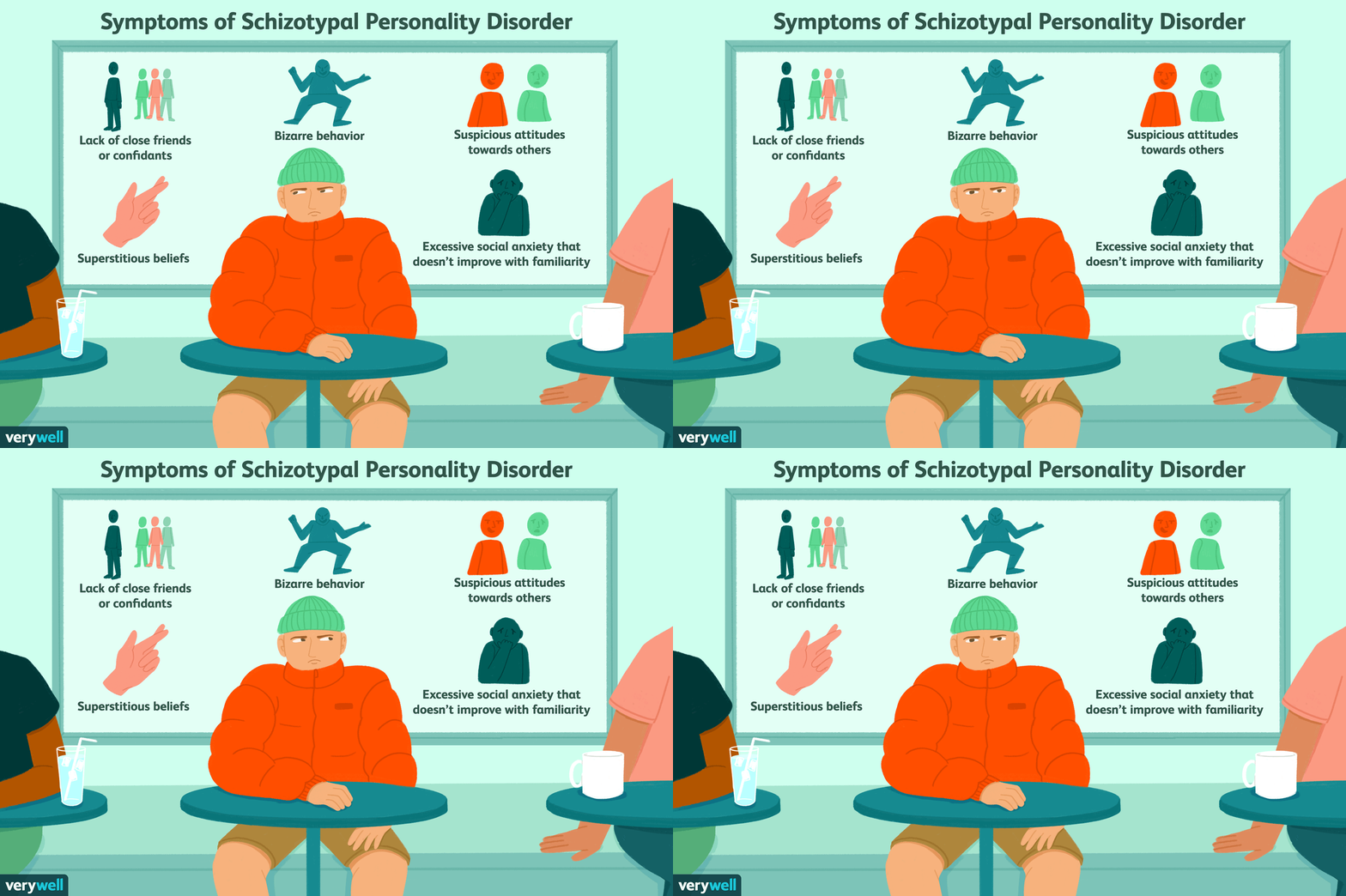
Unlike in social anxiety disorder, where an individual is likely to grow more comfortable with time, individuals with schizotypal personality disorder remain uncomfortable even when they’re interacting with the same people in the same environment over and over again.
The disorder also involves distorted thinking and eccentric behavior—which tends to push people away and create even more isolation.
Superstitious Beliefs
Sometimes, individuals with schizotypal personality disorder are superstitious or preoccupied with paranormal phenomena that are outside what would be expected in their culture.
They may think they have special powers or magical control over others (such as thinking the reason their co-worker is leaving early is that they wished an illness upon them). They may also believe their behavior prevents a harmful outcome, such as thinking that they can prevent bad things from happening by placing an object in a certain place.
They may experience perceptual alternations, such as hearing someone mumbling their name or sensing that a spirit is present.
Their speech may be vague or incoherent at times. They may use strange phrases or talk in a way that confuses others.
Strange Behavior
They might also appear constricted and show little emotion during their interactions. They may have unusual mannerisms, such as an unkempt manner of dress.
An individual with this disorder may wear ill-fitting clothing or bizarre clothing combinations (winter boots with shorts) and may be unable to participate in the normal give-and-take of a conversation.
They may occasionally express sadness over their lack of close relationships but their behavior suggests they have little desire for close connections. They often interact with people when they have to but prefer to keep to themselves.
They might also experience transient psychotic episodes during times of extreme stress (lasting minutes to hours) but they do not have regular hallucinations or delusions (such as in the case with schizophrenia).
DSM-5 Diagnostic Criteria
According to the fifth edition of the Diagnostic and Statistical Manual, symptoms must begin by early adulthood. In order to meet the criteria for a diagnosis, individuals must experience at least five of the following symptoms:
- Ideas of reference (incorrect interpretations of causal incidents or events as having an unusual meaning specifically for the person)
- Odd beliefs or magical thinking that influences behavior and is inconsistent with subcultural norms
- Unusual perceptual experiences, including bodily illusions
- Odd thinking and speech
- Suspiciousness and paranoid ideation
- Inappropriate and constricted affect
- Behavior or appearance that is odd, eccentric, or peculiar
- Lack of close friends or confidants other than first-degree relatives
- Excessive social anxiety that does not diminish with familiarity and tends to be associated with paranoid fears rather than negative judgments about oneself
The symptoms may begin during childhood or adolescence. Symptoms evident during childhood may include:
- Poor peer relationships
- Social anxiety, isolation
- Underachievement in school
- Hypersensitivity
- Peculiar thoughts and language
- Bizarre fantasies
Causes
In community studies, the prevalence of schizotypal personality disorder ranges from .6 percent of the population in Norway to 4.6 percent in samples taken in the United States.
There isn’t a single known cause for schizotypal personality disorder. It appears there is a strong genetic component, however.
Individuals with first-degree biological relatives with schizophrenia are more likely to have a schizotypal personality disorder.
Diagnosis
A mental health professional can diagnose a schizotypal personality disorder. Like all personality disorders, a clinician must take into account what type of impairments are caused by the symptoms.
Someone who is eccentric with few friends doesn’t necessarily have a schizotypal personality disorder. In order to meet the criteria for a diagnosis, the symptoms must interfere with a person’s social, occupational, or educational functioning.
There isn’t a test that determines whether someone has a personality disorder. Instead, a clinician will conduct a thorough interview that gathers the history of the symptoms and assesses the impairments. The clinician also observes the individual throughout the interview to look for signs of the condition.
Assessment tools may be used as part of the diagnostic process. The individual may be given a questionnaire to complete or may be asked to answer specific diagnostic questions.
Sometimes, close family members are interviewed as well.
Ruling out Other Disorders
Before a diagnosis can be made, a clinician must rule out other disorders that can cause someone to exhibit symptoms that appear similar to the symptoms of schizotypal personality disorder. Schizophrenia, bipolar disorder, psychotic disorders, neurodevelopmental disorders, and other personality disorders may be confused with a schizotypal personality disorder because they have certain features in common.
Schizotypal Personality Disorder Treatment
Like other personality disorders, there is no cure for schizotypal personality disorder. Like all personality disorders, the symptoms are likely to persist throughout the life span. That doesn’t mean you can’t reduce the severity of the symptoms or improve your functioning, however.
Over half of individuals with schizotypal personality disorder may have a history of at least one depressive episode. Sometimes, individuals seek treatment for their depression, rather than the symptoms related to their personality disorder.
Treatment for schizotypal personality disorder may include a combination of psychotherapy and medication.
Psychotherapy may include cognitive-behavioral therapy to address distorted thinking patterns and to teach specific social skills. It may also help address problematic behavior.
Family therapy may also be used to help family members understand the symptoms and to assist in helping everyone communicate better and support the individual.
While there isn’t a specific drug used to treat schizotypal personality disorder, medications may be used to address depression, anxiety, or psychotic symptoms. Some medications may reduce distorted thinking.
Coping
Positive life experiences can be key to coping with schizotypal personality disorder. Forming relationships—even though it’s difficult to do—can reduce the distress associated with schizotypal personality disorder.
Additionally, a sense of achievement can also reduce symptoms. Getting a job, volunteering, going to school, or engaging in community activities can be helpful.
Thanks for your feedback!
What is your feedback?
Helpful
Report an Error
Other
