

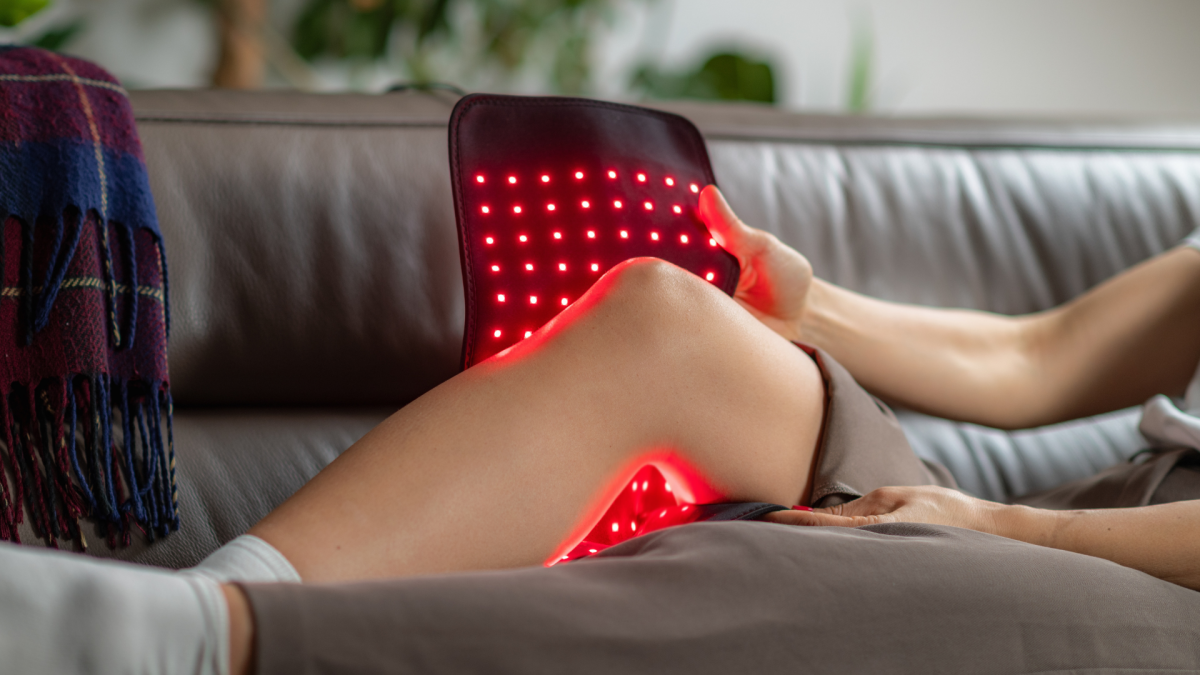
Red light therapy devices are everywhere—from lamps, to full-body mats, to those glowing face masks flooding my social media feed. I usually see red light therapy advertised for “younger-looking skin,” but I’m not interested in these devices as a means to slow down aging—I’m interested in them as a recovery-obsessed athlete with very sore muscles.
These gadgets promise to boost athletic performance, speed muscle recovery, and reduce inflammation, all by bathing your body in specific wavelengths of red and near-infrared light. But do these trendy tools live up to the hype, especially for muscle recovery?
What red light therapy advocates claim
Red light therapy devices typically emit light in the red (620-670 nanometers) and near-infrared (800-850 nanometers) spectrum. Manufacturers claim these wavelengths penetrate the skin to stimulate cellular activity, specifically targeting the mitochondria (the energy-producing powerhouses inside our cells). The purported benefits include enhanced muscle recovery, reduced inflammation, improved circulation, decreased muscle soreness, and even performance gains.
It all sounds scientific enough: the light supposedly helps mitochondria produce more ATP (cellular energy) and triggers the release of beneficial compounds like nitric oxide, which improves blood flow and activates repair processes throughout the body. But let’s dig into what these gadgets can actually do.
What the science actually says
Surprise, surprise: The science is more nuanced than marketing materials suggest. According to Dr. Wesley Buckle, a licensed naturopathic doctor, “the data on red light therapy is not definitive. Some studies show that it can help with delayed onset muscle soreness and muscle recovery. However, the evidence is mixed. Most of the studies that have found a positive benefit are small, short-term ones.”
While the research shows potential, there’s a significant gap between what manufacturers claim and what the evidence actually supports, Buckle says he’s seen “claims of enhanced performance, improved circulation, and muscle recovery” that are ultimately overblown. “The evidence supports mild improvements in muscle fatigue. It doesn’t support dramatic claims of large gains and strength or performance boosts.”
This is a crucial distinction. If you’re expecting red light therapy to transform your performance or replace proper training, you’ll be disappointed. The benefits appear to be modest and supportive rather than revolutionary.
Another critical factor is device quality. McCall McPherson, a physician associate and founder at Modern Thyroid Clinic and Modern Weight Loss, says that “not all devices are created equal. The effectiveness depends heavily on the wavelengths used, power output, and build quality of the device.” It’s important to distinguish between medical-grade panels built with specific, researched wavelengths and all the cheaper consumer devices that may not deliver the necessary light intensity or correct wavelengths to produce biological effects.
There’s certainly promising research, but this research is based on specific wavelengths (typically 620-670 nm for red light and 800-850 nm for near-infrared) and specific energy doses. Many budget-friendly devices don’t meet these parameters, which means they’re unlikely to produce the results seen in clinical studies.
What do you think so far?
Should you consider red light therapy?
For the average athlete, red light therapy could be a useful addition to a recovery routine—but with important caveats. Buckle advises prioritizing the fundamentals: “Sleep, nutrition, and proper training are all extremely important. Without these things, red light therapy won’t help. It can’t replace these practices…Red light therapy could be a good supportive recovery tool for most people. However, it’s best to focus on the basics first, such as proper training.”
McPherson is more enthusiastic, saying, “I really do think red light therapy can be a great recovery tool for casual athletes when used correctly.” She notes that for best results, athletes should look for quality medical-grade devices and use them consistently right before or after workouts on the specific muscles trained. “It’s not magic,” says McPherson, “but it’s one of the most well-researched, noninvasive tools we have for reducing soreness and speeding up recovery between workouts.”
The bottom line
Red light therapy for muscle recovery isn’t pure snake oil; there’s legitimate science supporting its use as a supportive recovery tool. However, the benefits appear to be modest improvements in muscle soreness and recovery rather than dramatic performance enhancements. The evidence is still evolving, with many studies being small and short-term.
If you’re considering adding red light therapy to your recovery arsenal, remember these key points: First, nail the basics. No amount of red light will compensate for poor sleep, inadequate nutrition, or improper training. Second, invest in quality. If you decide to try red light therapy, choose a medical-grade device with the correct wavelengths and power output rather than the cheapest option on Amazon. Third, be consistent. The research shows benefits with regular use, not occasional experimentation.
Finally, manage your expectations. Think of red light therapy as a potentially helpful tool for reducing soreness and supporting recovery—not a miracle device that will dramatically transform your athletic performance.
