

1. Dress in Soft, Breathable Fabrics
Although conventional wool is notoriously itchy, one study found that merino wool, which is thinner and softer than most wool, not only improved atopic dermatitis symptoms when compared with standard clothing but also boosted the study subjects’ quality of life.
[2]
Organic textiles are grown without pesticides and typically aren’t treated with harsh chemicals. Some — like lyocell and modal — are known for being soft and breathable, making them especially atopic dermatitis–friendly.
[3]
Cotton
It’s soft, durable, and breathable. Although 100 percent cotton is optimal, cotton blends can be okay too; just check the label to make sure there isn’t a high percentage of polyester, which can aggravate atopic dermatitis.
[4]
Bamboo
Bamboo is a plant that grows in hard stalks, yet somehow it produces soft textiles. Some apparel and textile companies tout bamboo as being softer than cotton, on par with silk or cashmere — and more breathable as well. Research confirms that bamboo fiber is highly absorbent and naturally hypoallergenic (meaning it does not cause allergic reactions).
[5]
The processing needed to make bamboo fiber can be chemical-intensive. While these chemicals may not irritate skin, they can be detrimental to the environment, leading some consumers to opt for the eczema-safe fabric lyocell (often branded as Tencel), which is generally more environmentally-friendly in its manufacturing methods.
[4]
Silk
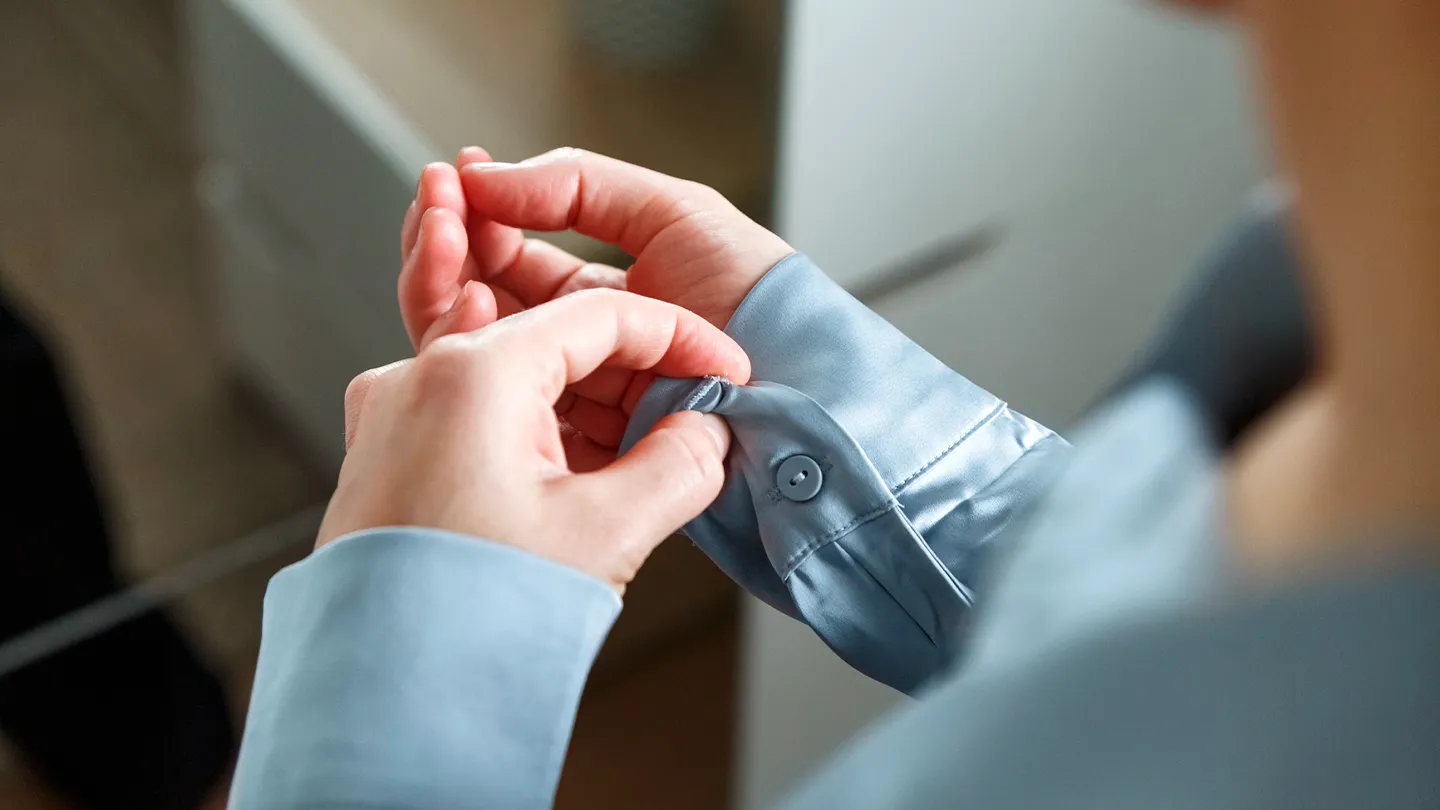
Silk is another soft, breathable fabric. Unfortunately, it stains easily — a particular problem if you use a lot of moisturizers or topical atopic dermatitis treatments — and can be expensive to buy and care for. While it’s common practice to dry-clean silk, it’s possible to gently hand-wash many silk garments.
[6]
2. Layer Up in All Types of Weather
Cold weather can mean wearing wool for warmth. Because many types of wool can be scratchy, layering is a good strategy if you have atopic dermatitis. For instance, wearing a cotton shirt underneath a wool sweater can reduce friction and irritation.
In general, layering is a useful tactic for people with atopic dermatitis, no matter the weather. “It gives a person more control over their environment,” says Bruce Brod, MD, a clinical professor of dermatology and the codirector of the occupational and contact dermatitis program at Penn Medicine in Philadelphia. “A person can sense when they are feeling uncomfortable and adjust accordingly, whether that’s putting on more layers in the winter or shedding layers in the summer.”
It’s important not to overheat in warm weather, because sweat contains sodium and other minerals and metals that can trigger flare-ups.
[7]
“Some patients with atopic dermatitis are aggravated by perspiration — it makes them feel really itchy,” says Dr. Brod. “Some say they actually feel like they’re allergic to their own sweat.”
3. Be Cautious About Certain Textile Colors and Dyes
Jenny Murase, MD, a dermatologist at the Palo Alto Medical Foundation Medical Group in Mountain View, California, warns that certain fabric colors and dyes can trigger flares in people with atopic dermatitis. She advises against wearing dark clothes in the summer, for instance, because they absorb sunlight and may contribute to overheating.
Plus, she says, “Different textile dyes like blue, black, orange, and red can trigger an allergic skin reaction.”
Research indicates that natural dyes, such as those derived from plants and minerals, are less likely to cause allergic reactions than synthetic versions.
[8]
People with atopic dermatitis may want to ask their dermatologist about allergy testing.
4. Aim for a Loose and Airy Fit
Close-fitting clothing that rubs against skin can aggravate atopic dermatitis. Tight workout wear can be especially troublesome because physical exertion produces both friction and sweat. Sweat gets trapped against the skin, increasing the potential for irritation.
[9]
People with atopic dermatitis tend to do better when their skin gets more air, so loose-fitting garments are best.
But even loose-fitting clothing can rub against skin. Dr. Murase urges patients to be aware of problem areas, such as the fronts of the shoulders, armpits, and along the waistline where a shirt may be tucked in against the belly.
People with atopic dermatitis should check clothing for features that may cause irritation, such as tags, rough seams, fasteners, and loose threads.
[4]
5. Launder Away Irritants
New clothes should be washed before they’re worn to eliminate problematic chemicals used in manufacturing — but be careful about what cleaning products you use.
It can help to use detergents and fabric softeners that are free of dyes and fragrances and formulated for sensitive skin. People with eczema are advised to avoid fabric softeners and dryer sheets due to added their fragrance, and because they’re also harder to rinse out of fabrics.
[10]
People who are extra sensitive may consider giving their garments a double rinse after washing.
