

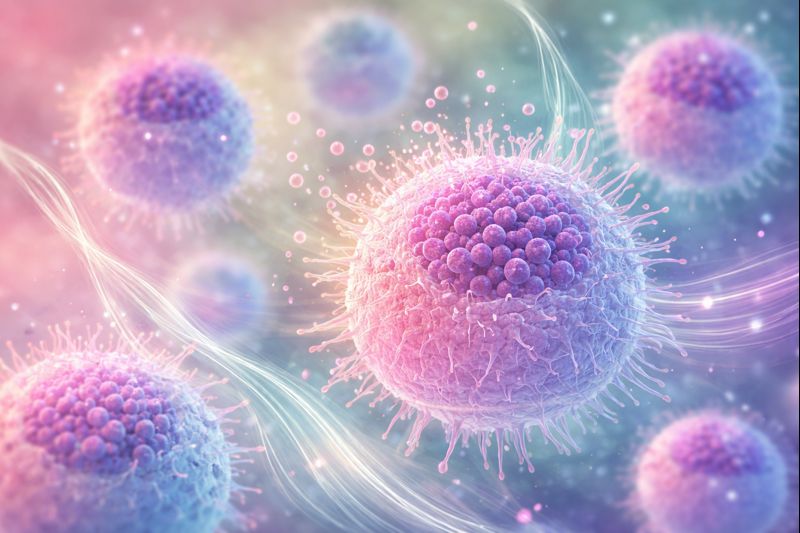
Mast cells are often introduced in medical training as the foot soldiers of classic allergy: histamine-filled, quick to degranulate, and responsible for hives, flushing, and the familiar arc of allergic reactivity. But the last decade of research has recast them into something more complex—and far more interesting.
Mast cells are increasingly understood as neuroimmune interface cells: immune cells that both respond to nearby nerves and actively signal back to them, shaping vascular tone (blood flow), pain perception, barrier function (such as skin and gut integrity), and inflammatory cascades. As such, they sit at the crossroads of immunology, neurobiology, trauma physiology, and—unexpectedly—aesthetics.
For individuals working in beauty, wellness, dermatology, integrative medicine, or minimally invasive aesthetics, mast cells matter not only because they mediate hives or sensitivity reactions, but because they reveal something about how the body interprets the world. They reflect whether the environment feels safe or threatening—through skin, through sensation, through emotion. They link the immune system to the autonomic nervous system (ANS—the branch of the nervous system that regulates heart rate, digestion, vascular tone, and stress responses) and, in many ways, to the emotional life of the skin.
Understanding this connection reshapes how we approach patients who flush, react, or “mysteriously” break out under stress. It also reframes aesthetic practice as a sensory–neuroimmune experience, not merely a cosmetic one.
Mast Cells as the Body’s Sensory Border Patrol
Mast cells sit at the body’s perimeter: the skin, the gut, the airways, the meninges (the membranes surrounding the brain), and the vasculature.
Their strategic location allows them to evaluate the world—pathogens, allergens, temperature shifts, physical pressure, and emotional arousal—and translate those inputs into rapid physiological responses.
Contemporary scholarship frames mast cells not as simple allergy cells but as environmental interpreters. They store and release:
- histamine
- tryptase
- prostaglandin D₂
- leukotrienes
- cytokines such as IL-6 and TNF-α
These mediators influence vascular tone, smooth muscle contraction, barrier integrity, itch signaling, pain pathways, and immune-cell recruitment (Castells et al., 2024; Özdemir et al., 2024).
What is striking—especially from the vantage point of aesthetics and touch-based therapies—is how readily mast cells respond to non-allergen cues.
Mechanical pressure, temperature shifts, neuropeptides (chemical messengers released by nerves), hormones, and abrupt emotional changes associated with stress physiology can all trigger mediator release.
In other words, mast cells are not responding only to allergen load; they are responding to meaning—to the body’s sense of situational safety, reflected in patterned physiological signaling associated with perceived challenge or calm.
Stress, Trauma, and the ANS–Mast Cell Loop
The last decade has clarified the close proximity—and constant communication—between mast cells and the autonomic nervous system (ANS).
Mast cells cluster around peripheral nerves and express receptors for neurotransmitters, neuropeptides, and stress hormones. Conversely, mast-cell mediators directly influence neural firing, vasodilation, pain sensitization, and the permeability of protective barriers, including the gut lining and the blood–brain barrier (Forsythe, 2019; Theoharides et al., 2024).
Stress physiology is therefore not a psychological abstraction—it has biochemical consequences. During acute or chronic stress, the hypothalamic–pituitary–adrenal (HPA) axis releases corticotropin-releasing hormone (CRH) and catecholamines (such as adrenaline), both of which can provoke mast-cell activation (Theoharides, 2024; Skaper et al., 2019).
Clinically, this helps explain why some individuals experience:
- flushing or hives in emotionally charged moments
- gastrointestinal distress during conflict or public speaking
- temperature-triggered urticaria under sympathetic dominance
- dysautonomia-like episodes accompanied by mast-cell mediator flares
The literature stops short of claiming a single unified disorder of ANS–mast-cell dysregulation, but the connection itself is unmistakable.
A 2025 AGA (American Gastroenterological Association) expert review highlights the frequent coexistence of hypermobile Ehlers–Danlos syndrome (hEDS), postural orthostatic tachycardia syndrome (POTS), and mast-cell–mediator–driven gastrointestinal symptoms, reflecting cross-talk between connective tissue, autonomic tone, and barrier immunity (AGA Institute, 2025). Kucharik & Chang’s review of the hEDS/POTS/MCAS triad points in the same direction (2020).
For aesthetic practitioners, this means that reactions seen during or after treatments may involve systems far broader than local skin response. They may reflect the patient’s baseline autonomic and neuroimmune landscape rather than a simple contact or product sensitivity.
When Two Systems Converge: A TCM Interpretation of Neuroimmune Reactivity
Traditional Chinese Medicine (TCM) offers a remarkably parallel understanding of neuroimmune sensitivity—though expressed in a different medical language.
In TCM, sudden, reactive, and emotionally inflected symptoms fall within classical patterns involving the Liver system (associated with regulation of stress and autonomic shifts), the Spleen system (linked to digestion, inflammation, and fluid metabolism), the Lung system (boundary function and immune vigilance, often described as Wei Qi), and the Kidney system (long-term regulatory reserve and stress resilience).
These systems describe networks of function rather than isolated organs, mirroring the distributed nature of mast cells throughout fascia, nerves, mucosa, vasculature – even surrounding the brain.
Many mast cell activation syndrome (MCAS)-like presentations map elegantly onto these classical frameworks: Liver-driven “Wind” reactions, Spleen-related Dampness affecting gut barrier function, Lung-mediated skin sensitivity, and Kidney-associated vulnerability to chronic stress.
This is not offered as metaphor alone. It represents two medical languages describing the same underlying phenomenon: the convergence of immune vigilance, sensory processing, and emotional regulation.
Why MCAS (Mast Cell Activation Syndrome) Belongs in a Neuroaesthetics Conversation
Neuroaesthetics explores how the brain responds to beauty, coherence, and sensory order—and how these experiences shape emotional, cognitive, and physiological states.
While this literature often uses the term beauty, here it may be more precise to speak of the salubrious: sensory inputs that regulate the nervous system and support physiological balance.
Mast-cell physiology highlights the opposite end of this spectrum: what happens when the body interprets the world as jagged, unpredictable, or threatening.
Beauty and threat exist on a continuum of sensory meaning-making:
- Salubrious inputs (soothing touch, coherent environments, gentle color and light, rhythmic or predictable sensory experience) tend to downshift autonomic arousal and reduce inflammatory signaling.
- Noxious or disorganizing inputs (abrupt pressure, sharp sensory contrast, unpredictability, emotional tension) may upshift sympathetic tone and provoke mast-cell activation in sensitive individuals.
This makes aesthetic settings—not traditionally viewed as neuroimmune environments—important spaces for sensory regulation. The sensory choreography (touch, sound, light, order etc) of a treatment room may have neurobiological consequences for people with reactive biology.
Aesthetic Practice as a Neuromodulatory Environment
This is not about diagnosing MCAS or treating immune pathology in an aesthetic setting. Rather, it is about recognizing that every aesthetic treatment is a sensory event—one that interfaces with the nervous system, the emotional brain, and the immune system in real time.
Research cited in the previous post demonstrates that acupuncture, intentional touch, facial massage, structured breathing, and coherent multisensory environments can regulate limbic activity, improve heart-rate variability (a marker of autonomic flexibility), and modulate stress circuits that affect mast cells downstream.
In parallel, mast-cell literature shows that sympathetic arousal, temperature shifts, pain anticipation, and emotional stress influence mediator release (Forsythe, 2019; Theoharides, 2024; Chan et al., 2024).
This intersection underscores a key point for aesthetic and wellness practitioners:
The body reacts not just to what we do, but to how we do it—and in what sensory and emotional context.
For patients with mast-cell sensitivity, gentleness, predictability, and sensory coherence are as therapeutic as the intervention itself.
The Future: Toward Neuroimmune Beauty
As the minimally invasive aesthetics field evolves, the conversation is shifting from procedures to physiology—from surface effects to the sensory–emotional–immune loops that shape how a person experiences their own face, skin, body, and environment.
MCAS is not primarily an aesthetics condition, nor should it be treated as one. But it offers a vivid illustration of what happens when the body over-reads the world—when signals that should be benign feel threatening, and when the skin becomes a site of neuroimmune conversation.
The future of integrative beauty—aligned with neuroaesthetics, TCM, and emerging neuroimmune science—will increasingly recognize:
- the emotional intelligence of the skin
- the sensory intelligence of mast cells
- the role of safety and coherence in treatment environments
- the power of aesthetic rituals to influence the nervous system
- the possibility that beauty, properly understood, is a form of neuromodulation
This is the landscape in which minimally invasive aesthetics will continue to grow: one where sensory meaning, emotional regulation, and immune physiology meet—and where practitioners shape not only appearance, but experience.
References
1. Castells M, Giannetti MP, Hamilton MJ, et al. Mast cell activation syndrome: Current understanding and research needs. Journal of Allergy and Clinical Immunology. 2024 Aug;154(2):255–263.
2. Dilemma of mast cell activation syndrome: Overdiagnosed or something else? Journal of Allergy and Clinical Immunology: In Practice. 2024.
3. Mast cell activation syndrome (MCAS): A primary care guide. 2025.
4. Özdemir Ö, Kasımoğlu G, Bak A, Sütlüoğlu H, Savaşan S. Mast cell activation syndrome: An up-to-date review of literature. World Journal of Clinical Pediatrics. 2024;13(2):92–113.
5. Forsythe P. Mast cells in neuroimmune interactions. Trends in Neurosciences. 2019;42(1):43–55.
6. Theoharides TC. Mast cell–sensory neuron interactions under stress. Journal of Allergy and Clinical Immunology. 2024 letter.
7. Kucharik A & Chang C. The relationship between hypermobile Ehlers–Danlos syndrome (hEDS), postural orthostatic tachycardia syndrome (POTS), and mast cell activation syndrome (MCAS). Clinical Reviews in Allergy & Immunology. 2020 Jun;58(3):273–297.
8. Theoharides K, et al. Mast cells in the autonomic nervous system and potential role in disorders with dysautonomia and neuroinflammation. Annals of Allergy, Asthma & Immunology. 2024;132(4):440–454.
9. Skaper SD, Facci L, Giusti P. Mast Cells in Stress, Pain, Blood-Brain Barrier, Neuroinflammation and Alzheimer’s Disease. Frontiers in Cellular Neuroscience. 2019;13:54.
10. AGA Institute. AGA Clinical Practice Update on GI Manifestations and Autonomic or Immune Dysfunction in Hypermobile Ehlers–Danlos Syndrome: Expert Review. Clinical Gastroenterology and Hepatology. 2025;23(8):1291–1302.
11. Wang J, Wu S, Zhang J, et al. Treatment of allergic rhinitis with acupuncture based on pathophysiological mechanisms: A narrative review. International Journal of General Medicine. 2023;16:3917–3929.
Lynnea Villanova MD is a senior integrative physician with over 30 years of clinical experience in Chinese herbal medicine, neurological scalp acupuncture, and complex chronic disease care. A former Physician Advisor to the North Carolina Acupuncture Licensing Board, she has helped shape clinical and regulatory standards in integrative medicine. Dr. Villanova has led multidisciplinary medical practices across specialties including women’s health, aesthetics, and neurorehabilitation, and has served on the faculty of New York Presbyterian and lectured at UNC School of Medicine. Her interdisciplinary research at the intersection of neuroscience and healing informs her immersive media works exploring brain plasticity and recovery, including Projection Booth, presented at the BrainMind Summit, and Forms of Fire, a theatrical collaboration supported by NYU, Mabou Mines, and the Romanian Cultural Institute.
