

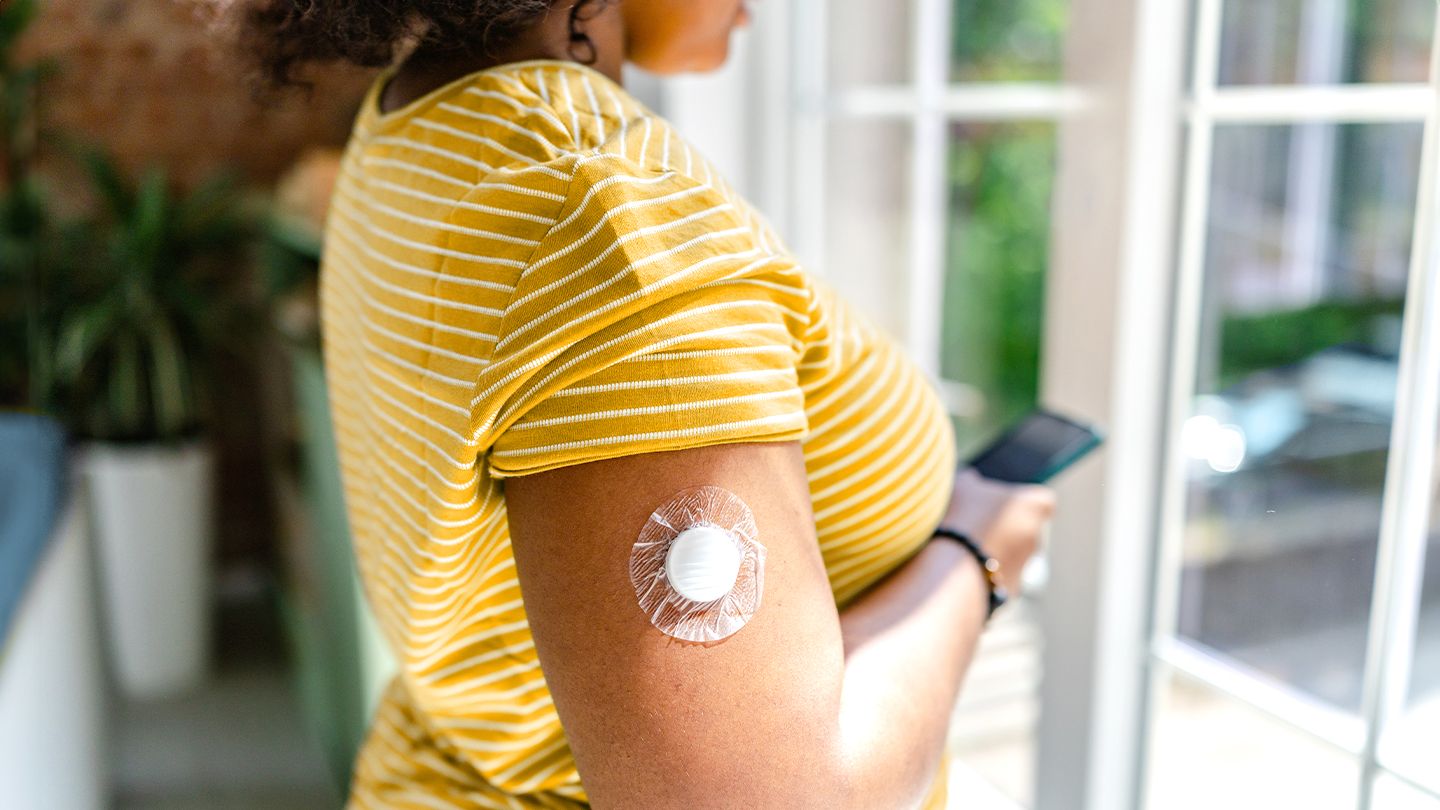
“Time in range reveals how much of the day a person’s blood sugar stays in the so-called ‘healthy zone.’ It’s measured using a continuous glucose monitor device,” says Mihail Zilbermint, MD, associate professor of medicine at Johns Hopkins University School of Medicine and chief of the division of endocrinology, diabetes, and metabolism at Suburban Hospital in Maryland.
A target range of 70 to 180 milligrams per deciliter (mg/dL) is the standard recommendation for most people with type 1 or type 2 diabetes, with the goal being to keep it in this range at least 70 percent of the time. However, there can be some variation, depending on your health and your goals.
[2]
“There may be different target ranges for certain populations,” says pediatric endocrinologist Kristin Arcara, MD, clinical codirector of the division of pediatric endocrinology and diabetes at Johns Hopkins Children’s Center in Baltimore. “For example, target ranges for patients who are pregnant [may be different],” she says.
Advantages
TIR can show what’s really happening from day to day, says Dr. Zilbermint. “It’s not just an average like A1C. It can help capture high sugar, low sugar, [and] glucose swings, which we know affect how people feel, function, and stay safe,” he says.
What’s more, TIR offers daily feedback, which can help users figure out exactly which variables are impacting their blood sugar.
[3]
With this information, providers can help patients decide their next action steps.
Dr. Arcara says that time in range can really help providers home in on treatment decisions — for instance, if they see that a patient’s blood sugar is high at a particular time of day. “Time in range really has a lot of advantages in clinical decision-making about insulin doses and medication doses,” she says.
TIR hasn’t been studied as extensively as A1C because it hasn’t been available for nearly as long. Nevertheless, preliminary data suggests that higher TIR is associated with better diabetes outcomes, including decreased risk of:
- Cerebrovascular accidents and microvascular complications
[4]
- Diabetic retinopathy
[5]
- Severe low blood sugar
[6]
- All-cause mortality and cardiovascular disease mortality
[7]
- Pregnancy-related complications
[8]
Disadvantages
There’s no TIR without a CGM. “Pretty much the only way to get a time in range [measurement] is to have lots of data, so it requires people to wear continuous glucose monitors, or CGMs,” says Zilbermint. “We know that it’s not accessible or may not be appealing to everyone.”
Acara also says that TIR can be an issue if a patient’s not wearing the sensor continuously. “When you look at the time in range data, you get a picture of what their glycemic control is while they’re wearing their CGM, but it’s not going to pick up their glycemic control during those times when they’re not wearing the sensor,” she says. Not everyone loves wearing a CGM all the time: Frequent alarms, alerts, and reminders from CGM devices can also lead to diabetes tech distress and burnout.
Some users may also have issues with CGM data inaccuracy.
[9]
“One of those things could be compression lows,” says Acara. Compression lows occur when a CGM blood sugar level inaccurately reads low because of applied pressure, which can happen if you fall asleep with your CGM pressed against the mattress.
[10]
Finally, experts cannot be perfectly confident that a good TIR translates to good long-term health outcomes, because there’s simply a lack of long-term data on TIR.
[1]
“We’ve really only been using CGM for, on a bigger scale, maybe the past 15 years or so,” says Acara. “We haven’t specifically done long-term studies.”
