

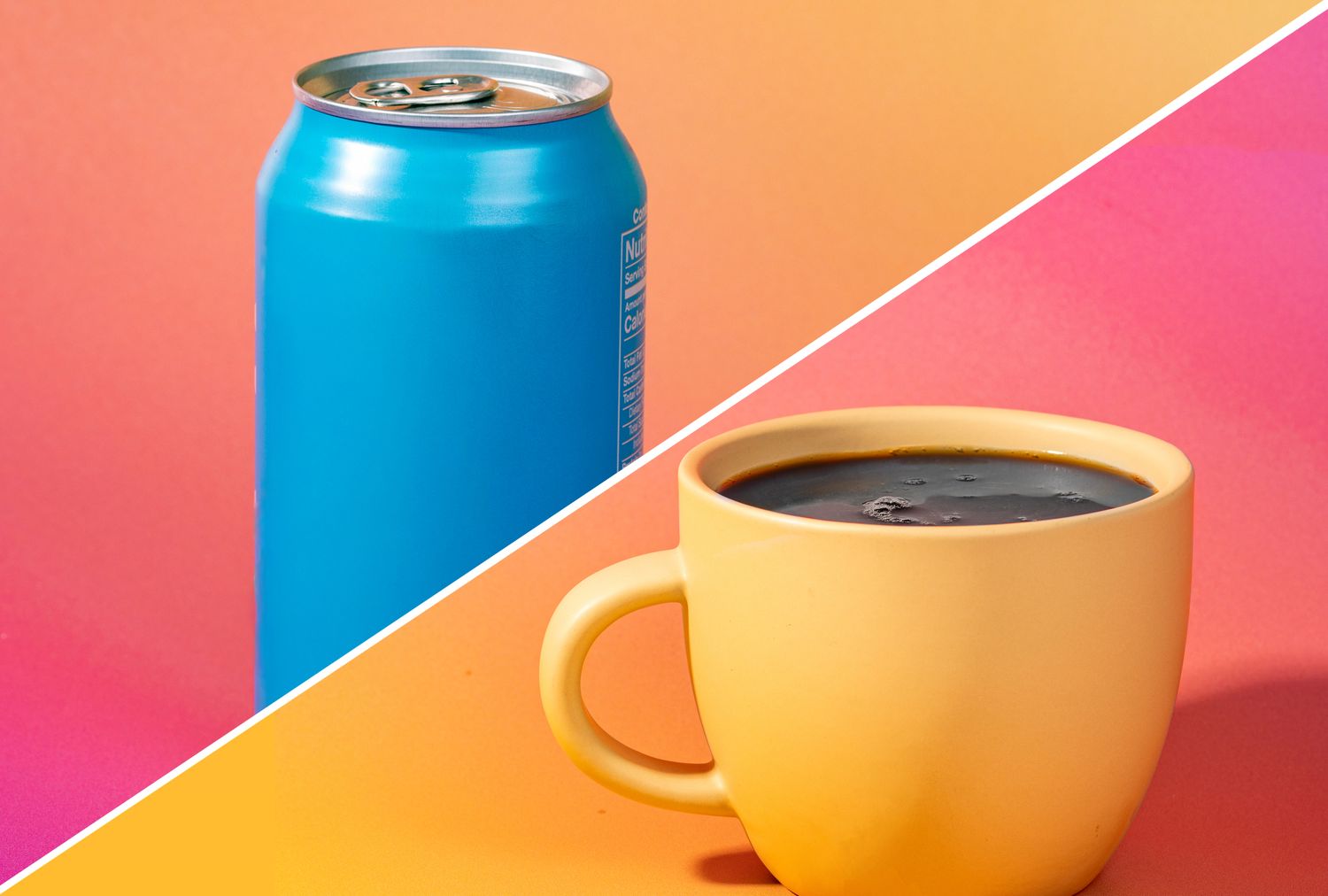
- Energy drinks and coffee both contain energy-boosting caffeine.
- Experts say coffee is a safer choice, as it’s free from harmful additives and lower in sugar.
- Whichever drink you choose, limit caffeine intake to no more than 400 mg per day.
When you need an energy boost, you may wonder if there’s a difference between coffee and energy drinks. After all, they both contain caffeine to stave off the dreaded afternoon slump. But there’s more to these drinks to consider, especially added ingredients that could spell trouble for your health.
To help you decide, we asked experts which is a better way to get your energy fix: energy drinks or coffee. Keep reading to find which is the healthier, more effective choice.
How Energy Drinks May Boost Energy
They May Contain Large Doses of Caffeine
The main way energy drinks increase energy is through caffeine, a central nervous system stimulant that helps reduce fatigue, sleepiness and grogginess. “The caffeine blocks adenosine, which is [a brain] chemical that signals fatigue,” says Amy Goldsmith, RDN, LDN. When you consume caffeine, it kicks in quickly, usually in about half an hour. Because each of us metabolizes caffeine differently, the amount of time it lasts depends on your unique physiology. However, the typical adult will get a caffeine boost for about five hours. During that time, you may experience increased alertness, improved reaction time and less fatigue, says Jordan Langhough, RD, CPT.
Trouble is, the amount of caffeine can vary substantially from one energy drink to another. In fact, it can range from as little as 40 milligrams to as much as 250 mg per 12-ounce can (and up to 330 mg in a 16-ounce can). To put that into perspective, the Food and Drug Administration recommends consuming no more than 400 mg of caffeine per day.
While the caffeine in energy drinks can help fight fatigue, it may also lead to jitteriness, anxiety, stomach upset and insomnia in people who are sensitive to caffeine—especially if you drink a couple of cans daily or usually go for a large can. At the extreme, it can even lead to dangerous irregular heart rhythms or seizures.
They Often Include Added Sugars
“A lot of energy drinks also have added sugar to assist with a positive taste,” says Goldsmith. These sugars provide calories that unsweetened coffee alone doesn’t have. Often, they contain as much as 9 teaspoons sugar per 12-ounce can.
However, the energy you’ll get from the added sugars in these drinks is temporary at best. What’s more likely to happen is an initial spike in blood sugar, providing a quick energy surge, followed by a plummet shortly after, leading to a crash.
That said, not all energy drinks contain added sugars. Some of them rely on nonnutritive sweeteners like stevia or sucralose for sweetness instead. These sweeteners won’t deliver that initial burst of energy, but—on the upside—they also won’t provide unwanted sugar. Either way, it’s a good idea to check out the Nutrition Facts panel and ingredient list. That way, you’ll know exactly what kind of sweetener is in your energy drink and how much sugar it may contain.
They Can Contain a Dangerous Mix of Added Ingredients
“Energy drinks can increase blood sugar, heart rate and blood pressure,” says Julie Pace, RDN.
This is because they often contain a combination of additives intended to fight fatigue and boost brain function and mental performance, like taurine, D-glucuronolactone, L-carnitine and guarana., Research has found that when these ingredients are mixed with caffeine, they may have dangerous short- and long-term effects on heart and brain health, especially among people who drink large quantities of energy drinks.
Energy drinks may also contain additional B vitamins. That might sound like a plus, but these vitamins will only improve energy if you have a deficiency.
To complicate matters, “energy drinks’ additional ingredients haven’t been shown to provide real benefits, and regulatory oversight is less stringent than for traditional beverages, raising safety concerns,” says Pace.
Why Coffee May Give You a Boost
It Also Contains Large Amounts of Caffeine
Just like energy drinks, coffee gets its fatigue-fighting properties from caffeine. “When you drink coffee, caffeine blocks adenosine just like it does with energy drinks,” says Langhough. By blocking adenosine receptors, coffee’s caffeine indirectly leads to the release of neurotransmitters that promote memory and alertness.
Depending on how it’s brewed, a 12-ounce cup of coffee contains roughly 115 to 250 mg of caffeine. So, the amount of caffeine in your cup of coffee may not be all that different than what you’d get from an energy drink. On the downside, too much caffeine from coffee—or energy drinks—may lead to anxiety, palpitations, increased heart rate, high blood pressure and, of course, insomnia.
Coffee Drinks May Provide Energizing Nutrients
Technically, caffeine doesn’t give you energy—it blocks fatigue. You get energy from calories found in carbs, protein and fats. The protein in some coffee drinks—like lattes or protein coffee—may be especially advantageous. That’s because protein is digested slowly, providing a long-lasting energy source. Just one 12-ounce latte, made with dairy milk or soy milk, delivers about 10 grams of protein.
Coffee is also naturally sugar-free. However, like energy drinks, some coffee drinks contain sugar added for flavor. Yes, that sugar will provide a quick energy boost. But it won’t last long, and once that sugar crash hits, you’re likely to feel worse than you did before you had your coffee.
To maximize coffee’s full energy potential, drink it with protein-rich dairy or soy milk, and skip the added sugar (or use as little as you can comfortably get away with).
Which One Is Better for Energy?
“I recommend choosing coffee over energy drinks because it is the safer choice and provides health benefits without the risks associated with energy drinks,” says Pace. The occasional small energy drink is unlikely to hurt you. But the risks of regularly consuming energy drinks are pretty significant. Studies show that energy drinks can cause cardiovascular, gastrointestinal and psychiatric health issues because of their mix of caffeine and compounds like taurine, D-glucuronolactone, L-carnitine and guarana.
Energy drinks aren’t just high in caffeine. They’re also usually loaded with sugar yet lack coffee’s natural bitterness, making it easy to drink too many of them. Unsweetened coffee is naturally sugar-free, says Langhough. That’s a big plus, as regularly consuming lots of added sugars is linked to health issues like diabetes, heart disease and weight gain. So, an unsweetened (or very lightly sweetened) cup of coffee is better for you than a sugary energy drink.
Our Expert Take
While energy drinks and coffee can both block fatigue, experts agree that coffee is generally a safer choice. Coffee doesn’t contain potentially harmful additives like taurine, D-glucuronolactone, L-carnitine, guarana or other stimulants. Plus, it’s naturally sugar-free.
Regardless of your preferred source of caffeine, think moderation. Health experts recommend that people who consume caffeine limit their intake to no more than 400 mg per day. Consuming more increases the chances you’ll experience anxiety, insomnia, digestive upset or even abnormal heart rhythms and high blood pressure. Considering the whole point of an energy drink or coffee is to make you feel better, that’s probably the last thing you want!
