

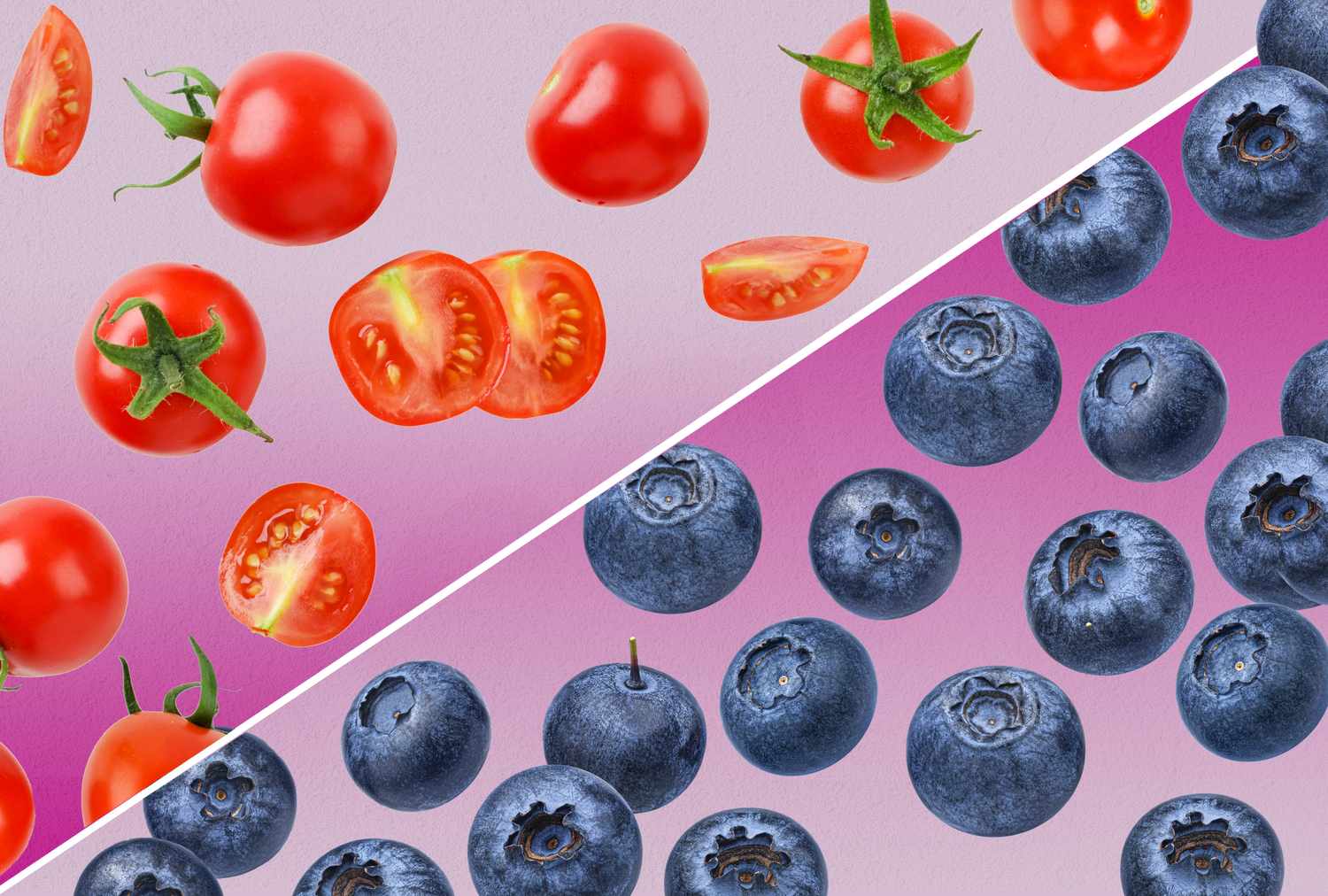
- Tomatoes contain lycopene, an antioxidant that helps reduce cardiovascular inflammation and protect blood vessels.
- Blueberries are rich in anthocyanins, which offer anti-inflammatory effects and can help lower chronic disease risk.
- Experts recommend including both for a wider, complementary range of health benefits.
Chronic inflammation is sneaky. You can’t really tell it’s there, but it has been linked to many chronic conditions from diabetes to heart disease, cancer and even gastrointestinal disorders. The good news is that one of the best ways to tamp down chronic inflammation and side-step some of those potential side effects is through a healthy diet. In fact, numerous research studies have shown that certain compounds in fruits and vegetables can have inflammation-fighting effects in the body.
With that in mind, are some fruits and veggies better at fighting inflammation than others? In this article, we compare two popular fruits with anti-inflammatory benefits, tomatoes and blueberries, to see which one comes out on top.
Why We Love Tomatoes
If you’ve heard rumors that tomatoes are inflammatory, rest assured that it’s mostly a myth and there is plenty of research to support their potential benefits.
Packed with Lycopene
If you want to protect your heart health, consider adding more tomatoes to your plate. Chronic inflammation puts extra strain on your cardiovascular system, but the beloved tomato is packed with compounds that can keep it in check. “Tomatoes are rich in a carotenoid called lycopene, which is strongly associated with reduced cardiovascular (heart) inflammation,” says Jackie Newgent RDN, LDN. This well-researched compound is actually what gives tomatoes their ruby red color.
Tomatoes also contain nutrients like vitamin C and beta-carotene that collaborate with lycopene to protect your vascular health, or the condition of your blood vessels. Research has found that these nutrients help prevent low-density lipoprotein (LDL) oxidation, a key factor in the development of atherosclerosis (the hardening of your arteries due to plaque). That’s because, when LDL gets oxidized, it increases the pro-inflammatory messengers in the body that tell white blood cells to clump inside arteries where they can lead to coronary heart disease and heart attacks, explains Maggie Moon, M.S., RDN.
Incredibly Versatile
Few ingredients are as widely utilized in recipes across a variety of cuisines as the tomato. From fresh to canned, roasted or sauced, there are an endless number of ways to use this popular fruit. What’s more, cooking your tomatoes can actually unlock more of their anti-inflammatory potential. “Cooking tomatoes actually boosts lycopene absorption. That means tomato soups, sauces and various canned tomato products may all provide substantial anti-inflammatory benefits. Plus, preparing or eating tomatoes along with a little healthy fat, like extra-virgin olive oil, can help your body absorb even more lycopene,” says Newgent. So stock up on both fresh and cooked tomato products.
Tomato Nutrition
Here is a snapshot of the nutrition content of 1 red ripe raw tomato, per the USDA:
- Calories: 22
- Carbohydrates: 5g
- Dietary Fiber: 1.5g
- Total Sugar: 3g
- Added Sugar: 0g
- Protein: 1g
- Total Fat: 0.2g
- Saturated Fat: 0g
- Cholesterol: 0mg
- Sodium: 6mg
Why We Love Blueberries
An ever-growing body of research supports the potential health benefits of berries. Here’s how eating blueberries can help control chronic inflammation.
Abundant in Anthocyanins
As if you needed another reason to add a pint of tasty blueberries to your cart, they’re also packed with inflammation-fighting antioxidants. “They’re rich in anthocyanins, the plant compounds that give them their deep blue color and also provide anti-inflammatory effects,” says Sapna Peruvemba, M.S., RDN. She adds that research shows that eating blueberries on a regular basis can even lower your risk of chronic conditions like heart disease or diabetes. In fact, research found that people who ate blueberries more than twice a week had a 23% lower risk of developing diabetes compared to those who rarely ate them. So don’t underestimate the potential of those anthocyanins!
Bolster Gut Health
That’s not all, blueberries can also bolster your gut health, which, in turn, can lower chronic inflammation. “Flavonoids in blueberries are life support for the gut microbes that make short-chain fatty acids (SCFAs) that reduce inflammatory responses,” explains Moon. Blueberries are also much higher in fiber than tomatoes, with 3.5 grams of fiber per serving, compared to 1 gram of fiber per tomato. And we know that higher-fiber diets support regularity and overall gut health.
Blueberry Nutrition
Here is the nutrition content of 1 cup raw blueberries, per the USDA:
- Calories: 84
- Carbohydrates: 21.5g
- Dietary Fiber: 3.5g
- Total Sugar: 14.5g
- Added Sugar: 0g
- Protein: 1g
- Total Fat: 0.5g
- Saturated Fat: 0g
- Cholesterol: 0mg
- Sodium: 1.4mg
Do You Need to Choose?
In this case, our experts agree that there’s no need to choose one over the other. Both tomatoes and blueberries contain compounds that help prevent inflammation in different ways. “Rather than choosing one over the other, regularly including both provides a wider range of anti-inflammatory compounds that work in slightly different but complementary ways,” says Peruvemba. “This is why we say to ‘eat the rainbow.’”
Instead of getting hung up on one food versus another, you’ll get the most anti-inflammatory benefits from focusing on the big picture. “It’s not as simple as one food being more anti-inflammatory than another because they may have different or additive benefits,” says Moon. “As always, context matters, no single food can make us healthy. Including anti-inflammatory foods like blueberries and tomatoes in a diverse and balanced plant-forward diet is a great start,” she adds.
Our Expert Take
Chronic inflammation tends to be present in many chronic conditions. However, adopting healthier diet and lifestyle habits can keep it in check. Our experts recommend adding more anti-inflammatory foods like blueberries and tomatoes to your diet as a great way to start. Tomatoes provide plenty of lycopene, while blueberries are loaded with anthocyanins. Each offers its own unique benefits for fighting inflammation. So the choice for the better anti-inflammatory food is not one or the other—but both!
