

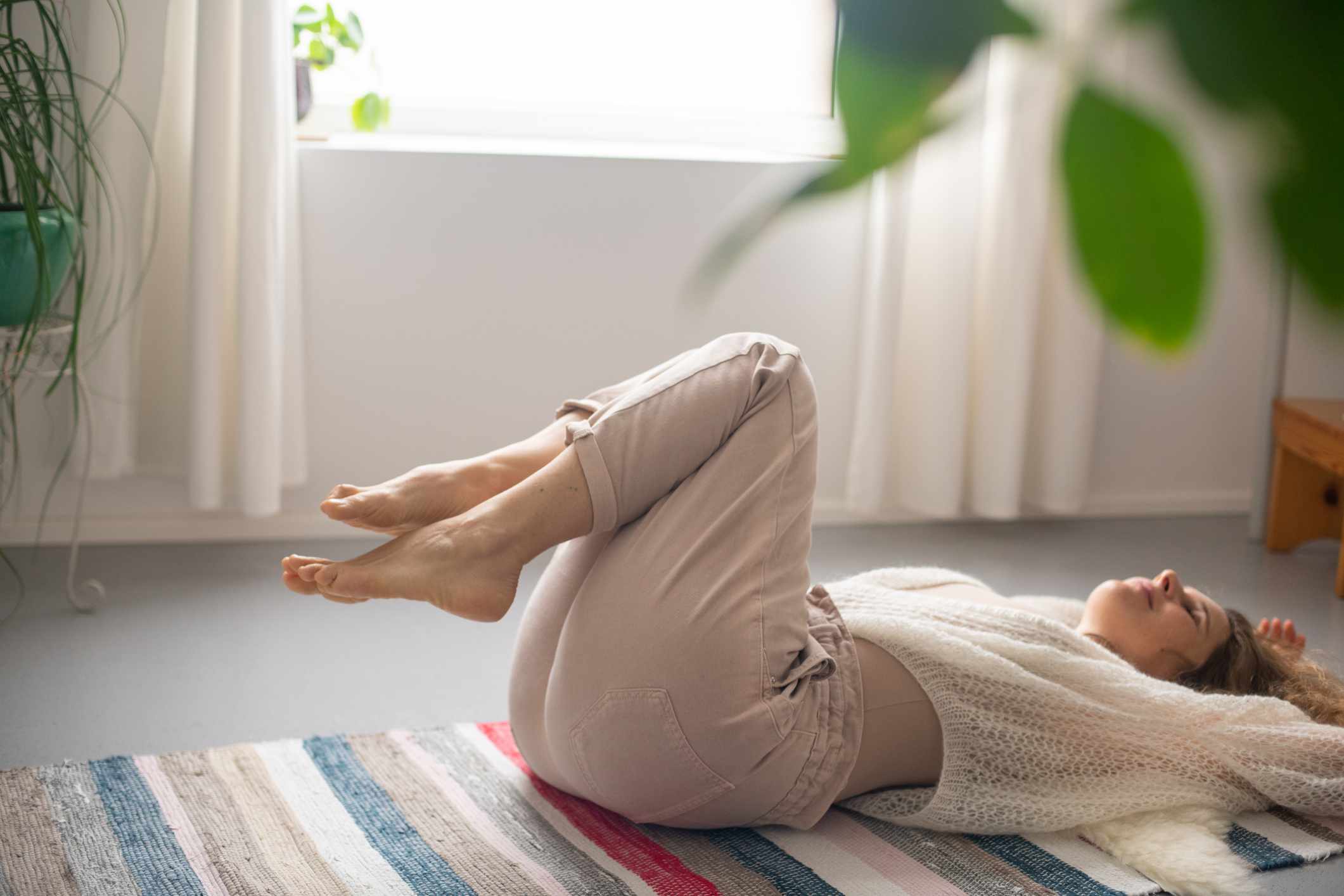
Key Takeaways
- “Floor time” helps activate the body’s relaxation mode and reduces stress by calming the nervous system.
- Lying on the floor can improve posture and spinal health by allowing the body to realign.
- The practice of “floor time” can make you feel more grounded and connected to your surroundings.
If you spend time scrolling on TikTok, you might have come across videos of people simply lying on the floor, doing… nothing. It’s called “floor time,” and it’s praised as an easy way to ground yourself, relax, reset, and manage stress.
While it may seem too simple to be effective, spending time on the floor—whether sprawled out in silence or curled up with a cozy blanket—can actually have profound psychological and physical benefits.
What Is ‘Floor Time?’
Floor time is exactly what it sounds like: taking a break by lying on the floor, often in a relaxed position. Many TikTok users describe it as a way to decompress from the day, unwind after work, or simply slow down in an overstimulating world.
Many users say it reminds them of childhood, when lying on the floor to daydream or stare at the ceiling was a natural way to relax.
This trend has gained traction as a counterbalance to our fast-paced, hyperconnected lifestyles. Unlike other wellness trends that require effort—like journaling, yoga, or cold plunges—floor time asks nothing of you except to be still.
How It Relates to Savasana
Floor time bears some resemblance to savasana, the final resting pose in yoga that allows the body and mind to fully surrender.
According to Yara Kamal, a yoga teacher as well as the founder and CEO of Scoria, savasana helps the body and mind fully absorb the benefits of the yoga practice. “Savasana is very important to help the muscles relax, recover, and to create a moment for deep rest,” Kamal says. “It creates space for the body to prepare for meditation and encourages mindfulness, both on and off the mat.”
Savasana may have benefits in itself: A small study in India looked at the effects of savasana on 30 patients with depression. On average, the patients’ depression scores were significantly lower after practicing savasana.
Even if you’re not actually meditating during floor time, it feels like a mindful practice. It’s not often in our lives that we get to intentionally do nothing, which is perhaps why floor time feels so good.
What Are the Psychological and Physical Benefits?
Although lying on the floor may seem simple, the practice can have real benefits.
1. Stress Relief and Nervous System Regulation
According to Kamal, one of the biggest benefits of floor time is its ability to activate the parasympathetic nervous system. This shifts the body out of fight-or-flight mode and into a state of rest and relaxation.
Mindfulness practices—including those done outside of clinical settings—can improve mental health. According to research, mindfulness-based practices seem to improve the symptoms of depression, anxiety, and stress.
By simply lying down and breathing deeply, you signal to your brain that you’re safe, which can help lower cortisol levels, slow your heart rate, and ease tension.
2. Grounding
Kamal says floor time can be grounding, which is why it’s so calming. Grounding techniques are popular for those experiencing anxiety or stress.
“When we lay our full body on the floor, we naturally become aware of the points making contact with it or the body,” Kamal says. “This awareness deepens our connection to the breath, body, and present moment.”
Many TikTok users say that floor time helps them feel more “connected” to their surroundings, almost like a physical “reset button” for their emotions.
3. Posture and Spinal Health
Spending time on the floor encourages better posture and spinal alignment.
In modern life, we spend hours slouched over screens, sitting at desks, or lounging on soft couches that don’t always support our backs.
“Even when sleeping on a mattress, our spine is never fully decompressed—we tend to lean to one side, arch the back, or shrug the shoulders,” says Kamal. “But when you lie on the floor, in a way, gravity is pulling everything down equally, allowing the body to realign and reset imbalances caused by daily posture and movement.”
This spinal decompression can feel great on your back. It can also relieve lower back tension and improve your posture—especially when done regularly.
4. Reducing Aches and Pains
Sometimes, your body just craves some time out. Floor time—which often allows you to stretch and relax deeply—can be good news for tired, tense, overworked muscles.
While you’re on the floor, you might choose to show your body some love with a few simple yoga poses. Allison Benzaken, a 500-hour certified yoga instructor at Ninja Yoga, recommends the following poses for floor time:
- Cat-Cow Pose (Marjaryasana-Bitilasana): On your hands and knees in a table top position, round your spine like a cat, then arch your back like a cow. Repeat this several times.
- Happy Baby Pose (Ananda Balasana): While lying on your back, bring your knees into your chest and hold onto your feet or shins. Gently rock side to side.
- Legs Up The Wall Pose (Viparita Karani): Lie on your back with your legs straight up against the wall. Relax the body.
- Butterfly Pose or Supine Bound Angle Pose (Supta Baddha Konasana): Lie on your back with your knees bent and your feet planted on the ground. Then part your knees, drawing both toward the floor. Gently press the bottoms of your feet together. If necessary, use yoga blocks to support your knees.
“In general, any stretch that feels good in your body while you have a connection with the earth will enhance your floor time,” Benzaken says. It’s important to listen to your body—if a pose feels painful, gently come out of that posture.
5. Encouraging Guilt-Free Rest
Many of us struggle with resting without feeling guilty. Whether it’s the pressure to be productive or the mental chatter that comes with downtime, relaxing can feel like a challenge.
Floor time TikToks help normalize stillness, reminding viewers that taking a break doesn’t require structure or productivity—it can simply be about existing.
When Should You Use It?
There’s no right or wrong time to try floor time. You can use it whenever it feels good to you. Some ideas include:
- After a long workday
- Before bed
- When feeling anxious or nervous
- In the middle of the workday to deal with creative block or brain fog
- To cope with overstimulation or overthinking
- Post-exercise
How To Practice Floor Time
Ready to give it a try? Here’s a simple guide to incorporating floor time into your self-care routine:
- Find a comfortable spot. Choose a firm but comfortable surface, such as a carpeted floor, yoga mat, or soft rug.
- Lie down in a natural position. You can lie on your back with arms at your sides, in a fetal position, or however feels most comfortable.
- Breathe deeply. Perhaps breathe in through the nose and out through the mouth.
- Close your eyes. Or, gaze softly at the ceiling.
- Stay as long as you need. Benzaken says there’s no ideal length of floor time. Any amount of time—whether five minutes or half an hour—can yield benefits.
- Get up slowly. Notice how you feel before transitioning back to your activities.
Floor Time Tips:
For extra relaxation, consider:
- Using a weighted blanket
- Pairing it with a mindfulness exercise
- Listening to calming music
- Pairing it with a breathing exercise; Benzaken suggests diaphragmatic breathing or the 4-7-8 breathing technique
How To Modify Your Floor Time Practice To Work For You
Anyone can engage in floor time. However, lying flat on the ground might not be comfortable for everyone. That’s where accommodations and modifications come in.
“One cannot find deep relaxation if a part of the body is uncomfortable,” Benzaken says. She always tells her students to make any adjustments they need to accommodate their bodies. “I’m a big fan of using blocks, bolsters, and blankets in class and especially during savasana,” she says.
Here are some potential modifications to make floor time more comfortable:
- If lying on your back isn’t for you: Try lying on your side.
- If your lower back gets sore: Try raising your knees while keeping your feet on the ground, hip-distance apart. Kamal and Benzaken recommend placing a prop—like a bolster, folded blanket, or blocks—underneath your knees.
- If the floor is uncomfortably hard: Use a cushion under your head and neck or a blanket or mat under your body.
- If your breathing feels restricted: Try elevating your torso by propping it up with cushions or a folded blanket.
- If it’s hard to block out distractions: Benzaken suggests using an eye mask.
- If you have balance or mobility issues or low blood pressure: Take your time when lying down and getting back up again. “To get up slowly, try lying on your side first and using your arm to press up,” Kamal suggests.
“Start slow and don’t shy away from using support,” Kamal says. “Pay attention to any discomfort—if something feels painful, listen to your body and come out of it.”
