

Day
1
2
3
4
5
6
7
Meals
Breakfast: Anti-Inflammatory Lemon-Blueberry Smoothie
——– Lunch: Mason Jar Power Salad with Chickpeas & Tuna
——– Dinner: Honey Salmon with Potatoes & Spinach
Breakfast: High-Protein Blueberry & Peanut Butter Chia Pudding
——– Lunch: Vegan Superfood Grain Bowls
——– Dinner: Sheet-Pan Balsamic Chicken & Asparagus & Chopped Salad with Italian Vinaigrette
Breakfast: High-Protein Blueberry & Peanut Butter Chia Pudding
——– Lunch: Vegan Superfood Grain Bowls
——– Dinner: Vegan Lentil Stew & Roasted Cabbage Salad with Lemon-Garlic Vinaigrette
Breakfast: High-Protein Blueberry & Peanut Butter Chia Pudding
——– Lunch: Vegan Superfood Grain Bowls
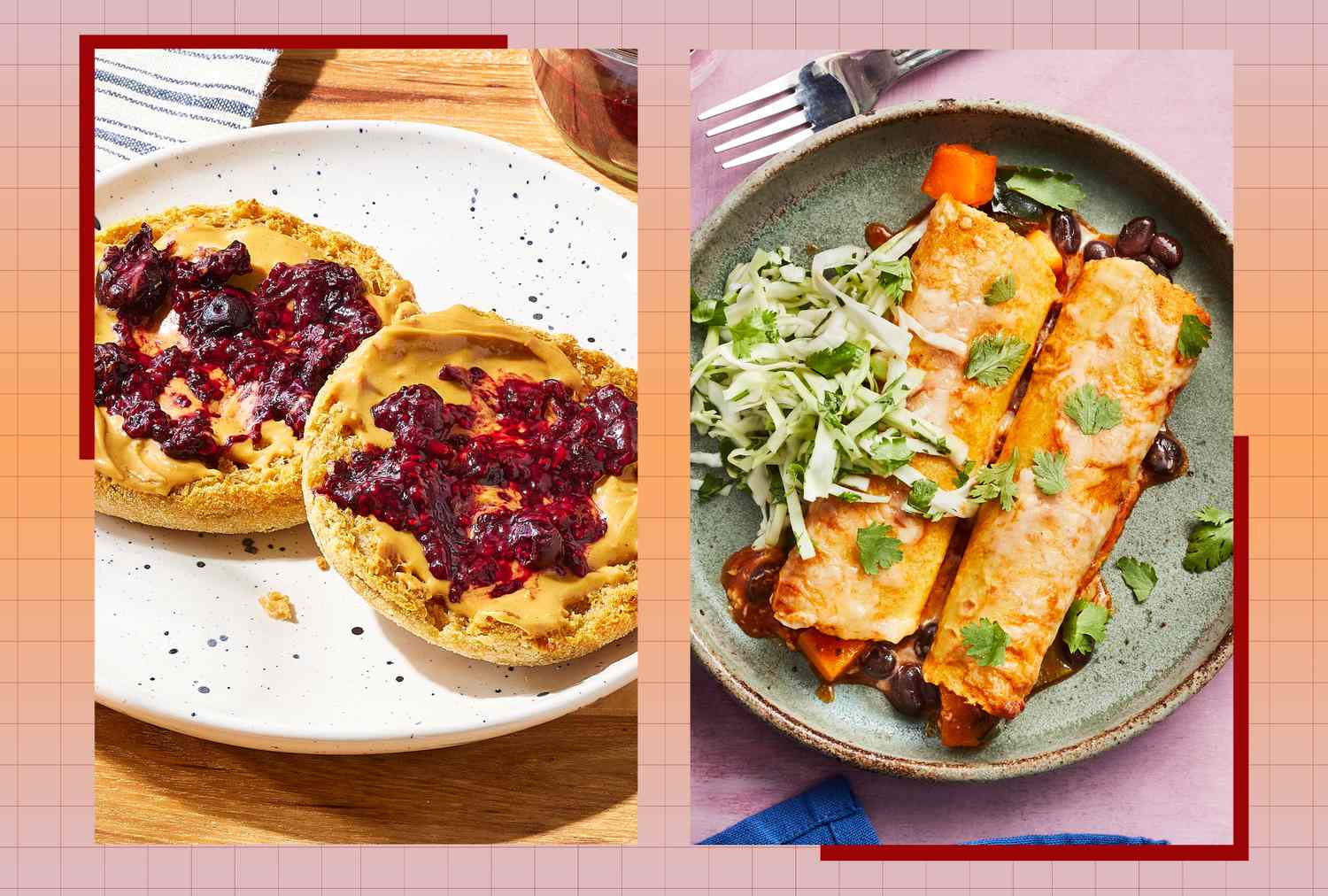
——– Dinner: Butternut Squash & Black Bean Enchiladas
Breakfast: Anti-Inflammatory Cherry, Beet & Kale Smoothie
——– Lunch: Vegan Superfood Grain Bowls
——– Dinner: Chicken & Cabbage Soup with Pesto & Smashed Green Beans with Parmesan & Balsamic
Breakfast: Anti-Inflammatory Cherry, Beet & Kale Smoothie
——– Lunch: Chicken & Cabbage Soup with Pesto & 1 medium apple
——– Dinner: One-Pot Garlicky Shrimp & Spinach & 1 cup cooked brown rice
Breakfast: Anti-Inflammatory Lemon-Blueberry Smoothie
——– Lunch: Chicken & Cabbage Soup with Pesto & 1 medium apple
——– Dinner: Stuffed Sweet Potato with Hummus Dressing
Daily Totals
Calories: 1,825
Fat: 84g Saturated Fat: 11g Protein: 104g Carb: 177g Fiber: 35g Sodium: 1,278mg
Calories: 1,791
Fat: 81g Saturated Fat: 11g Protein: 105g Carb: 180g Fiber: 51g Sodium: 1,472mg
Calories: 1,778
Fat: 80g Saturated Fat: 10g Protein: 84g Carb: 203g Fiber: 52g Sodium: 1,440mg
Calories: 1,793
Fat: 77g Saturated Fat: 12g Protein: 91g Carb: 204g Fiber: 52g Sodium: 1,278mg
Calories: 1,802
Fat: 73g Saturated Fat: 11g Protein: 98g Carb: 208g Fiber: 42g Sodium: 1,350mg
Calories: 1,789
Fat: 48g Saturated Fat: 8g Protein: 105g Carb: 249g Fiber: 36g Sodium: 1,392mg
Calories: 1,803
Fat: 63g Saturated Fat: 8g Protein: 98g Carb: 232g Fiber: 56g Sodium: 1,254mg
Day 1
Daily Totals: 1,825 calories, 84g fat, 11g saturated fat, 104g protein, 177g carbohydrate, 35g fiber, 1,278mg sodium
Breakfast (358 calories)
Anti-Inflammatory Lemon-Blueberry Smoothie
Lunch (430 calories)
Mason Jar Power Salad with Chickpeas & Tuna
Dinner (473 calories)
Honey Salmon with Potatoes & Spinach
Snacks
Blueberry-Pecan Energy Balls
No-Added-Sugar Chia Seed Jam
- Serve with: 1 cup nonfat plain strained (Greek-style) yogurt + ½ cup blueberries (189 calories)
- ¼ cup unsalted dry-roasted shelled pistachios (176 calories)
Make it 1,500 calories: Change snacks to 2 servings Blueberry-Pecan Energy Balls and 1 clementine.
Make it 2,000 calories: Add 1 slice sprouted-grain toast with 1 Tbsp. natural peanut butter to breakfast.
Day 2
Daily Totals: 1,791 calories, 81g fat, 11g saturated fat, 105g protein, 180g carbohydrate, 51g fiber, 1,472mg sodium
Breakfast (478 calories)
High-Protein Blueberry & Peanut Butter Chia Pudding
Lunch (381 calories)
Vegan Superfood Grain Bowls
Dinner (480 calories)
Sheet-Pan Balsamic Chicken & Asparagus
Chopped Salad with Italian Vinaigrette
Snacks
Make it 1,500 calories: Omit both the Blueberry-Pecan Energy Balls and the orange as snacks.
Make it 2,000 calories: Add 1 cup nonfat plain kefir to breakfast and add 1 medium apple to lunch.
Day 3
Daily Totals: 1,778 calories, 80g fat, 10g saturated fat, 84g protein, 203g carbohydrate, 52g fiber, 1,440mg sodium
Breakfast (478 calories)
Lunch (381 calories)
Dinner (467 calories)
Roasted Cabbage Salad with Lemon-Garlic Vinaigrette
Snacks
Make it 1,500 calories: Omit both the Blueberry-Pecan Energy Balls and the orange as snacks.
Make it 2,000 calories: Add 1 cup nonfat plain kefir to breakfast and add 1 large pear to lunch.
Day 4
Daily Totals: 1,793 calories, 77g fat, 12g saturated fat, 91g protein, 204g carbohydrate, 52g fiber, 1,278mg sodium
Breakfast (478 calories)
Lunch (381 calories)
Dinner (428 calories)
Butternut Squash & Black Bean Enchiladas
Snacks
Make it 1,500 calories: Omit all snacks except 2 servings Blueberry-Pecan Energy Balls.
Make it 2,000 calories: Add 1 cup nonfat plain kefir to breakfast and add 1 medium apple to lunch.
Day 5
Daily Totals: 1,802 calories, 73g fat, 11g saturated fat, 98g protein, 208g carbohydrate, 42g fiber, 1,350mg sodium
Breakfast (421 calories)
Anti-Inflammatory Cherry, Beet & Kale Smoothie
Lunch (381 calories)
Dinner (443 calories)
Chicken & Cabbage Soup with Pesto
Smashed Green Beans with Parmesan & Balsamic
Snacks
Make it 1,500 calories: For snacks, reduce to 1 serving Blueberry-Pecan Energy Balls and omit the pistachios.
Make it 2,000 calories: Add 1 slice sprouted-grain toast with 1 Tbsp. natural peanut butter to breakfast.
Day 6
Daily Totals: 1,789 calories, 48g fat, 8g saturated fat, 105g protein, 249g carbohydrate, 36g fiber, 1,392mg sodium
Breakfast (421 calories)
Lunch (417 calories)
Dinner (474 calories)
One-Pot Garlicky Shrimp & Spinach
- Serve with: 1 cup cooked brown rice
Snacks
Make it 1,500 calories: Omit Blueberry-Pecan Energy Balls and cherries as snacks.
Make it 2,000 calories: Add 1 slice sprouted-grain toast with 1 Tbsp. natural peanut butter to breakfast.
Day 7
Daily Totals: 1,803 calories, 63g fat, 8g saturated fat, 98g protein, 232g carbohydrate, 56g fiber, 1,254mg sodium
Breakfast (358 calories)
Lunch (417 calories)
Dinner (472 calories)
Stuffed Sweet Potato with Hummus Dressing
Snacks
Make it 1,500 calories: Omit the apple at lunch and omit the Blueberry-Pecan Energy Balls as a snack.
Make it 2,000 calories: Add 1 slice sprouted-grain toast with 1 Tbsp. natural peanut butter to breakfast.
Frequently Asked Questions
-
Is it OK to mix and match meals if there is one I do not like?
Yes, feel free to mix and match meals if there’s one you don’t like, or browse some of our other heart-healthy recipes for additional inspiration. Because we created this meal plan with heart health in mind, you may want to choose a meal with a similar nutrition profile. For reference, we aimed for 1,800 calories a day with at least 60 grams of protein and 30 grams of fiber—though most days came in quite a bit higher than that. We also capped saturated fat at 14 grams per day and limited sodium to 1,500 mg per day.
-
Can I eat the same breakfast or lunch every day?
Yes, feel free to eat the same breakfast or lunch every day. Each of these recipes meets our heart-healthy and anti-inflammatory guidelines, though the specific nutrients and calories differ. The breakfasts range from 358 to 478 calories while the lunches span 381 to 430 calories. These ranges are fairly similar, so a simple swap should work for most people.
-
Why is there not a modification for 1,200 calories?
We no longer provide modifications for 1,200-calorie days in our meal plans. The 2020-2025 Dietary Guidelines for Americans suggests that limiting calories to 1,200 per day is too low for most people to meet their nutritional needs, plus it’s unsustainable for long-term health and well-being.
-
How much sodium should I eat?
The American Heart Association recommends no more than 2,300 mg of sodium per day with an ideal goal of no more than 1,500 mg per day for most people, especially those with heart disease or who are at risk.
Other Tips for Better Heart Health
- Follow the Anti-Inflammatory Diet: Following an anti-inflammatory diet can help lower CRP, which is a marker of inflammation in the body. When this happens, blood pressure and cholesterol tend to improve, which reduces the risk of developing heart disease. To follow the anti-inflammatory diet, focus on eating a wide variety of plant-based foods, like fruits, vegetables, whole grains and legumes. It also emphasizes plenty of unsaturated fats from fish, nuts, seeds, avocado and olive oil. The anti-inflammatory diet limits refined grains and added sugar as well as alcohol, processed meats and other highly processed foods.
- Focus on Fiber: Because a high-fiber routine can help reduce and prevent high cholesterol, it’s a key nutrient to focus on if you’re trying to improve your heart health. High-fiber foods include whole grains, fruits, vegetables and legumes.
- Reduce Saturated Fat and Sodium: When eating for better heart health, the Centers for Disease Control and Prevention recommends limiting saturated fat and sodium, as these two nutrients may increase the risk of developing heart disease. Unsaturated fats, like those found in fish, nuts and olive oil, are encouraged in a heart-healthy diet.
- Seek Preventive Medical Care: Both high cholesterol and high blood pressure typically have zero symptoms. Because of this, it’s important to seek regular preventive medical care with your health care provider to check in on risk factors for developing heart disease.
- Exercise: Regular exercise can help reduce your risk of developing heart disease. It’s recommended to aim for at least 150 minutes a week of moderate-intensity exercise, such as a brisk walk, dancing or biking, to help keep your heart in tip-top shape.
How We Create Meal Plans
Registered dietitians thoughtfully create EatingWell’s meal plans to be easy-to-follow and delicious. Each meal plan meets specific parameters depending on the health condition and/or lifestyle goal it is targeting and is analyzed for accuracy using the nutrition database, ESHA Food Processor. As nutritional needs differ from person to person, we encourage you to use these plans as inspiration and adjust as you see fit.
Dig Deeper
The Best Foods to Eat to Fight Inflammation, According to Dietitians
5 Tiny Habits to Start Today to Improve Your Heart Health
