

Key Takeaways
- Psychology is a big field with 18 main types you can study.
- Each branch of psychology contributes to our understanding of the many different psychological factors that influence who we are, how we behave, and how we think.
Psychology is such a broad field that conveying its depth and breadth can be difficult. As a result, a number of unique and distinctive branches of psychology have emerged, each one dealing with specific psychological areas within the study of the mind, brain, and behavior.
Understanding what these subtopics represent can help you decide where your interests may lie. Here is more information about 18 major types of psychology if you are interested in studying, earning your degree, or creating a career in this expansive field.
Overview of the Branches of Psychology
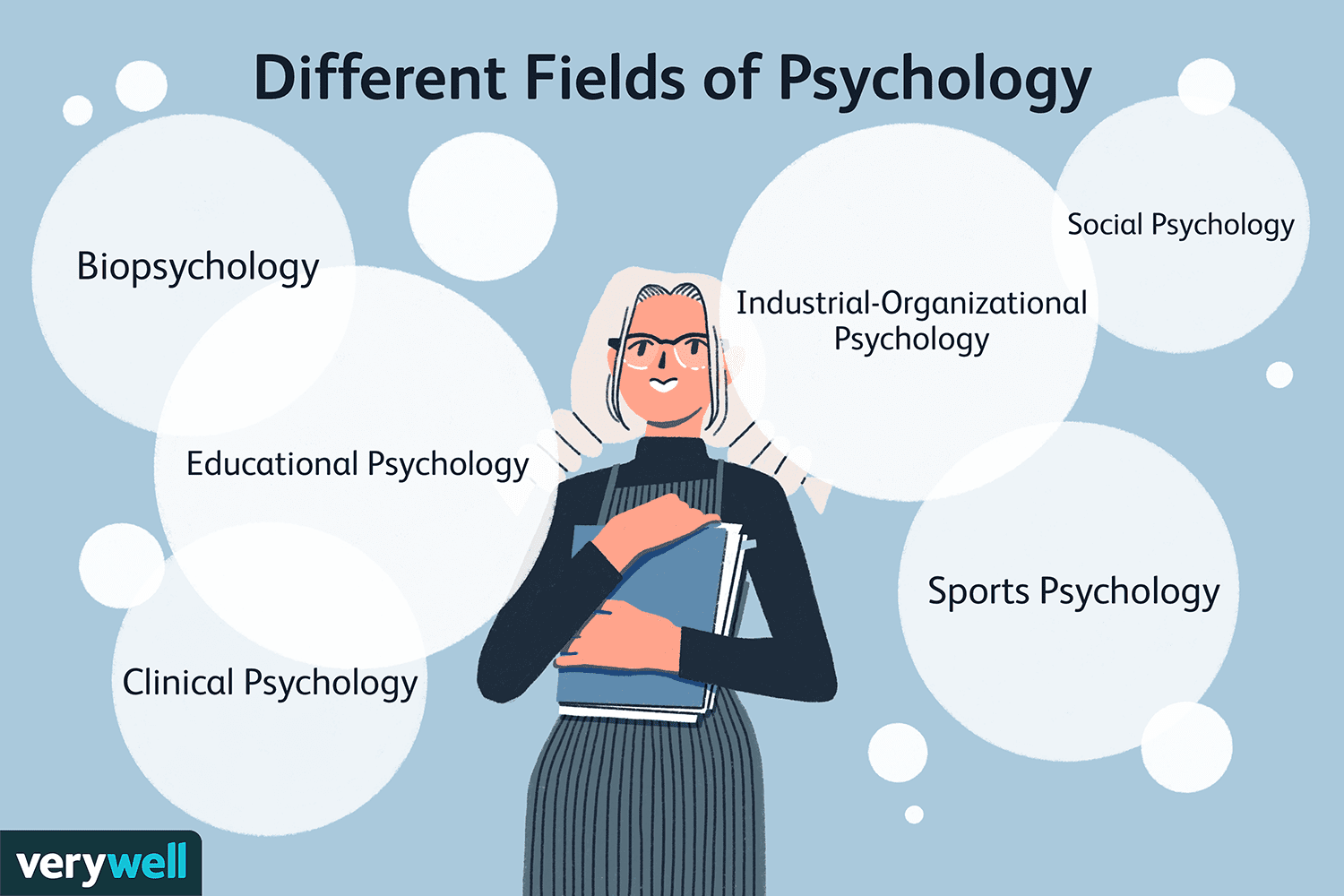
The major areas of psychology include:
- Abnormal psychology
- Behavioral psychology
- Biopsychology
- Clinical psychology
- Cognitive psychology
- Comparative psychology
- Counseling psychology
- Cross-cultural psychology
- Developmental psychology
- Educational psychology
- Experimental psychology
- Forensic psychology
- Health psychology
- Industrial-organizational psychology
- Personality psychology
- School psychology
- Social psychology
- Sports psychology
Each of these psychological areas looks at questions and problems from a different perspective. While they all have their own focus, they still share a common goal of studying and explaining human thought and behavior.
Because human behavior is so varied, the number of subfields in psychology is constantly growing and evolving. Some of these subfields have been firmly established as areas of interest, and many colleges and universities offer courses and degree programs in these topics.
Each type of psychology represents a specific area of study focused on a particular topic. Oftentimes, psychologists specialize in one of these as a career. The following are just some of the major branches of psychology. For many of these, working in that specific area requires graduate study in that particular field.
2 Main Areas of Psychology
Psychology can be roughly divided into two major areas:
- Research, which seeks to increase our knowledge base
- Practice, through which our knowledge is applied to solving problems in the real world
Abnormal Psychology
Abnormal psychology looks at psychopathology and abnormal behavior. It involves the study of people’s emotional, thought, and behavior patterns to identify, understand, and potentially resolve any issues that may be negatively affecting a person’s life.
Mental health professionals in this branch of psychology assess, diagnose, and treat a wide variety of psychological disorders, including anxiety and depression. Counselors, clinical psychologists, and psychotherapists often work directly in this field.
Behavioral Psychology
Behavioral psychology, also known as behaviorism, is a theory of learning based on the idea that all behaviors are acquired through conditioning. Behavioral strategies such as classical conditioning and operant conditioning are often utilized to teach or modify behaviors.
For example, a teacher might use a reward system to teach students to behave during class. When students are good, they receive gold stars, which can then be turned in for some sort of special privilege.
While this type of psychology dominated the field during the first part of the twentieth century, it became less prominent during the 1950s. However, behavioral techniques remain a mainstay in therapy, education, and many other areas.
Biopsychology
Biopsychology is a psychological area focused on how the brain, neurons, and nervous system influence thoughts, feelings, and behaviors. The biopsychology field draws upon many different disciplines, including basic psychology, cognitive psychology, experimental psychology, biology, physiology, and neuroscience.
People who work in this type of psychology often study how brain injuries and brain diseases impact human behavior.
Biopsychology is also sometimes referred to as physiological psychology, behavioral neuroscience, or psychobiology. So, if you are interested in studying or earning a degree in this psychology branch, you may want to look for courses or programs with these names.
Clinical Psychology
Clinical psychology is the branch of psychology concerned with the assessment and treatment of mental illness, abnormal behavior, and psychiatric disorders. Clinicians often work in private practices, but many also work in community centers or at universities and colleges.
You can even find clinical psychology professionals in hospital settings and mental health clinics. In these organizations, they often work as part of a collaborative team that may include physicians, psychiatrists, and other mental health professionals.
Cognitive Psychology
Cognitive psychology is a psychological area that focuses on internal mental states. This area has continued to grow since it emerged in the 1960s and is centered on the science of how people think, learn, and remember.
Professionals who work in this type of psychology typically study cognitive functions such as perception, motivation, emotion, language, learning, memory, attention, decision-making, and problem-solving.
Cognitive psychologists often use an information-processing model to describe how the mind works, suggesting that the brain stores and processes information much like a computer.
Comparative Psychology
Comparative psychology is the branch of psychology concerned with the study of animal behavior. This is important because the study of how animals behave can lead to a deeper and broader understanding of human psychology.
This psychology subtype has its roots in the work of researchers such as Charles Darwin and George Romanes and has grown into a highly multidisciplinary subject. In addition to psychologists contributing to this field, so do biologists, anthropologists, ecologists, geneticists, and several others.
Counseling Psychology
Counseling psychology is one of the largest areas of psychology. It is centered on treating clients in mental distress who may be experiencing a wide variety of psychological symptoms.
The Society of Counseling Psychology explains that professionals working in this type of psychology can improve their clients’ interpersonal functioning throughout life. They do this by improving the client’s social and emotional health, as well as addressing concerns about health, work, family, marriage, and more.
Cross-Cultural Psychology
Cross-cultural psychology is a branch of psychology that looks at how cultural factors influence human behavior. This may involve looking at differences between collective and individualist cultures, for instance. Cross-cultural psychologists might also look at how cultures vary in terms of emotion, personality, or child development.
The International Association of Cross-Cultural Psychology (IACCP) was established in 1972. This type of psychology has continued to grow and develop since that time, with increasing numbers of psychologists investigating how behavior differs among cultures throughout the world.
Developmental Psychology
Developmental psychology focuses on how people change and grow throughout life. This area of psychology seeks to understand and explain how and why people change. Developmental psychologists study physical growth, intellectual development, emotional changes, social growth, and perceptual changes that occur throughout the lifespan.
Some professionals may specialize in infant, child, adolescent, or geriatric development, while others might primarily study the effects of developmental delays. This psychology branch covers a huge range of topics, ranging from prenatal development to Alzheimer’s disease.
Educational Psychology
Educational psychology is the branch of psychology concerned with schools, teaching psychology, educational issues, and student concerns. Educational psychologists often study how students learn. They may also work directly with students, parents, teachers, and administrators to improve student outcomes.
Professionals in this type of psychology sometimes study how different variables influence individual students. They may also study learning disabilities, giftedness, and the instructional process.
8 Things to Know About Educational Psychology
Experimental Psychology
Experimental psychology is the psychological area that utilizes scientific methods to research the brain and behavior. Many of these techniques are also used in other psychology areas to study everything from childhood development to social issues.
Experimental psychologists work in a wide variety of settings, including colleges, universities, research centers, government, and private businesses. They utilize the scientific method to study a range of human behaviors and psychological phenomena.
Forensic Psychology
Forensic psychology deals with issues related to psychology and the law. Those who work in this branch apply psychological principles to legal issues. This may involve studying criminal behavior and treatment or working directly in the court system.
Forensic psychologists perform a wide variety of duties, including providing testimony in court cases, assessing children in suspected child abuse cases, preparing children to give testimony, and evaluating the mental competence of criminal suspects.
In many cases, people working in forensic psychology aren’t necessarily “forensic psychologists.” These individuals might be clinical psychologists, school psychologists, neurologists, or counselors who lend their psychological expertise to provide testimony, analysis, or recommendations in legal or criminal cases.
Health Psychology
Health psychology (also sometimes called medical psychology or behavioral medicine) focuses on how biology, psychology, behavior, and social factors influence health and illness. This area of psychology involves the promotion of health across a wide variety of domains, as well as the prevention and treatment of disease and illness.
Health psychologists often deal with health-related issues such as weight management, smoking cessation, stress management, and nutrition. They might also research how people cope with illnesses, helping patients learn more effective coping strategies.
Some professionals in this branch of psychology assist with the design of disease prevention and public awareness programs, while others work within the government to improve health care policies.
Industrial-Organizational Psychology
Industrial-organizational psychology applies psychological principles to workplace issues. This psychological area, often referred to as I/O psychology, seeks to improve productivity and efficiency in the workplace while maximizing the well-being of employees. It includes areas such as human factors.
Human factors psychology focuses on human error, product design, ergonomics, human capability, and human-computer interaction. Its goal is to improve how people interact with products and machines. This might involve helping to design products intended to minimize injury or creating workplaces that promote greater accuracy and safety.
Research in I/O psychology is known as applied research because it seeks to solve real-world problems. These types of psychologists study topics such as worker attitudes, employee behaviors, organizational processes, and leadership.
Personality Psychology
Personality psychology is the branch of psychology that focuses on the study of thought patterns, feelings, and behaviors that make each individual unique. Classic theories of personality include Freud’s psychoanalytic theory of personality and Erikson’s theory of psychosocial development.
Personality psychologists might look at how different factors (such as genetics, parenting, and social experiences) influence personality development and change. They may also be involved in the creation or administration of personality tests.
School Psychology
School psychology is a type of psychology that involves working in schools to help kids deal with academic, emotional, and social issues. School psychologists also collaborate with teachers, students, and parents to help create a healthy learning environment.
Most school psychologists work in elementary and secondary schools, but others can be found in private clinics, hospitals, state agencies, and universities. Some go into private practice and serve as consultants—especially those with a doctoral degree in school psychology.
Social Psychology
Social psychology seeks to understand and explain social behavior. It looks at diverse topics including group behavior, social interactions and perceptions, leadership, nonverbal communication, and social influences on decision-making.
Social influences on behavior are a major interest in social psychology, but these types of psychologists are also focused on how people perceive and interact with others. This branch of psychology also includes topics such as conformity, aggression, and prejudice.
Sports Psychology
Sports psychology is the study of how psychology influences sports, athletic performance, exercise, and physical activity. Individuals may work with a sports psychologist to improve their focus, develop mental toughness, increase motivation, or reduce sports-related anxiety.
Some sports psychologists work with professional athletes such as pro sports players and top Olympians. Others utilize exercise and sports to enhance the health and well-being of non-athletes throughout their lifespan.
