

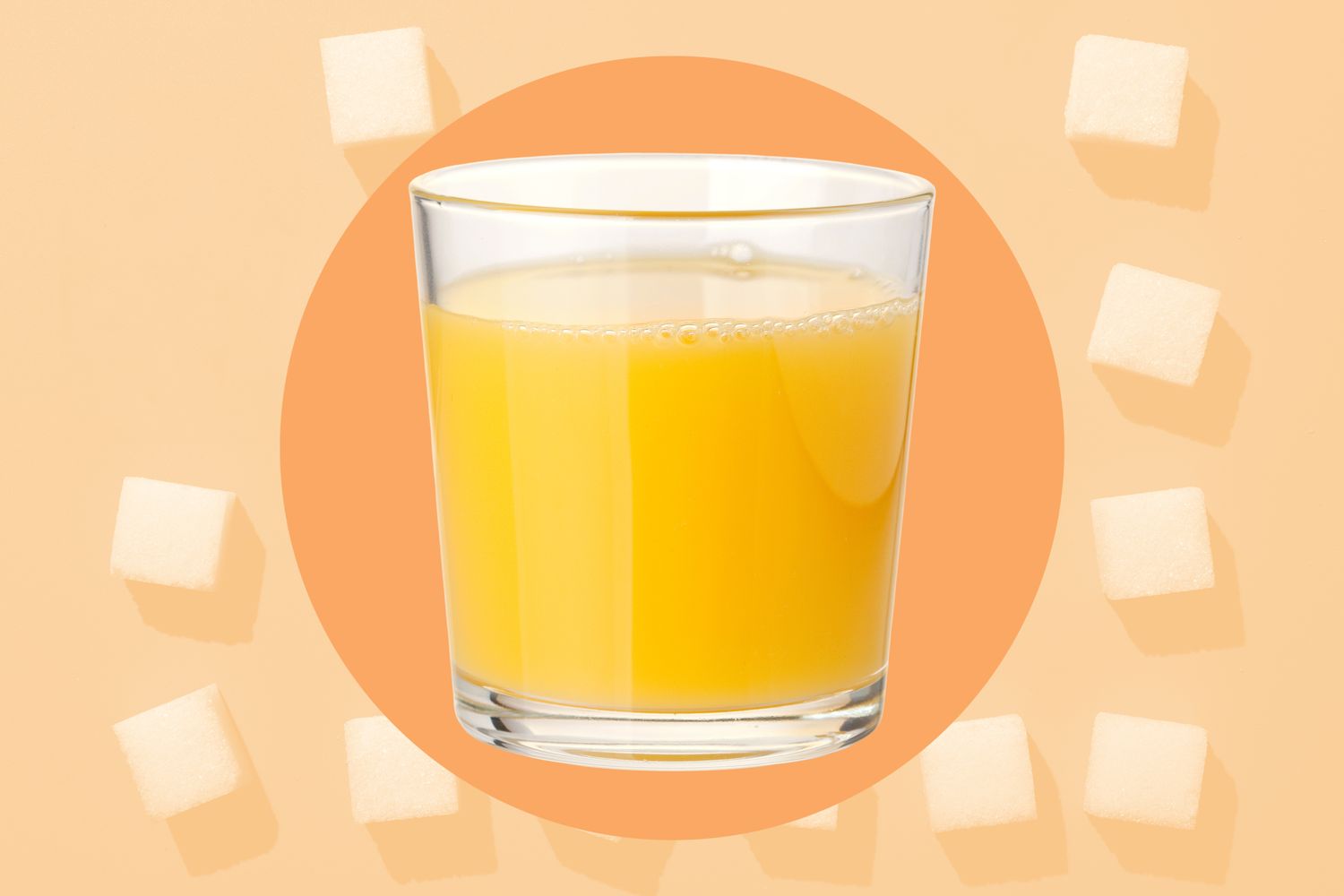
- Orange juice can fit into a balanced, blood sugar–friendly eating plan.
- Despite its sugar, it has a moderate glycemic index and is rich in protective antioxidants.
- To prevent blood sugar spikes, keep portions small and pair it with protein, fiber and fats.
Lately, the way certain foods and beverages impact our blood sugar has become a major point of conversation. It’s understandable. After all, blood sugar fluctuations can influence how energized (or drained) you feel throughout the day, leading to surges in energy followed by abrupt crashes.
Sugary drinks are notorious for spiking blood sugar. But what happens when those sugars come from natural and nutritious drinks, like orange juice? To find out, we spoke with registered dietitians.
Read on for the full picture on what orange juice really does to your blood sugar, plus healthy strategies to enjoy OJ.
How Orange Juice Impacts Blood Sugar
Its Sugars Enter Your System Quickly
Liquids are easier to digest than solids, because our stomachs don’t need to break them down the same way as food. So, when you drink any sugary liquid on an empty stomach, its sugars flood your system quickly. Plus, juices lack nutrients, like protein and fat, that can help slow digestion, says diabetes expert Erin Palinski-Wade, RD, CDCES . “[That] means they leave the stomach quickly and hit the bloodstream fast, so blood sugar and insulin tend to spike,” she explains.
Compare that to what happens when you eat a whole orange. Palinski-Wade notes that drinking orange juice rather than eating a whole orange typically leads to a faster rise in blood sugar, even when the carbohydrate content is similar. This is because the whole fruit contains fiber that slows digestion, while orange juice does not. What about orange juice with added pulp? While OJ with pulp may look like it contains fiber, pulp-containing brands have zero fiber. Fresh orange juice has a tiny bit, but it’s still less than 1 gram per 8-ounce glass.
Fortunately, there is a workaround to slow down the release of OJ’s sugars—and that’s consuming your juice as part of a balanced meal that contains some fiber, fat and protein. These gradually digested nutrients can help slow the digestion of OJ’s sugars, blunting potential blood sugar spikes. This may explain why research has found that orange juice may not always raise blood sugar levels.
It May Not Raise Blood Sugar as Much as Other Juices
An 8-ounce glass of 100% freshly squeezed orange juice provides about 120 calories, along with roughly 24 grams of carbohydrates and 20 grams of naturally occurring sugars. As sports dietitian Kelly Jones, M.S., R.D., CSSD, explains, this carbohydrate content plays a direct role in how the body responds. “All carbohydrate-containing foods and beverages will result in an increase in blood sugar,” says Jones. “After digestion, carbohydrates are absorbed into the bloodstream to help maintain healthy blood sugar levels and are then taken up by cells for immediate energy or stored as glycogen for later use.”
That said, orange juice may not make your blood sugar rise as quickly as some other types of juice. One reason is that orange juice has a low glycemic index . The GI is a measure of how quickly a food or beverage raises blood sugar, with 0 being the lowest and 100 being the highest. Orange juice clocks in at a reasonable 43, lower than some other juices, like papaya (50) or mango (56).
Its Bioactive Compounds May Be Protective
Vibrantly colored orange juice isn’t just pretty to look at. It’s filled with good-for-you phytonutrients. “The nutrients and plant compounds in 100% orange juice may be part of the reason studies consistently show it does not have negative impacts on blood sugar,” says Jones. “In addition to an 8-ounce serving being a good source of potassium, folate and thiamin, as well as an excellent source of vitamin C, 100% orange juice has bioactive plant compounds.”
One such bioactive compound, hesperidin, found primarily in citrus fruits, may be especially beneficial. In a recent study, scientists found that this antioxidant may help protect against high blood glucose while additionally decreasing serum and liver lipid levels.
Tips to Enjoy Orange Juice for Healthy Blood Sugar
If you enjoy orange juice, you can absolutely include it as part of a balanced eating plan. Here’s how to sip it strategically.
- Choose 100% orange juice. Many drinks that look like orange juice are actually orange-flavored drinks with added sugars and other flavorings. To be sure, look for the words “100% orange juice” on the label.
- Stick with a small portion. Opt for an 8-ounce pour to enjoy the juice without getting excessive sugars.
- Enjoy it with a balanced meal. Pair your OJ with foods containing lean protein, fiber and healthy fats to help slow the absorption of its sugars.
- Mix it into a protein smoothie. If you use protein powder after a workout, mixing a vanilla protein powder with 100% orange juice helps to replenish muscle glycogen stores, notes Jones. This combo also works alongside any protein- or fiber-rich meal or snack.
- Use it as a flavor enhancer. If you love the taste of orange juice, but don’t want to drink your sugar, use OJ to pump up the flavor in other beverages. Add a splash to seltzer or use it to sweeten your tea. You can even use it to brighten the flavor of salad dressings.
Meal Plan to Try
Simple 30-Day Meal Plan for Better Blood Sugar, Created by a Dietitian
Our Expert Take
Whether you like it for breakfast, or with any other meal or snack, orange juice is a classic favorite that can fit into a healthy, balanced eating pattern. The key is how you choose it and enjoy it. Opt for 100% orange juice without added sugars and keep portions small, about 8 ounces at most. How you drink orange juice can help, too. Pairing it with foods rich in protein, fiber and healthy fats, such as eggs and whole-grain toast or plain yogurt with nuts, can also help keep blood sugar in check.
