

Key Takeaways
- A sound bath uses sound waves to help you relax and feel better.
- Participants lie down and listen to sounds to clear their minds and create harmony.
- Sound baths can be done in groups or one-on-one, and you can even try them at home with recordings.
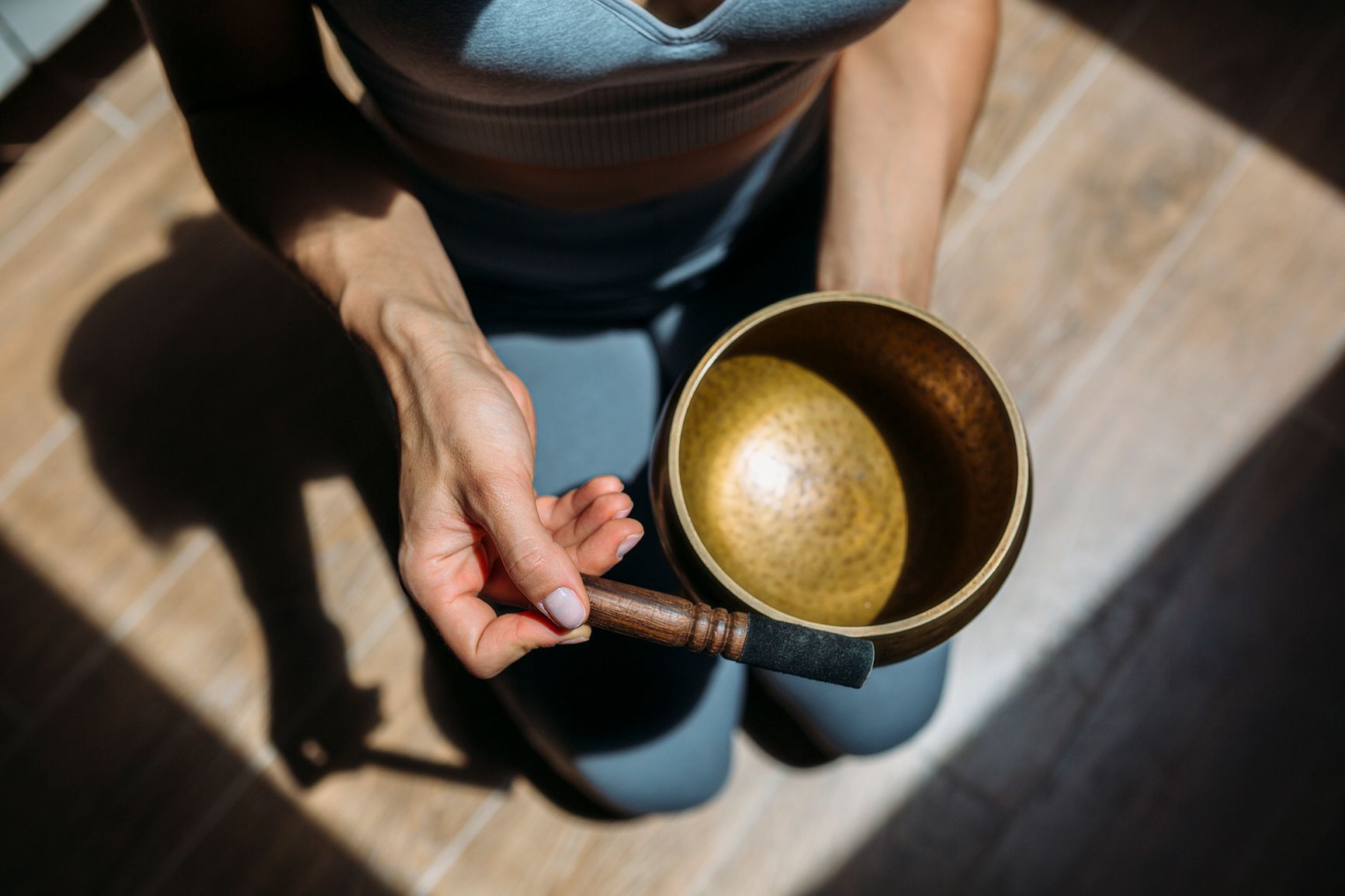
Though a sound bath may seem like a “new age” concept, the practice of healing bodies through sound is technically thousands of years old with deep roots in cultures across the world. A sound bath is a meditative experience where those in attendance are “bathed” in sound waves. These waves are produced by various sources, including healing instruments such as gongs, singing bowls, percussion, chimes, rattles, tuning forks, and even the human voice itself.
This “spiritual, cleansing music” varies according to place and culture, but it can be as simple as chanting an om following your yoga session or as complex as an hour-long experience in a dedicated space with a sound practitioner.
The music doesn’t have a catchy melody or rhythm like you’d experience at a rock concert or symphony. Instead, it’s a carefully selected wash of instrument and voice with notable resonance and overtones.
VICTOR TORRES / Stocksy
The intention is really to change and help balance the energy of the participants. During a sound bath, you don’t want to hook into a melody. You don’t want to repeat things because you don’t want the brain to recognize a repeated beat. Instead, you want participants to release, and you want the brain to let go.
What Happens During a Sound Bath?
During a sound bath, participants lie on their backs in what’s known as the Savasana position in yoga. Christina Resasco, a sound healing practitioner and yoga therapist at Saffron & Sage in San Diego, California, describes how the session is facilitated by a practitioner.
Participants may engage in chants, mantras, or rolling oms. These guided experiences typically last between 15 and 60 minutes.
After the session, it’s recommended to move slowly to a seated position. Additional advice includes staying hydrated, resting, and remaining relaxed.
What Does a Sound Bath Do?
“The goal of a sound bath is to create harmony in the listener by using sound to clear discordance from their energy fields,” says Seth Misterka, co-founder of the Crystal Sound Bath in Los Angeles. “Benefits include relaxation, an increased sense of well-being, expanded awareness, and access to inner visionary experiences.”
Some sound healing practitioners suggest that sound baths may also promote physical healing. The experience is compared to acupuncture by some, as it uses frequency and vibration instead of needles.
“If you visit an acupuncturist, you might have energy blockages that they help release. A sound bath operates similarly,” Miller explains. “We’ve observed individuals at Naturopathica experiencing areas where pain diminishes or feels as though it’s loosening.”
Although it may sound “too good to be true,” evidence supports this. Studies have highlighted the therapeutic effects of music and sound therapy.
“Sound therapy is based on scientific principles like quantum physics and sacred geometry,” notes Resasco. “Many clinical trials and studies explore its healing properties. In Western medicine, sound waves are used routinely, such as in ultrasound technology to break up kidney stones.”
Who Shouldn’t Do a Sound Bath
People with certain conditions, like a recent concussion, should avoid sound baths. However, experts agree that sound baths can be beneficial for almost everyone interested.
“This is the beauty of sound baths,” says Resasco. “They suit everyone, regardless of age or fitness level. While lying in Savasana (or supported Savasana), participants don’t need athletic ability or flexibility. Sound baths can be helpful during pregnancy, rehabilitation, or for people of all ages experiencing illness or trauma.”
She adds that sound baths may be particularly beneficial to someone who has had a difficult time connecting with traditional meditation or yoga but still yearns to experience similar benefits. This is especially true if you overthink or have excessive thoughts that make it difficult to meditate in a more traditional way.
Miller agrees, saying, “For a lot of people, it’s much easier to let go in a sound bath versus traditional meditation. I recommend people go when they feel like they need it. Ideally, you’d come every week, but especially when you’re experiencing overwhelming thought patterns or stress.”
The general intention of a sound bath is to create a state of harmony in the listener by using sound to clear discordance from the participants’ energy fields.
Arguably, the best part is that you don’t have to do anything but show up in comfortable clothing and receive the sounds around you while lying peacefully.
How to Experience a Sound Bath
You can find sound baths at locations nationwide, including “pop-up” events in parks, churches, and other communal spaces.
Yoga and meditation studios frequently host sound baths and are a good starting point for finding one. Availability depends on your location, but generally, attending a local session shouldn’t be too hard.
Resasco also recommends trying a one-on-one sound bath, especially if you want to address a specific issue or injury. She notes, “The different frequencies used with instruments like tuning forks and crystal singing bowls affect different organs, emotions, illnesses, diseases, chakras, and trauma. Having a sound therapy session personally tuned to your needs is a game-changer.”
You also have the option of purchasing sound healing instruments, or using your own voice, to create a sound bath at home. However, Resasco notes that you may find it easier to enjoy the experience if you’re being guided by an expert.
The different frequencies of sound healing instruments such as tuning forks and crystal singing bowls, affect different organs, emotions, illnesses, diseases, chakras and trauma. Having a sound therapy session personally tuned to your needs is a game changer.
For a happy medium, consider listening to a sound bath recording. Misterka offers several on his website and a number of sound bath apps also exist.
“Ultimately, a sound bath is a subjective experience and you can try out different sound baths to see what works for you,” says Misterka. “Ideally you should feel that the musician offering a sound bath has positive intentions of wellness, love, and healing. It is a unique experience that can’t really be compared to other therapies and potentially a wonderful supplement to any healing or wellness program.”
Thanks for your feedback!
What is your feedback?
Helpful
Report an Error
Other
