

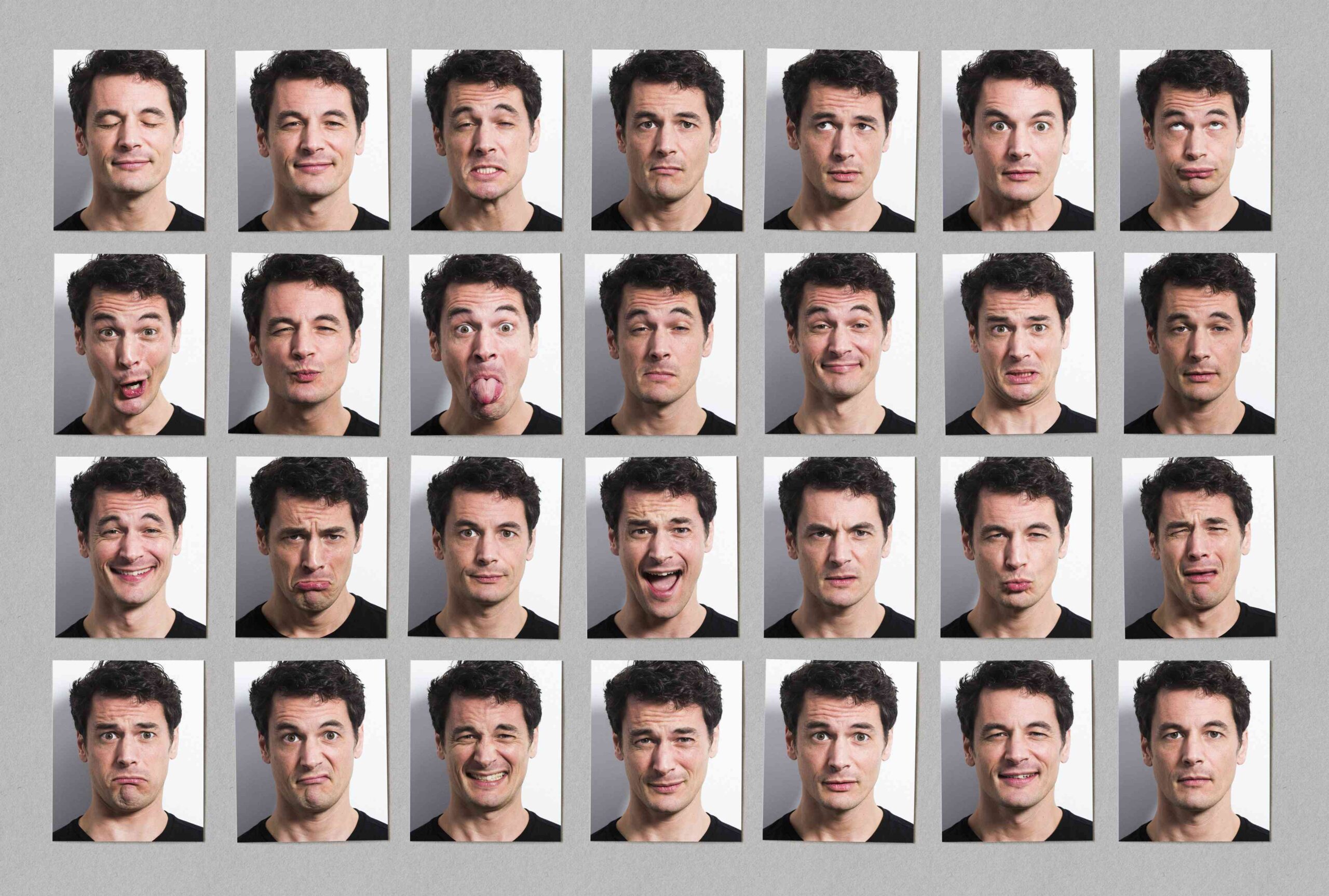
Key Takeaways
- Emotions are important in how we communicate with others, but we often don’t consider how many emotions there are.
- Robert Plutchik suggested there are eight basic emotions which include joy, sadness, trust, disgust, fear, anger, surprise, and anticipation.
- Paul Ekman found that there are seven universal emotions shown in faces: happiness, sadness, surprise, fear, anger, disgust, and contempt.
Emotions rule so much of our lives. Even writers and poets seem incapable of describing the full range and experience of human emotions.
Emotions are at once elusive yet the facet by which we communicate the subtlest of feelings to those around us. We can’t exist without them but rarely stop to consider how many there actually are. It is a question that has intrigued and challenged scientists and philosophers for generations and continues to do so today.
The Study of Emotions
As early as the 4th century B.C., Aristotle attempted to identify the exact number of core emotions in humans. Described as Aristotle’s List of Emotion, the philosopher proposed 14 distinct emotional expressions: fear, confidence, anger, friendship, calm, enmity, shame, shamelessness, pity, kindness, envy, indignation, emulation, and contempt.
In his 1872 publication The Expression of the Emotions in Man and Animals, Charles Darwin theorized that emotions were innate, evolved, and had a functional purpose. While Darwin did not explicitly define these “basic emotions,” it is thought he envisioned a shorter list of essential emotions, including fear, anger, sadness, happiness, and love.
By the 20th century, with the advent of psychotherapy, the number had expanded considerably. According to Robert Plutchick, professor emeritus at the Albert Einstein College of Medicine, more than 90 different definitions of “emotion” have been put forth by psychologists with the aim of accurately describing what constitutes and differentiates human emotion.
In recent years, psychologists have tried to identify and categorize these emotions in a way that is considered empirical and universal. However, the number of emotions researchers settle on greatly depends on how specifically emotions are defined and the criteria used. For example, in a 2017 study, researchers identified 27 unique emotions. Still, when it comes to the most basic emotions, most psychologists will tell you that are far fewer than one might think and that larger accountings of emotional expression come from more nuanced variations of those basic feelings.
What Emotion Are You? Take the Quiz
Our fast and free emotion quiz can help you better understand your emotional responses to certain situations, and why you may think or behave the way you do.
This emotion quiz was medically reviewed by Rachel Goldman, PhD, FTOS.
Plutchik’s Wheel of Emotions
One of the most prominent theories of the 20th century is Robert Plutchik’s wheel of emotions. In it, Plutchik proposed eight basic emotions—joy, sadness, trust, disgust, fear, anger, surprise, and anticipation—which he believed overlapped and bled into the next like hues on a color wheel.
Plutchick further explained that the primary emotional “colors” can combine to form the secondary and complementary emotional “colors.” For example, anticipation plus joy might combine to form optimism, while fear and surprise might together describe awe.
Eckman’s Facial Action Coding System
Many researchers have questioned Plutchik’s model and argued that his secondary and complementary emotions can often vary by culture or society. They insist that, in order for an emotion to be considered foundational, it has to be universally experienced in all cultures.
To this end, psychologist Paul Ekman created what he called the facial action coding system (FACS), a classification model which measures and evaluates the movements of facial muscles as well as those of the eyes and head. Based on his theory, Ekman proposed that there are seven emotional expressions universal to people all over the world: happiness, sadness, surprise, fear, anger, disgust, and contempt.
While Ekman’s work helped highlight the effect of “nature or nurture” on emotional response, much of his theory has since been criticized when, in 2004, he proposed that the same technique could be used as a means of lie detection.
Four Irreducible Emotions
Following on Ekman’s work, a research team at the University of Glasgow in 2014 aimed to identify emotions based on facial expressions irrespective of sociocultural influences.
What the researchers found was that certain emotions elicited the same facial response. Fear and surprise, for example, engaged the same facial muscles and, rather than representing two emotions, could be seen one. The same could be applied to disgust and anger or excitement and shock.
Based on their findings, the scientists pared down the number of irreducible emotions to just four: happiness, sadness, anger, and fear. Beyond this, they argued, the more complex variations of emotion have evolved over the millennia under numerous social and cultural influences.
The commonality of facial expressions, they say, is primarily biological (something we are born with) while the distinction between subtle and complex emotional expressions are mainly sociological (things that we, as a culture, have learned and developed over time).
Keep in Mind
Emotions, and how we experience and express them, can be both abundantly apparent or remarkably subtle. The general consensus among scientists today is that the basic emotions, however many there may be, serve as the foundation for the more complex and subtle emotions that make up the human experience.
