

Key Takeaways
- The media shows traditional gender roles, which can limit girls’ career choices.
- Seeing how girls and women look in media can make girls feel bad about their bodies.
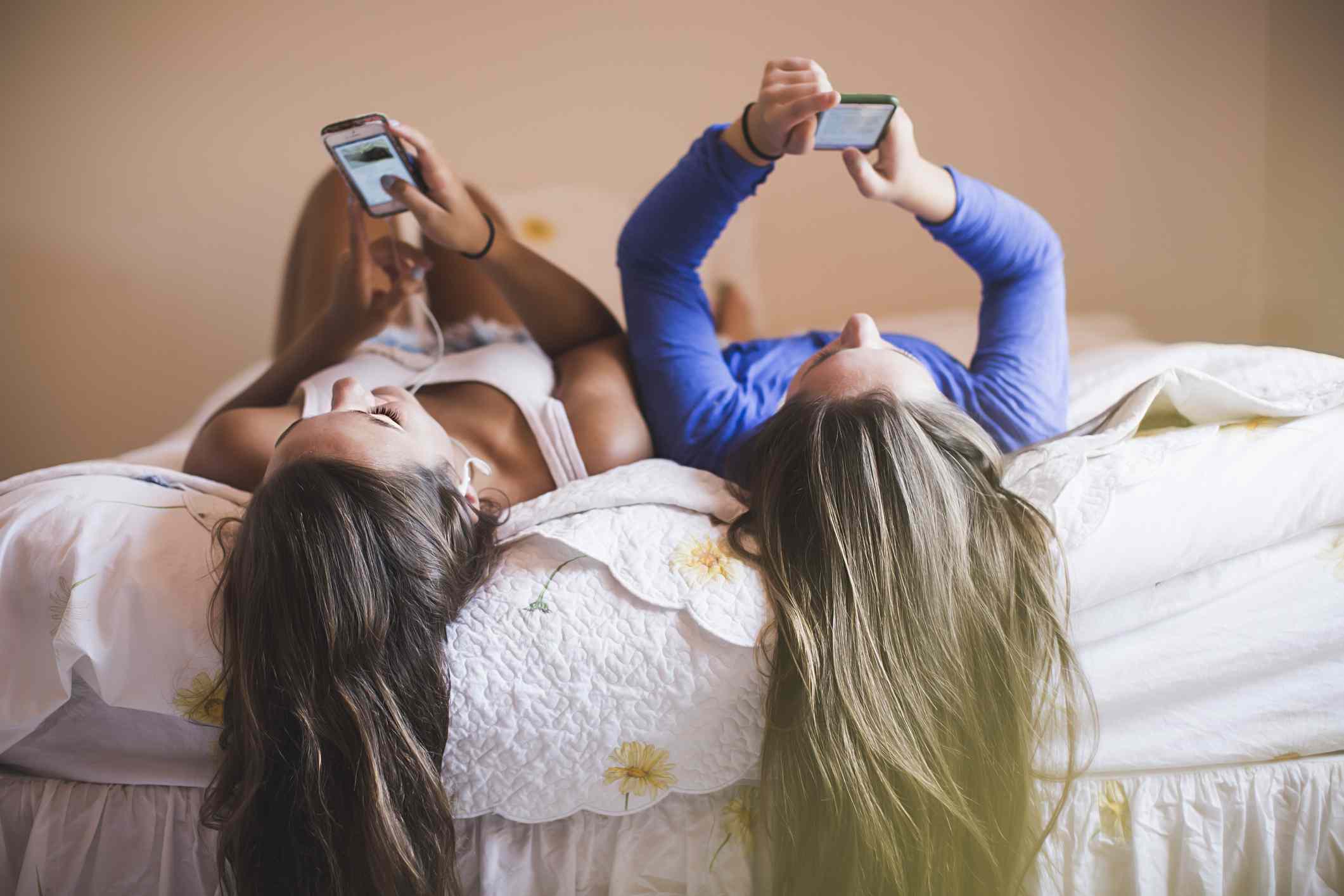
- Girls spend a lot of time watching videos and using social media, which affects their view of themselves.
Children grow up in an environment that’s saturated with media. Research shows that as of 2020, girls between birth and age 8 take in approximately two hours of screen media a day, with a majority of that time spent with videos, especially on YouTube.
And screen time only gets longer as children get older. In 2021, tween girls spent an average of almost five hours using screens for entertainment per day while teen girls spent about eight hours per day.
Like younger children, the majority of that time is spent with videos, but by the time they’re teenagers, children also dedicate about an hour and a half to social media each day.
This article will explore what psychological research says about the ways media consumption impacts girls and will provide suggestions that parents, teachers, therapists, and concerned citizens can use to help girls develop healthier media habits.
Girls Learn About Gender Roles Through Media
Before they’re able to talk, children are able to distinguish between men and women. Studies have shown that children as young as six months can discern men’s voices from women’s voices and that they can do the same for photographs of men and women at nine months.
Between 11 and 14 months, children develop the ability to associate the two, matching men’s voices with photos of men and women’s voices with photos of women. Thus, children develop an understanding of gender categories from a very early age.
Moreover, researchhas demonstrated that children pay more attention to, better remember, and more successfully engage in activities or play with toys that they are told, directly or indirectly, are for their gender.
By extension, the gender representations in media may be an especially important source of learning about gender roles starting in early childhood. As a result, the biases baked into the representation of girls and women in media can be problematic.
Media Still Perpetuates Traditional Gender Roles
While the general public is increasingly aware of the way messages that reinforce traditional gender roles can limit peoples’ choices, children’s media, a major provider of these messages, still tends to promote stereotypical gender roles.
Some progress has been made, with a recent analysis of popular children’s programs finding that a majority of episodes positively represent female characters. However, those same programs are twice as likely to feature a male character in science, technology, engineering, or mathematics (STEM) professions than a female character and are three times as likely to show female characters in revealing clothing or partially naked.
In general, media messages suggest that being a boy or man is more valuable than being a girl or woman. Moreover, greater media exposure is related to greater beliefs in gender stereotypes, including more traditional attitudes regarding behaviors, sexual and romantic relationships, and occupational roles.
Body Dissatisfaction as an Effect
Furthermore, girls as young as 5 start to experience increased body dissatisfaction if they are exposed to TV that focuses on appearances, and by the time they are adolescents, children have often internalized what media says about what boys and girls should look like. For girls, this can lead to self-objectification, or believing their appearance matters more than other internal qualities. This is related to lower body esteem, body shame, anxiety, and depression.
The stereotypical depictions of gender in media have real consequences for both genders.
For example, exposure to traditional gender representations influences girls’ perceptions of their current interests and future possibilities, which has the potential to prevent them from pursuing fulfilling careers, especially in STEM fields.
Plus, media stereotypes about girls’ appearance and sexualization can lead to negative body image and mental health concerns, including depression. By the time they are teenagers, girls feel less confident, brave, and listened to than boys, an issue that seems to stem at least in part from the lack of strong, relatable female role models in TV and film.
When girls and women are exposed to strong female role models the results are enormously positive. For example, one study found that over half of its women participants were inspired by female film and TV role models to be more assertive and ambitious.
Meanwhile, children’s TV series Doc McStuffins, which focuses on a girl who fixes up toys in her play clinic, has resulted in more girls saying they aspire to be doctors or pursue careers in STEM.
Why Does Social Media Impact Girls’ Mental Health?
Today, videos consumed via TV, movies, and online platforms like YouTube aren’t the only media impacting girls’ mental health.
Since the invention and widespread adoption of social media, studies have consistently shown interactions on these sites, including Facebook, Instagram, and Twitter, negatively affect girls, leading to depression, negative body image, and potentially even suicide.
For example, one study found that increased use of social media was associated with poor sleep, online harassment, low self-esteem, and negative body image, which were then all associated with depressive symptoms, especially for girls.
Similarly, another study found a consistent link for girls between social media use and mental health issues including poor self-esteem, depressive symptoms, and lower life satisfaction. This link was found to be stronger than that shown between mental health concerns and binge drinking, sexual assault, early sexual activity, and being suspended from school.
Social Media Use Causes Stress and Social Comparison
Part of the reason for this is the nature of social media, which involves interactions through text and images that can be curated and crafted specifically for others’ consumption. As a result, things like the number of likes one receives can be a source of stress.
In addition, social media promotes social comparison, where people compare and contrast themselves to others on the platforms, often with negative results.
For example, one investigation found a relationship between Facebook usage and depressive symptoms that were the result of the negative impact of participants comparing themselves to others on the site.
The negative consequences of social media use on girls have led scholars to suggest that the increase in suicide rates from 1999 through 2014 among girls between the ages of 10 and 14 could be the result of greater social media use.
How Can Parents and Others Help Girls Form Healthy Media Habits?
Girls shouldn’t be prevented from consuming media completely. Instead, parents, teachers, therapists, and other people can help girls build healthy media habits.
How to Develop Healthy Media Habits
- Call out problematic stereotypes: Watch TV shows, movies, and online videos with kids and then have a conversation about what they’ve seen. If the content includes gender stereotypes or other negative media messages, make sure to bring them up and point out the flaws in them.
- Restrict children under 13: Don’t let children sign up for social media accounts before they’re ready. Even though the restrictions can be easily bypassed, currently no one under 13 is supposed to be able to create an account on the many available social media platforms.
- Create screen time boundaries: Set screen limits by using apps and settings to restrict the amount of time a child can access social media and other apps and websites.
- Create tech-free zones: For example, create a rule that there are no mobile devices at the dinner table and make sure adults adhere to it too.
- Take media out of bedrooms. Don’t let kids have mobile devices in their bedrooms overnight. The temptation to check their devices can ruin sleep, potentially exacerbating mental health issues.
- Consider therapy: Look for changes in behavior or drops in grades, this may indicate an issue. If children seem to be withdrawing or seem more unhappy, it could be time to seek out the assistance of a mental health professional.
