

Key Takeaways
- Non-sleep deep rest (NSDR), rooted in yoga nidra, is a practice of deep rest without fully falling asleep.
- An NSDR practice may help reduce stress and anxiety and support focus, emotional regulation, and relaxation.
- NSDR can feel refreshing, but cannot replace sleep, especially for people who are sleep-deprived.
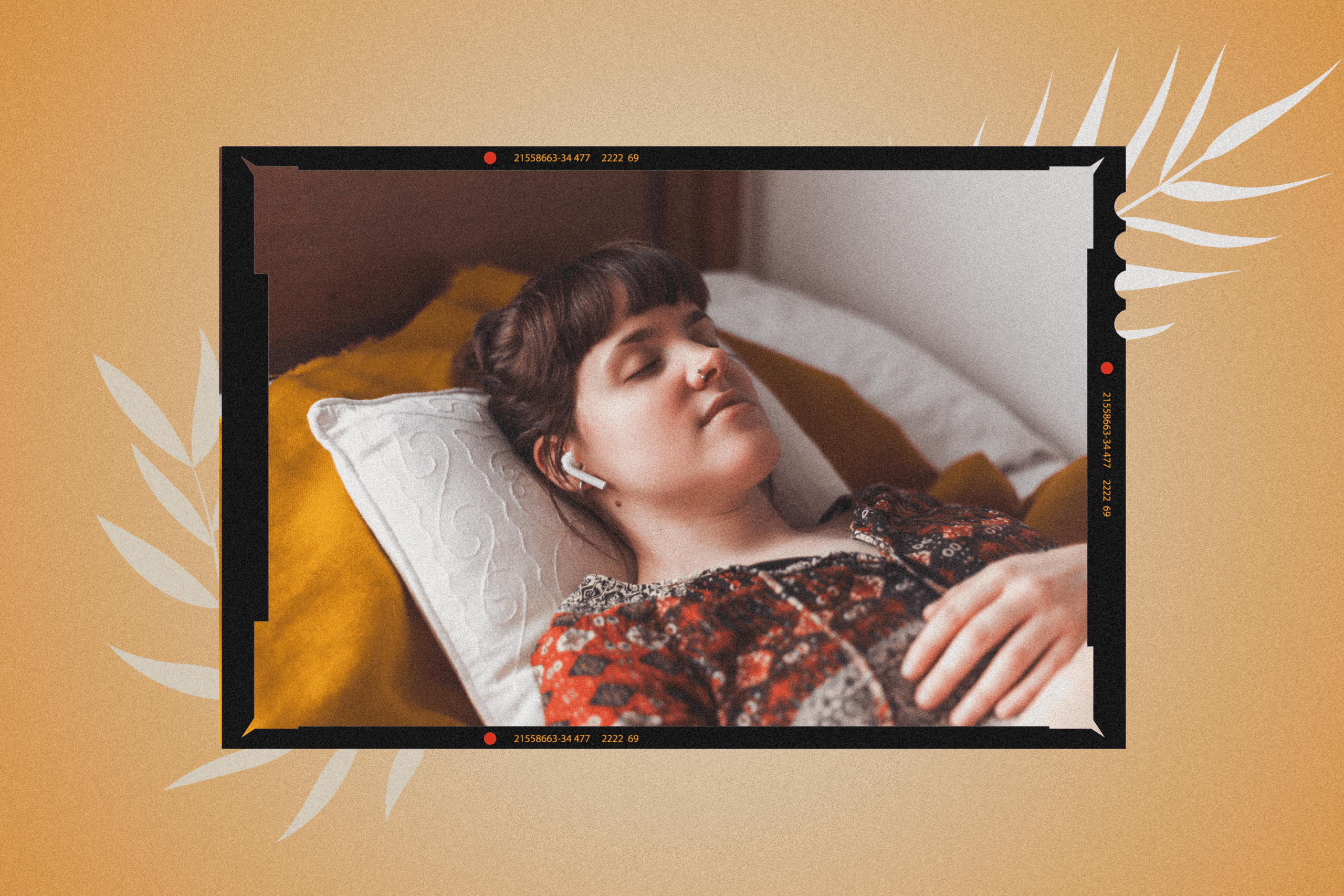
You know that feeling you get as you’re drifting off into sleep, where you’re aware that you’re about to doze off, but you’re deeply relaxed? This state is actually used in a popular relaxation practice called non-sleep deep rest (NSDR).
For a whole week, I willingly went into this state to see how it would affect my mental health. Spoiler alert: It’s my new favorite relaxation tool.
What Is Non-Sleep Deep Rest (NSDR)?
Non-sleep deep rest (NSDR) is the practice of putting the body into a deeply restorative state without being fully asleep. Popularized by neuroscientist and podcaster Andrew Huberman, NSDR has steadily been gaining popularity in wellness circles.
This relaxation practice is a Western-friendly repackaging of the concept of yoga nidra (also called yogic sleep).
“Yoga nidra is a specific and structured technique designed to guide the body into a sleep-like state while maintaining conscious awareness,” says Rachel Bhandal, a yoga and breathwork facilitator with a background in mindfulness-based cognitive therapy.
“Entering the state of yoga nidra can feel almost hypnotic,” Bhandal says. “You’re both aware and unaware, awake yet asleep. Time seems to dissolve, and you drop into profound stillness.”
This might sound a bit like meditation, and in some ways, it is a meditative practice. But it’s done in a specific way and for a specific purpose.
“Unlike more freestyle meditation approaches, which may aim to energize or simply relax practitioners, yoga nidra is rooted in ancient yogic traditions and works by shifting brainwave activity from beta (active thinking) to alpha, theta, and even delta waves—states associated with deep rest and sleep,” Bhandal says.
What Are the Benefits of NSDR?
People who practice NSDR claim it helps with:
Although it isn’t well-studied, some research suggests yoga nidra has positive effects on physical and mental health. In a 2023 study, it showed promise in reducing blood pressure, pulse, and respiratory rate, along with stress and anxiety.
As it is a form of mindfulness—and meditation has been shown to positively impact the brain—I figured a week of consistent NSDR could be worth a shot.
My Experience Practicing NSDR
For one week, I committed to one NSDR session per day, typically in the afternoons. Some nights, I also practiced NSDR before bed to help me unwind.
I used:
- Guided NSDR sessions on YouTube or Spotify (10-30 minutes)
- A quiet, dark room with a comfortable surface (either my bed or a yoga mat)
- Earphones and a weighted eye mask to block out distractions (although this is totally optional)
My goal? To see if NSDR could help me recharge, improve my focus, and make a difference in my mental well-being.
Day 1: Getting Used to It
I started with a 20-minute guided NSDR session in the afternoon around 3 p.m., which is when my energy usually crashes.
Even though I’ve done yoga nidra sessions before, it was hard to completely let go and trust the process. I kept wondering, Am I doing this right?
Bhandal says that you’re still benefiting from the session, even if you’re finding it hard to fully let go.
“The best news is that even if you spend most of the practice feeling restless or distracted, you’re still getting all the wonderful benefits,” she explains. “Yoga nidra activates the parasympathetic nervous system, lowering cortisol and promoting a deep state of rest, regardless of whether you ‘feel’ like you’ve reached the ideal state.”
After my session, I felt a little lighter and more relaxed.
Day 2: Feeling More Comfortable
The next day, I felt a little less anxious about doing NSDR “right.”
In fact, I really looked forward to my practice. I spent the morning feeling overwhelmed and overstimulated, and my quick NSDR session was exactly what I needed to soothe myself.
My session felt like a really good way to break up the day—sort of like a lunch break, but for my brain.
I also noticed that it:
- Improved my mood
- Helped me feel less fatigued
- Curbed the creative slump I often feel in the afternoons
When I got up, I thought to myself, “That was exactly what I needed—a moment to do nothing.”
Day 3: Can NSDR Replace Naps?
I’m a chronic insomniac. Since I slept badly the night before, I felt extra tired on day 3.
I had my NSDR session around 1 p.m., hoping it would energize me as much as a well-timed afternoon nap would. While I enjoyed it, I still felt tired, and desperately needed my 3 p.m. nap.
To learn more, I spoke with Alex Dimitriu, MD, double board-certified in psychiatry and sleep medicine and founder of Menlo Park Psychiatry & Sleep Medicine.
Dimitriu says that both napping and NSDR can be helpful, but they fulfill different needs. “For someone sleep deprived, a nap may be best,” he explains. “For someone busy and stressed out, and adequately rested, a moment to introspect and quiet all the inputs can also be a precious and rejuvenating experience.”
NSDR, while refreshing, can’t really make up for lost sleep. As Dimitriu says, “Silence is golden. But it is not sleep.”
Day 4: NSDR Before Bed
Many people claim that practicing NSDR before bed helps them sleep better. Dimitriu says he often recommends relaxation or meditation to his patients with insomnia, while Bhandal says her yoga nidra students often report falling asleep more easily and sleeping better as a result of their practice.
I ended up doing a 30-minute NSDR session and dozing off almost immediately after the session. For someone who often struggles to sleep, this was a huge relief.
I slept better, but this experiment coincided with me taking new sleep medication, so it’s hard to say whether NSDR actually improved my sleep.
One thing’s for sure: NSDR certainly helped my bedtime routine feel a little more relaxing!
Day 5 & 6: Feeling the “Reset” Effect
At this point, NSDR felt like a mental refresh button. After each session, I felt like I had taken a power nap without actually sleeping.
“In a world full of inboxes, messages, newsfeeds, and demands, even 10 to 30 minutes of quiet ‘being’ can really move the average in a very positive way,” Dimitriu says.
One of the most noticeable changes? I was more present. Instead of pushing through the afternoon slump, I gave my body what it needed—deep rest—and I felt clear-headed and more productive afterward.
Day 7: Reflecting on the Experience
Day 7 was a difficult one for me. It was one of those days where everything just felt heavy, difficult, and distressing.
I ended up falling asleep during my yoga nidra session. Although NSDR is a state of non-sleep, Bhandal assured me that falling asleep doesn’t mean I was “doing it wrong.”
In a world full of inboxes, messages, newsfeeds, and demands, even 10 to 30 minutes of quiet ‘being’ can really move the average in a very positive way.
“It simply means your body needed the rest. The goal is to stay in a state between wakefulness and sleep, but any experience you have is still beneficial,” she explains. “The body knows what it needs and will show us when we simply pause long enough to listen.”
As someone who struggles with insomnia, I also appreciated the relaxation effects before bed. Even though I started a new sleep medication around this time, the pre-bed NSDR routine helped signal to my body that it was time to wind down.
How NSDR Affected Me
Based on my experience, here’s how NSDR helped my mental health:
- It reduced anxiety and overwhelm. It was a great way to press pause and reset my nervous system.
- I could think more clearly. With my stress levels muted, I felt more mentally clear after my sessions.
- It boosted my energy. Each NSDR session felt like it gently rebooted my brain.
- I slept better. While I can’t say for sure whether NSDR improved my sleep (because I also started sleep medication), it definitely helped me relax before bed.
It also felt much easier than traditional meditation—at least, it did for me. Lying down and following a guided session required zero effort, making it an accessible way to reduce stress.
Would I Continue Practicing NSDR?
Absolutely. Even after just a week, I saw real benefits—especially when it came to dealing with that 3 p.m. slump.
Although I won’t give up my beloved afternoon naps altogether, I’ll definitely continue using NSDR in the afternoons to combat fatigue. I’ve also leaned into doing it just before bed, helping me relax extra deeply.
If you struggle with stress, low energy, or trouble unwinding before bed, NSDR is definitely worth trying. It’s effortless, science-backed, and free—a rare trifecta in the wellness space.
Should You Try It?
If you’re looking for a simple way to reset your mind and body, NSDR is a tool worth adding to your mental health toolkit.
Would I recommend it? 100%. It’s one of the easiest, most effective relaxation techniques I’ve ever tried. There are plenty of NSDR and yoga nidra recordings out there, including free options on YouTube and Spotify.
For those new to yoga nidra, Bhandal recommends approaching the experience with a beginner’s mind—in other words, drop your expectations and approach it with curiosity. Don’t expect to be “good” at it—there’s no ‘good’ or ‘bad’ here—and remember that it might feel unusual or unnatural at first.
“Accept that this is a practice, a muscle to be trained over time,” Dimitriu adds. “Even the simple act of sitting in silence is something that takes work and practice. So don’t give up.”
“Most importantly, surrender to the experience,” Bhandal says. “Simply showing up for yourself and making time for deep rest is a powerful act of self-care. So well done, you!”
