

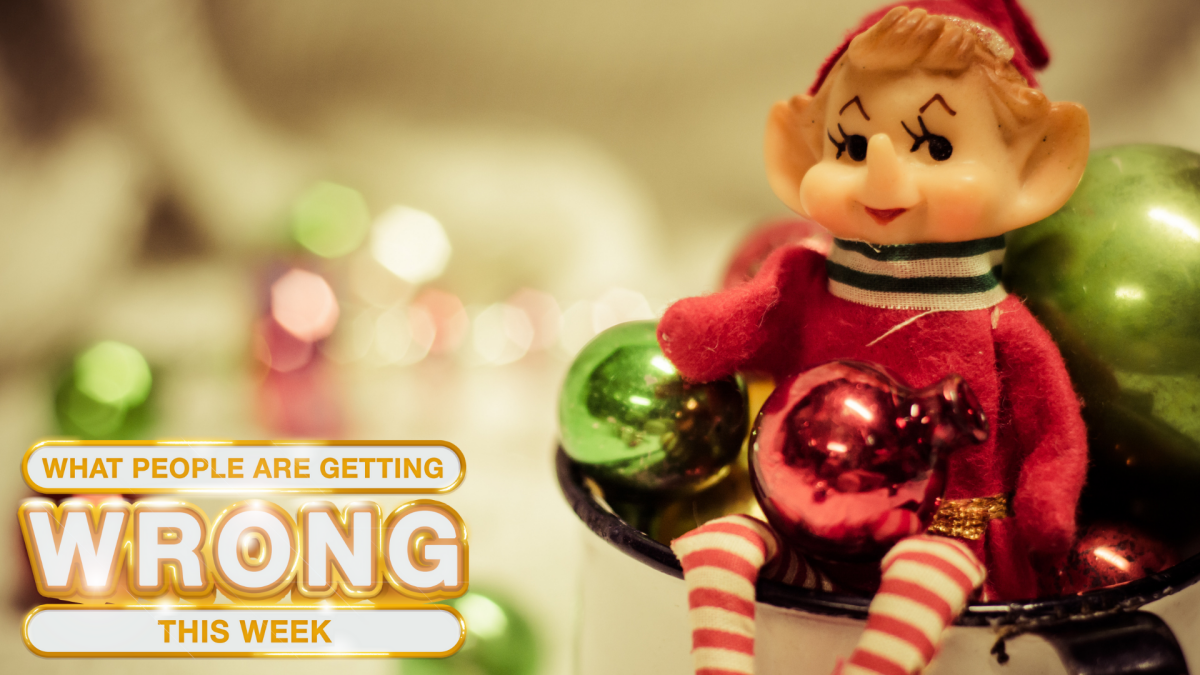
Because it’s Christmas time, I’ve been digging into myths and misconceptions we have about the holiday: Yuletide misinformation is rampant, and I’m setting the record straight. Last week I dug into who Santa Claus really is, with side quests about St. Nicholas bringing children back from the dead and the religious war between Santa and Kris Kringle. One thing I didn’t talk about? His elves.
Christmas elves feel like they’ve been around forever, and people have strangely consistent ideas of what they’re all about—they’re small, they wear green, they make toys out of some innate magical compulsion, they love shelves— but that variety of elf is a recent invention; “real” elves were often anything but jolly little pieceworkers. The elves’ thousand-year transition from supernatural nightmare creatures to friendly factory workers is a cultural Rorschach test revealing Western culture’s changing attitudes about work, wealth, and what it means to be a “useful” member of society.
The dark elves of the past
To understand how we arrived at our current vision of elves, you have to rewind past Will Ferrell vehicles, Christmas specials, and Victorian holiday frippery to the colder heart of Western culture—the old, weird world that was haunted by supernatural forces, and elves weren’t creatures you’d ever want spying on your children.
The early origin of elves can’t be pinned down exactly because the idea of elves predates the written word. Magical, man-like races were mentioned in mythology and oral traditions in cultures all over the world; but elves, specifically, were common in Norse and Germanic folklore. This variety of elf was (usually) more like Legolas than Hermey from Rudolph the Red Nosed Reindeer—human-sized and magical, although sometimes mischievous.
Elves in Anglo-Saxon England, though, were jerks. Old English medical texts attributed various diseases to elves. If you felt a sharp, unexplained pain, it was probably the result of an “elfshot”—an elf firing an invisible arrow at you. Elves were also associated with witchcraft, nightmares, and mental disorders.
Various elven misdeeds
Elves did all kinds of bad things. Kind of, anyway: The names and deeds of elves, fairies, hobs and other creatures were basically interchangeable and regional, so it’s hard to ascribe anything specifically to elves (it could have been a nixie or brownie, after all).
In the Middle Ages, elves/fairies/other small magic folk were known to steal people’s babies, replacing them with changelings—sickly imposters left in the human’s place. They could curse your livestock, spoil your milk, or lead travelers astray in the woods. Elves were blamed when infants died suddenly or when children developed unexplained illnesses. The “elf-lock” was a particularly nasty bit of mischief where elves would tangle your hair into impossible knots while you slept—the bastards! In other words, these were not the kind of people who would help make toys. They were fundamentally alien—beings that operated by rules humans couldn’t understand and definitely couldn’t trust—and they weren’t for fun or for kids. They were deadly serious and considered very real.
The rise of transitional helper-elves
So how did we get from disease-causing, child-stealing nightmare creatures to Santa’s personal toy-making proletariat? By the medieval and early modern period in Britain, there is widespread belief in what I call “transitional elves.” These were household spirits that came out at night to perform chores while families slept. Useful, for sure, but these elves were mercurial and easily offended. They would leave forever if they felt insulted or taken advantage of. You couldn’t even do something nice for them—if you made them clothes, they might decide to quit forever, shouting, “Gie Brownie a coat, gie Brownie a sark, Ye’se get nae mair o’ Brownie’s wark.”
These “household helper” folk beliefs often cast elves as craftsmen, one step closer to toy-makers. These stories inspired the text that laid the foundation for Christmas Elves: the Brothers Grimm fairytale “The Elves and the Shoemaker.” In that story, a shoemaker is down to his last piece of leather, but he wakes up to find a pair of elf-crafted shoes. He sells them, and continues to get free shoemaking labor until he grows wealthy. Then he makes the fateful mistake of rewarding his unpaid laborers with clothing and shoes of their own. They elves are so impressed with their classy new fits, they leave forever, seemingly because they now regard themselves as too good for a working class life. The moral: Don’t treat your employees very well, lest they think they’re your equal.
What do you think so far?
How Elves became associated with Christmas
Along with establishing much of Santa’s mythology, Clement Clarke Moore’s 1823 poem “A Visit from St. Nicholas” (better known as “The Night Before Christmas”) described Santa Claus himself as “a right jolly old elf,” This line laid the foundation for the association of elves with Christmas. An 1857 poem called “The Wonders of Santa Claus” spelled it out clearly. Santa, the poem says, “keeps a great many elves at work,” making “a million of pretty things” like “cakes, sugar-plums, and toys.”
In a reflection of the industrial revolution that was happening far from the North Pole, elves weren’t household spirits helping one family, they were a workforce, mass-producing toys in a factory. And in what can be seen as an expression of sentimental Victorian ideas about class, the elves loved working in a sweatshop; it’s what they were born to do!
Here’s the first picture of Santa’s Workshop, from Godey’s Lady’s Book in 1873. At the time, Godey’s had a huge circulation in the United States, and this image cemented the modern idea of Santa’s Workshop.
Credit: Public Domain
Modern Christmas elves
The 1964 Rankin/Bass TV special Rudolph the Red-Nosed Reindeer put the finishing touches on Christmas elf lore by presenting a deeper look at how the North Pole workshop operates. Perhaps fueled by growing cultural misgivings about modernization and capitalism, Santa’s workshop in Rudolph is rife with vicious interoffice politics, forced conformity, workers whose dreams and ambitions are crushed (He just wanted to be a dentist, Santa!), and a boss man who is woefully out-of-touch with his employees. The only major innovation in Elf-lore since Rudolph is the “Elf on the Shelf,” but he’s a damn snitch, so we won’t talk about him.
The next time you see a green-suited helper in a Christmas movie, remember, that the jolly little toymaker was cobbled together from medieval folklore, German fairy tales, and 19th-century magazine illustrations, and shaped by the rise of industrialization. The modern elf is the domesticated, sanitized, capitalist-approved descendant of supernatural creatures that stole babies, drove people mad, and shot invisible arrows at your ancestors. Merry Christmas!
