

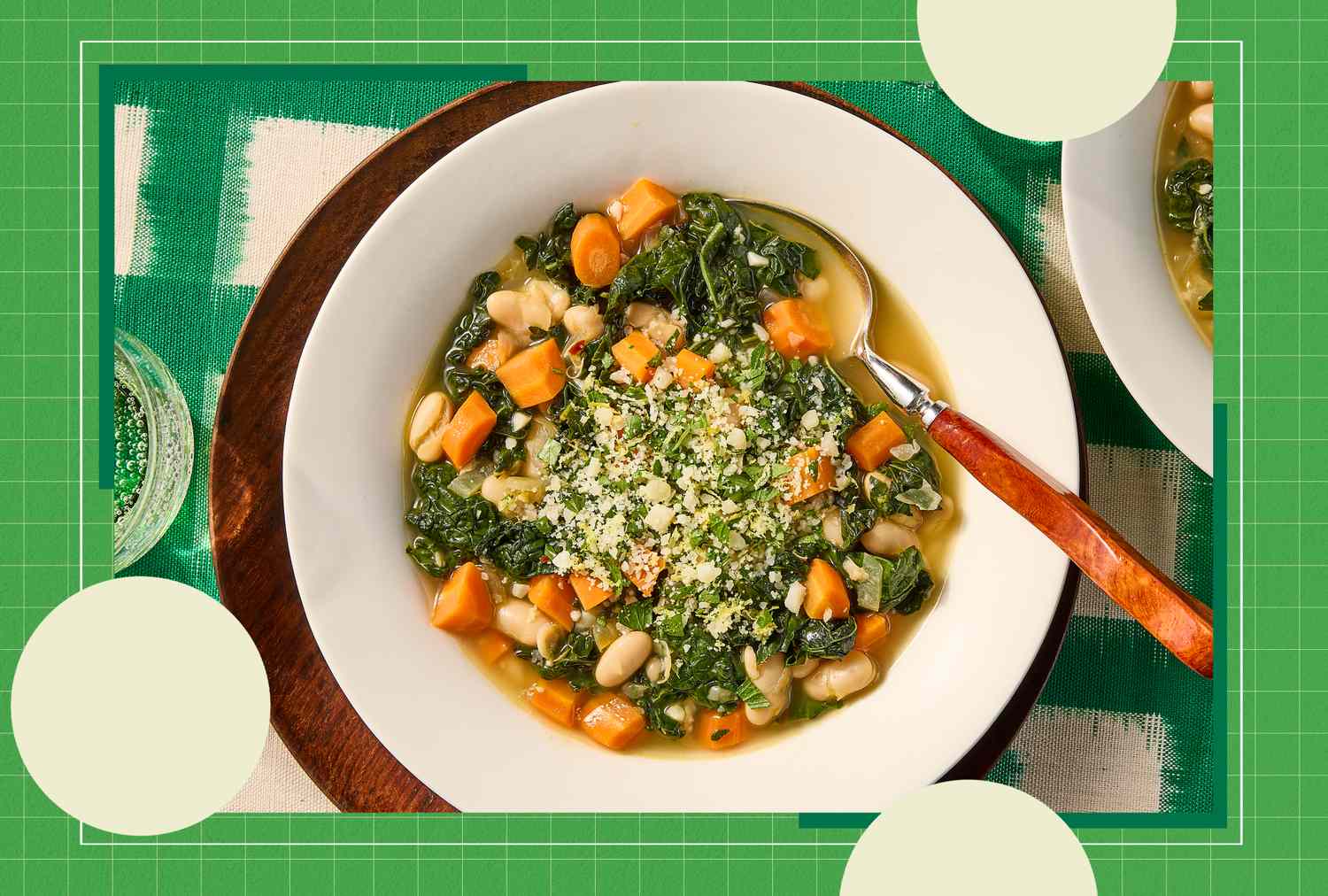
- An RD helped her client improve her blood sugar and energy by balancing her plate.
- They did this by building meals and snacks around protein, fiber-rich carbs and healthy fats.
- This formula works by focusing on what you can eat, instead of what you can’t.
As a registered dietitian, I often work with women who feel like they’re doing all the “right” things but still can’t figure out why their blood sugar—and their energy levels—feel so unpredictable. Diabetes dietitian Sheri Gaw, RDN, CDCES, sees it all the time. “Eating ‘healthy’ foods doesn’t automatically prevent blood sugar spikes—imbalanced meals and oversized portions can still trigger them,” she says.
That was the case for Catherine (not her real name), a woman in her mid-40s who came to me shortly after being diagnosed with prediabetes. She was using a continuous glucose monitor (CGM) and felt alarmed by what she was seeing: Sharp spikes after some meals, unexpected drops between others and uncertainty about what to do next. Catherine’s eating pattern was inconsistent—often characterized by long stretches without eating, followed by meals heavy in carbohydrates and light on other nutrients.
Those patterns mattered more than she realized. Research shows that irregular eating and unbalanced meals are linked to greater blood sugar swings, which can contribute to low energy, fatigue and worsening insulin resistance over time.,
Rather than overhauling everything she ate or cutting out entire food groups, we focused on a small but strategic shift that helped bring more consistency to Catherine’s meals—and, in turn, her blood sugar. And that change was using a simple formula to balance her plate.
The Formula That Helped Her Manage Her Blood Sugar
A Balance of Protein, Fiber and Healthy Fats
To help stabilize Catherine’s blood sugar, we focused on a simple, balanced plate formula. The goal was to build meals and snacks around lean protein, fiber-rich carbohydrates and healthy fats. This combo provided enough structure to guide choices without feeling restrictive.
Dietitians agree this is an effective strategy. “I encourage clients to focus on what they can add to meals—especially protein and fiber—rather than what they need to remove,” says Ali McGowan, M.S., RD. “That approach feels more sustainable and helps blood sugar stay more predictable.”
Why This Approach Supports Stable Blood Sugar
The reason this method works comes down to how different nutrients affect digestion and blood sugar.
When meals include a mix of protein, fiber and healthy fats, carbohydrates are absorbed more slowly into the bloodstream., , That steadier release of glucose helps prevent the sharp spikes and crashes that can leave blood sugar—and energy levels—feeling erratic.
“Refined carbohydrates are digested very quickly, so the glucose they provide enters the bloodstream within minutes,” explains Anne Danahy, M.S., RDN. “On the other hand, foods that are high in protein, fiber and fat take longer to digest. When you pair carbohydrates with those nutrients, glucose is released at a slower, more gradual pace.”
Each part of the formula plays a role. Protein has minimal impact on raising blood sugar, fiber slows the absorption of carbohydrates and healthy fats delay stomach emptying. Together, they help smooth the blood sugar response after meals.
McGowan adds that this steadier pattern can make a noticeable difference in how people feel day to day. “When blood sugar stabilizes, people often notice improved energy, fewer cravings and clearer thinking,” she says. “Eating feels more consistent because hunger and cravings become more predictable.”
What the Formula Looked Like in Real Life
In practice, this approach wasn’t about eating “perfectly” or following a rigid plan. “The biggest shift for many people is realizing it’s not about any one food being ‘off limits,’ but about how foods are paired to support steadier blood sugar,” says McGowan.
For Catherine, it meant pairing foods with more intention. Breakfast might be an Egg, Spinach & Cheddar Breakfast Sandwich, lunch a Chipotle Chicken Quinoa Burrito Bowl, and for dinner a Chicken Satay Bowl with Spicy Peanut Sauce.
How She Implemented These Changes
Consistently following the balanced plate formula made Catherine’s meals more satisfying and helped support balanced blood sugar throughout the day. Here’s how she did it.
- She ate more consistently. Instead of going for long stretches without eating, she ate a balanced meal or snack every 3 to 4 hours. That regularity helped prevent the blood sugar dips and spikes she’d been experiencing.
- She focused on the formula, not restriction. Each meal or snack included a source of lean protein, fiber-rich carbohydrates and healthy fats. The focus wasn’t on cutting foods out, but on combining them more intentionally to support steadier blood sugar.
- She planned snacks with purpose. Snacks weren’t an afterthought. Pairing foods—like fruit with nuts or strained (Greek-style) yogurt—helped keep her energy steady and reduced the urge to graze later.
- She kept a flexible mindset. No foods were off limits. The goal was consistency, not perfection, making these changes easier to maintain over time.
Health Benefits She Noticed
As Catherine became more consistent with her meals and her blood glucose levels became more balanced, the changes showed up in ways that extended beyond her blood sugar.
- Steadier energy throughout the day. Instead of the midmorning and midafternoon crashes she’d grown used to, Catherine noticed her energy felt more consistent from meal to meal. This made it easier to make it through the day without relying on caffeine or grabbing a carby snack.
- Improved focus and mental clarity. She felt more alert and better able to concentrate—especially in the afternoon, when she previously struggled with brain fog.
- Fewer cravings and more predictable hunger. Balanced meals helped her feel satisfied longer, which reduced intense cravings and made hunger cues easier to recognize and respond to.
- Greater confidence around food choices. Understanding how to build balanced meals helped Catherine feel more confident and less anxious about eating, without feeling restricted or overly focused on numbers.
Our Expert Take
If your blood sugar feels unpredictable—even when you’re eating “healthy”—the problem may be less about the foods you choose and more about what you’re eating alongside them. Going for long stretches without eating or relying on meals that are heavy in carbohydrates and light on protein, fiber or fat can make blood sugar harder to regulate, leading to cravings, brain fog and unpredictable dips in energy.
Catherine’s experience shows that stabilizing blood sugar doesn’t mean cutting out foods or following rigid rules. Eating regularly and following the balanced plate formula–which focuses on meals and snacks containing a combo of lean protein, fiber-rich carbs and healthy fats–can help keep blood sugar more stable. Over time, this approach supports more consistent energy, clearer focus and greater confidence around food—without making eating feel restrictive or overwhelming.
