

We may earn a commission from links on this page.
Did you know you can customize Google to filter out garbage? Take these steps for better search results, including adding Lifehacker as a preferred source for tech news.
When you’re assigned a text, you’re supposed to take away the big-picture ideas. The problem is that sometimes, you can miss the forest for the trees, skimming passages just to get it all over with. To get to that broad understanding you need, you should use a method that is all about being detail-oriented. It’s called “close reading,” and it will help you grasp whatever you read so you understand not only your assigned passage or chapter, but the concept you’re studying overall.
What is close reading?
Close reading is a method that requires you to focus on every detail in a text and operate on the assumption that no detail is in there by accident or for no reason. That’s not an assumption so much as it’s a fact. Think about the process required for that content to be in front of you. A subject matter expert had to research it all, write it all down, pass it through perhaps an agent and definitely an editor, if not multiple editors. If it’s for school, that material had to be reviewed by some kind of board and approved for use. Everything that made it to the final version had multiple sets of eyes on it. All of it is important and deserves to be there; anything irrelevant would likely have been cut.
In Teaching Literature, literary critic Elaine Showalter says that “close reading” is “slow reading, a deliberate attempt to detach ourselves from the magical power of storytelling and pay attention to language, imagery, allusion, intertextuality, syntax, and form.” The idea is to break the habit of reading casually or taking everything in at once and instead form a new habit wherein you examine every tiny element of what you’re reading and question why the author included it.
The method is even included in the United States’ Common Core standards for K-12 education. There, it’s defined as “the methodical investigation of a complex text through answering text dependent questions geared to unpack the text’s meaning.”
Essentially, you’re not just looking at what the text says, but how it says it—and that’s beneficial: Per Literacy in Focus, that means you’ll eventually be able to truly grasp what the text means. Educators have researched the use of the method and found it increases reading comprehension, for instance. Using close reading helps learners understand what a text says, but also why it’s important.
How to use the close reading method
Close reading involves reading everything twice (or more than twice). The first time is to get what it says, but the following times are to understand why it says it and why it says it that way. The goal is to be able to apply that deeper thinking and understanding to what you learned the first time through.
Read for understanding
On your first pass through the material, just get the gist. Figure out the main argument or story, who is speaking, and to whom. Don’t worry about details. Just take it all in and make a mental note of what stands out, confuses or, or seems relevant.
What do you think so far?
Read for details
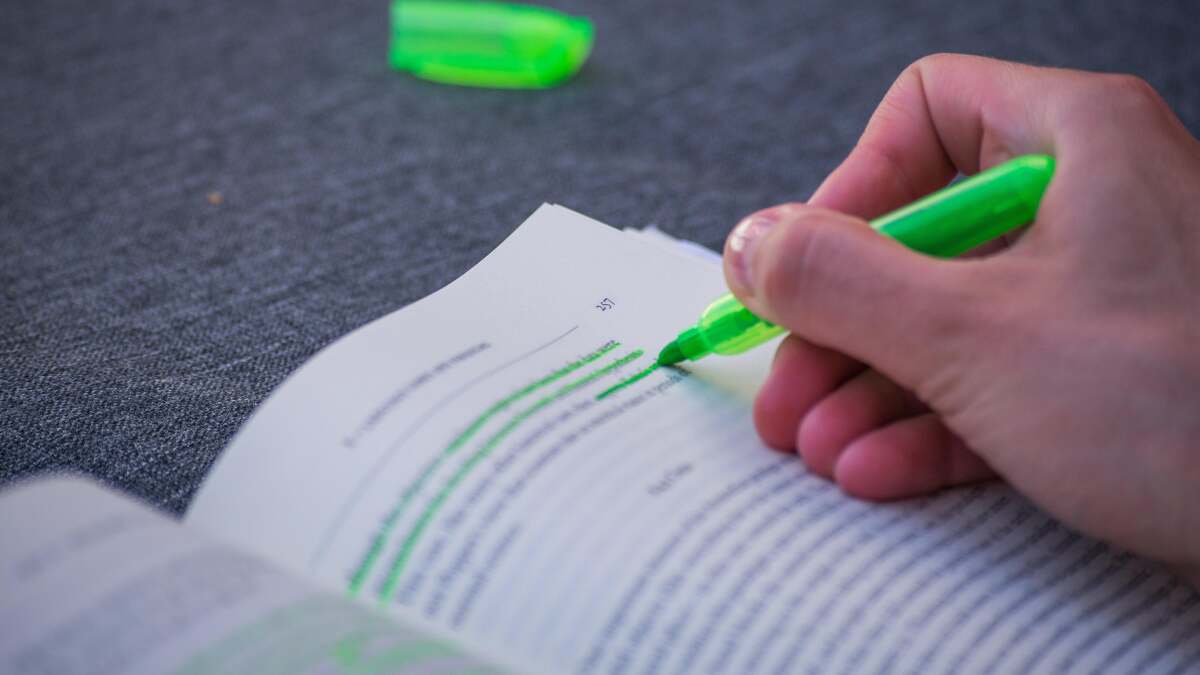
On your second time through the content, you’ll actually do the “close reading” part. Highlight key terms, circle new words, and look all of those those up. Pay special attention to formatting, like subtitles, section breaks, and visuals like charts or photos. Remember: None of it is in there by accident. Think, too, about how the information is ordered. Does the author start broad, describing an issue before zeroing in on examples? Or do they start with a specific example and then explain broader context?
Ask questions
Read it again, but this time, ask questions. Write them down on a separate paper or even in the margins. It’s likely you’ll be reading something digital, so just open up a blank word processing doc if you have to. Some questions to ask, though these will vary depending on your content, grade level, author, and more:
-
Why is this section titled the way it is?
-
Why did the author use that [evocative/obscure/flippant/etc.] word?
-
Why introduce this idea before that one?
-
Why did the author start the chapter with a character-driven story before explaining the broader context?
-
Who is the intended audience? Students? Educators? The general public? Plumbers? Politicians?
Crucially, ask questions even—or especially—if you’re unsure of the answer. Maybe you don’t know why the author used a particular phrase or for whom the content was written. That doesn’t matter. By asking, you become more curious and think more deeply. It keeps you engaged.
Read for meaning
Once you’ve read it enough times that you’ve identified the main idea and found some questions to ask, you’ve made it to your final read-through. Here, zoom out. Stop thinking of individual words, unusual punctuation, or why the author included a particular graph. Think instead of the bigger picture again, like you did on that first read-through. What’s the author’s purpose? How do the things you noticed the second time through or the questions you asked the third time through contribute to that message?
Maybe a recurring reference in a short story hints at a theme. Maybe the structure of an essay is meant to mirror the thoughts of its subject. That’s what this exercise is about. You’re moving beyond what the text says and understanding how it’s delivering its message. Obviously, this is a useful practice when studying literature, but it works for a variety of subjects. If you’re reading history, you might wonder why an author frames a particular battle or policy in a negative or positive way and wonder, too, how the people on the other side of that battle or policy felt—and why their view isn’t represented. Even asking those questions gets you thinking deeper and relating more to the material, which makes it not only easier to understand, but easier to remember.
