

Key Takeaways
- Junk journaling is a creative hobby that lets you use everyday items to document memories, ideas, and feelings through mixed media.
- This practice can help reduce stress because there are no rules or pressures to make something perfect.
- Junk journaling can make everyday tasks more fun by helping you look for unexpected items to use in your journal.
I never gave much thought to the odd bits of everyday “junk” like receipts, coupons, flyers, stamps, or product tags before tossing them in the trash. That is, until I stumbled upon one of the latest self-care trends sweeping social media: junk journaling.
What Is Junk Journaling?
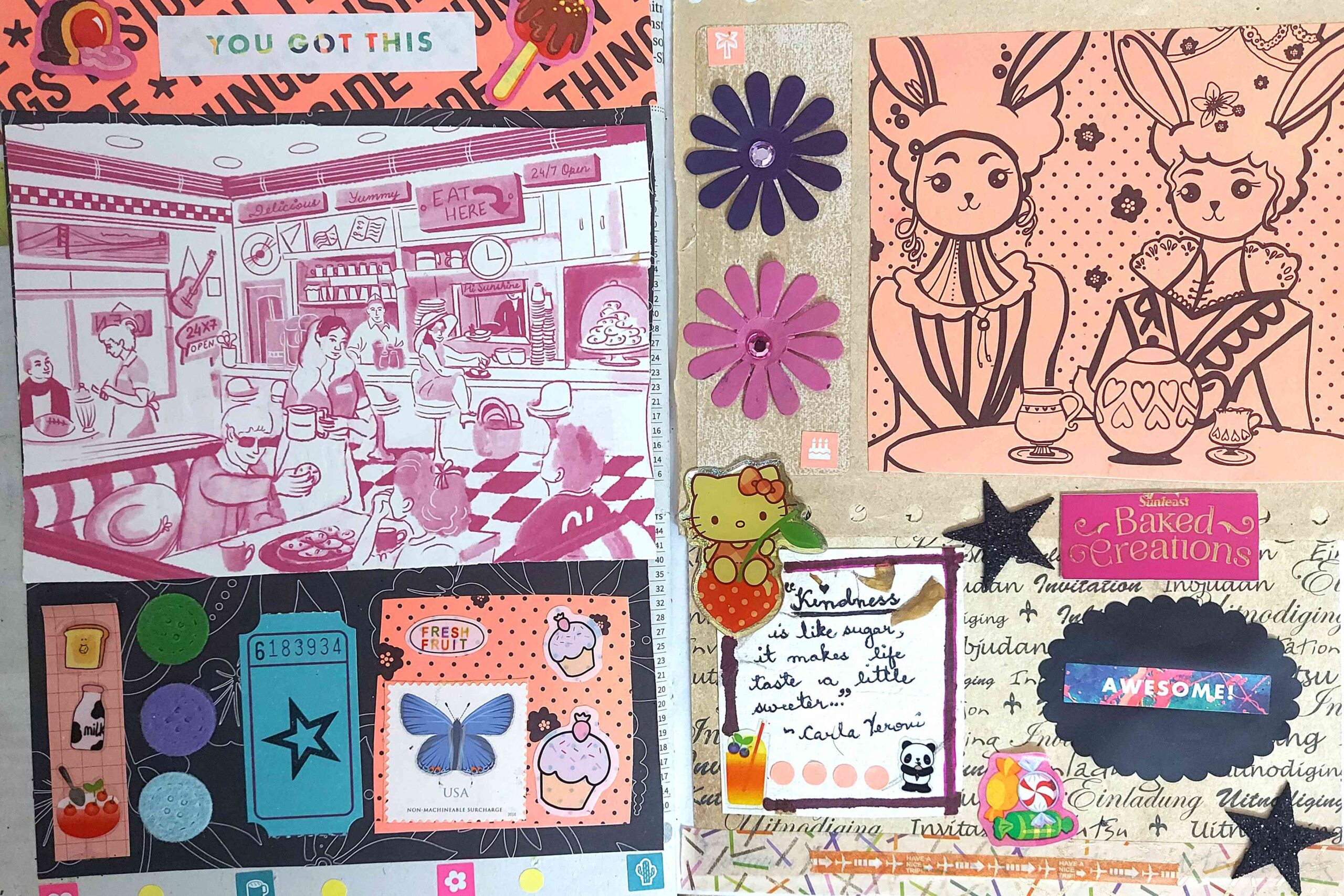
Junk journaling is a flexible, creative hobby that involves using everyday items like receipts and flyers to document your life through collage and writing. Instead of being a place to organize your thoughts or to-do lists, a junk journal is a place to organize your “junk.” Think of it as a less structured, more laidback cousin of traditional journaling and scrapbooking.
Part of the fun is that there are no rules. In a world that constantly demands productivity, perfection, and engagement, this freeform practice might just be the respite our mental health needs. And because it involves objects collected in daily life, there’s practically no barrier to entry.
Given its promising stress-busting benefits, the self-care nerd in me naturally had to try it out.
My Weekly Junk Journaling Experience
To stay as close to the “junk” theme as possible, I decided to create my own notebook for this experiment by repurposing discarded scraps. I used an old wedding card to form the notebook cover, and cut and stapled old newspaper sheets, paper bags, and leftover wrapping paper to make the pages.
Week 1: Getting Unstuck
Despite my excitement about trying something new, it was hard to get started. I laid out everything needed, but the moment I sat down, I felt stuck. I watched several junk journal flip-throughs on YouTube for inspo, but it only made me feel more anxious to start.
That is, until I reminded myself there are no rules—and therefore no pressure to get it “right.” I put all the expert tips aside and just got to it.
I picked up the scraps and got gluing, not worrying whether the final result would look “pretty” enough. They didn’t. But did I enjoy the process? Oh yes. Once I got unstuck from worries about getting it right, I was able to let loose and have fun, which was the whole point.
Week 2: Finding a Flow
Now that I didn’t have any expectations for my weekly spread, the ideas came more naturally. I didn’t need to force myself to get started. In fact, I was totally engrossed for over three hours—a rare feat, given how my attention span, like many, has shrunk considerably, thanks in part to our increasingly digital lifestyle.
Week 3: Improvising with Found Materials
I didn’t have as much paper junk for the week as I would have liked, so creating a spread turned out to be a fun creative challenge. I turned to unusual scraps like withered leaves from the backyard, dried floral tea leftovers, and a bunch of colorful buttons—and ended up with a cutesy nature-themed collage.
Week 4: Reaping the Benefits
I came down with a cold, but throughout the week, I looked forward to sitting down with my journal as soon as I got better.
By then, I noticed I felt more present when doing even ordinary things like eating a snack, sorting trash, or putting away groceries.
The past four weeks had felt like a mini treasure hunt. No matter what I was doing, part of my mind was always looking for the next “surprise” find to add to my journal. It brought a spark of joy to even the most routine tasks. I also noticed that creating spreads kept me so engaged that I spent way less time doomscrolling.
The lack of rigid rules made the whole process more freeing, especially for a recovering perfectionist like me; there’s no “wrong” way to junk journal, which helped quell my fear of making mistakes. And the best part? The sense of accomplishment that came from holding something tangible I’d created from scratch. It was a nice mood booster.
What Are the Benefits?
After noticing all the positive effects, I wondered—is there actual science behind this? To find out, I asked experts how creative outlets like junk journaling might support mental well-being.
1. May Lower Stress and Anxiety
There is something freeing about not worrying whether your handwriting is neat or your thoughts make sense.
“Instead of writing in structured sentences, you can use colors, textures, and images to express your feelings. This creative self-expression has been shown to help reduce stress, ease anxiety, and improve overall mood,” says Lisa Anderson, LCSW, clinical director at Brooks Healing Center, Tennessee.
2. Can Promote Mindfulness
The tactile, creative process of picking, cutting, and pasting different materials encourages mindfulness, grounding you in the present moment, says Allison Barton, a San Diego-based therapist specializing in trauma, anxiety, and perfectionism.
This helps pull your mind away from intrusive thoughts and feelings, making you feel calmer and more in tune with yourself, adds Anderson.
3. Helps Cultivate Gratitude and Joy
Junk journaling invites you to find meaning in seemingly insignificant items. Maybe it’s a coffee shop receipt from a perfect morning, a pressed flower from a walk, or a silly doodle that made you smile.
“When collected and arranged in a journal, these small details become a visual reminder of the good moments we often forget. It shifts your perspective from focusing on stress to appreciating your day’s tiny sparks of happiness,” Anderson explains.
Over time, this skill can translate to viewing everyday life with renewed appreciation and building a more positive emotional outlook, says Barton.
Should You Try Junk Journaling?
Since junk journaling focuses on creative self-expression rather than skill, it’s suitable for people of all ages and artistic abilities, says Barton. Some groups who may benefit include:
- Perfectionists: “It’s particularly helpful for those who struggle with perfectionism as it promotes free and non-judgmental creative exploration,” Barton says.
- Those dealing with grief or trauma: Junk journaling provides a safe space to explore and process difficult emotions that may be hard to put into words, says Janet Bayramyan, LCSW.
- Neurodivergent individuals: According to Anderson, junk journaling offers those with ADHD, autism, or other forms of neurodivergence an open-ended, hands-on way to process thoughts and emotions without rigid rules.
What Alternatives Are There?
If junk journaling is not quite your thing, no worries! Several alternative activities offer comparable mental health benefits:
- Coloring
- Bullet Journaling
- Collage Making
- Clay Modeling
- Diamond Art
- Gardening
- Knitting
- Crocheting
- Zentangling
The key is to choose a creative outlet that feels natural and enjoyable to you—one that gives your brain a break while also helping you express yourself, says Anderson.
